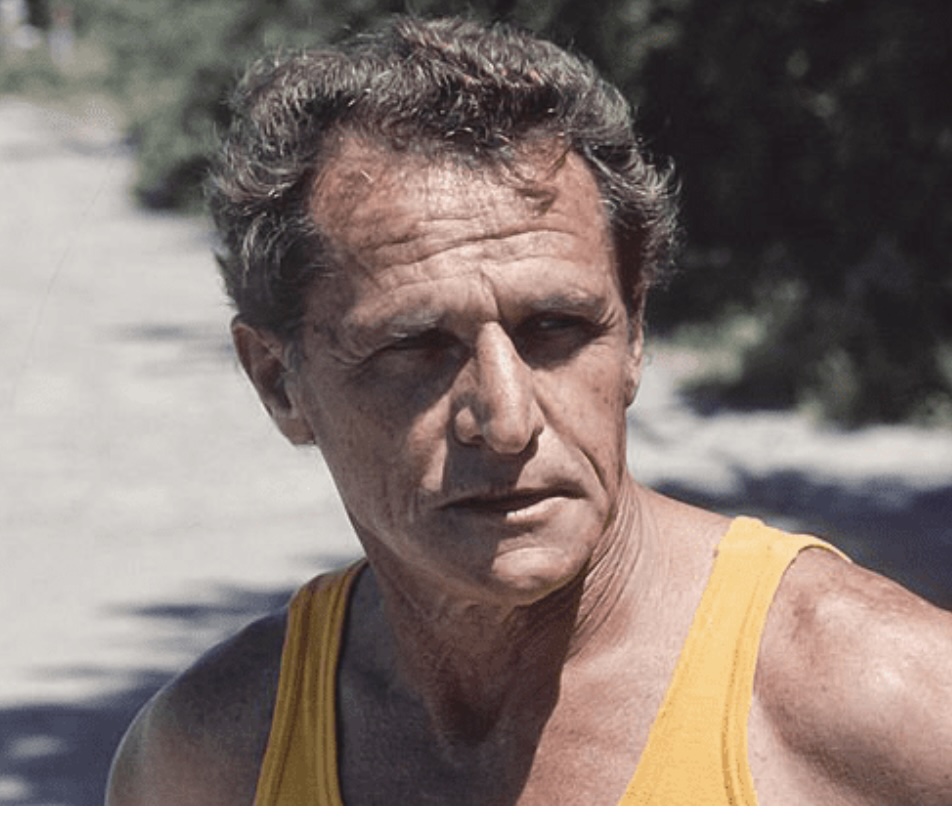
David Finniff is a former middle distance runner, who was trained by Lydiard, now a masters rower.
Endurance training in rowing is often discussed in terms of heart rates, watts, and lactate, but the principles that matter most were established long before any of those tools existed.
This article grew out of a conversation with Rebecca Caroe, when I mentioned that I was coached for six years beginning in 1971 by the legendary Auckland-based track coach Arthur Lydiard. Rebecca asked three simple but important questions: What did Lydiard teach? Why was it innovative? And where do we see parallels in rowing today?
Who Was Arthur Lydiard?
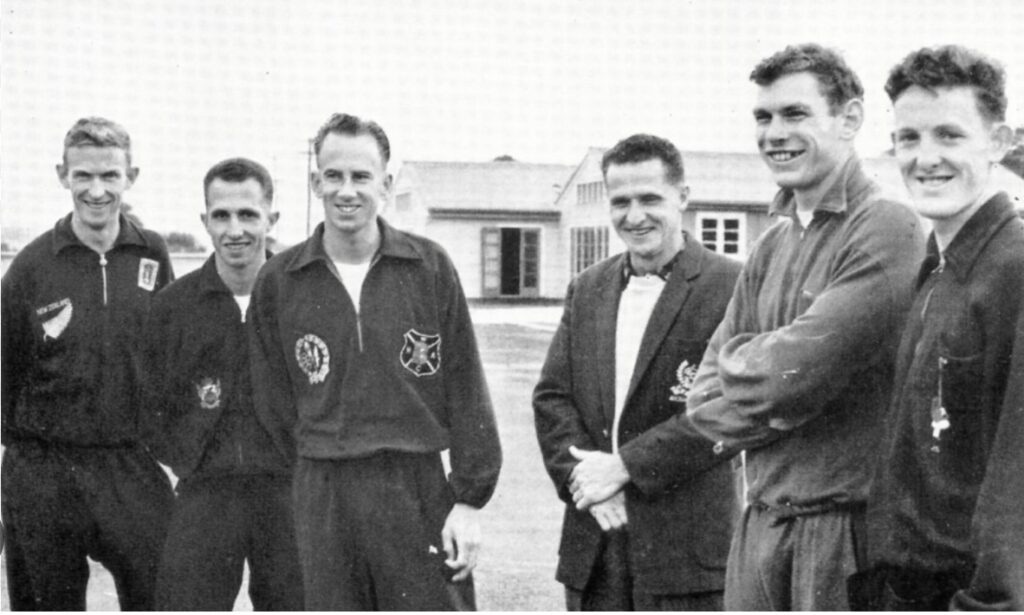
Arthur Lydiard was a relatively unknown running coach until the 1960 Rome Olympics, where athletes he coached delivered extraordinary results. Peter Snell won gold in the 800 meters, Murray Halberg won gold in the 5,000 meters, and Barry Magee earned bronze in the marathon. Four years later, at the 1964 Tokyo Olympics, Snell won gold in both the 800 and 1,500 meters, while another Lydiard athlete, John Davies, captured bronze in the 1,500.
These performances sparked global interest in Lydiard’s training philosophy. He published Run to the Top in 1961, outlining the program behind those Olympic medals. After 1964, Lydiard worked widely with coaches and athletes. I first met him during his U.S. lecture tour in 1970, after which he coached me primarily through correspondence, with occasional inperson meetings during later tours.
The Core Objectives of The Lydiard System
Lydiard’s training system was built around two primary goals: developing sufficient endurance to maintain race-winning speed over the full distance and structuring training so that peak fitness is reached at precisely the right time for a major championship or Olympic race.
To achieve this, he developed a periodized system based on a deliberate balance between aerobic and anaerobic work. His approach consisted of three clearly defined phases: Marathon Conditioning, Hill Training, and Race Conditioning guided by his enduring motto: “Train, Don’t Strain”.
Marathon Conditioning: Building The Aerobic Base
Through years of self-experimentation, Lydiard concluded that running approximately 100 miles per week for ten weeks, plus any supplementary mileage, was ideal for developing cardiac efficiency and improving oxygen intake, transport, and utilization. This work followed a hard/easy structure, with three long runs and four medium runs per week.
A hallmark of this phase was the extra-long Sunday run, famously conducted on the 22 mile Waiatarua circuit near Auckland. These runs were performed at a brisk but conversational pace, a level we now recognize as Zone 2 or UT2 training.
What follows is the marathon-conditioning program Lydiard prescribed to Halberg, Snell, and Magee in the build-up to the 1960 Rome Olympics:
- Monday: 10 miles at ½ effort over hills
- Tuesday: 15 miles at ¼ effort over undulating terrain
- Wednesday: 12 miles easy fartlek
- Thursday: 18 miles at ¼ effort
- Friday: 10 miles fast at ¾ effort, but not race pace
- Saturday: 15 miles at ¼ effort
- Sunday: 22 miles at ¼ effort
Athletes new to the program began at a modest mileages and increased volume over time. Some adapted quickly, others required years, and some never reached the 100-mile weeks. Lydiard coached them with equal care, whether they became Olympic champions or lifelong club runners, working to help each runner reach their own potential.
Another major innovation in Lydiard’s system addressed how athletes controlled training intensity. Without heart-rate monitors, he defined training intensity by perceived effort and breathing patterns. These effort levels align closely with modern rowing training zones:
- Best effort: Anaerobic—very deep, rapid breathing; nearly impossible to talk
- ¾ effort: Anaerobic threshold—rapid breathing; hard to talk
- ½ effort: UT1—heavier breathing; talking becomes difficult
- ¼ effort: UT2—conversational pace sustainable for long durations
Athletes were encouraged to listen closely to their bodies and adjust distances, repetitions, or effort levels as needed. Breathing served and still serves as a reliable proxy for training intensity.
Hill Training: Strength Without Weights
Lydiard did not believe in traditional weight training. Instead, he used hill running to develop leg strength, ankle flexibility, and efficient running mechanics. In rowing terms, this phase is comparable to power strokes, technical drills, and workouts using multiple stroke rates. While modern rowing programs frequently include weight training to improve leg strength and maximal power, Lydiard achieved similar adaptations through terrain-based resistance.
His hill circuit consisted of a steep half-mile climb with a flat quarter-mile section at both the top and bottom. After a two-mile warmup, athletes sprinted uphill with exaggerated knee lift and powerful toe push-off. At the top, they jogged for recovery, then ran downhill fast but relaxed and under control. At the bottom, the half-mile flat was used for short, sharp sprints such as alternating 50- and 220-yard efforts.
Originally, the workout session consisted of four repeats of the hill loop. Monday through Saturday, followed by the 22mile Waiatarua run on Sunday, for a total of six weeks. In later years, Lydiard reduced the number of hill sessions to three per week. For the other three days, he introduced a new workout which he called the leg speed workout.
Race Conditioning: Speed, Stamina, and Timing
The final phase, Race Conditioning, was divided into two five-week blocks. The first emphasized repetition work, sprint training, and steady runs. The second replaced repetitions with sharpening sprints and time trials. The goal was to progressively blend speed and endurance while sharpening race-specific skills and timing. Together, these two blocks were designed to progressively blend speed and endurance while sharpening race‑specific skills and timing.
To make sense of the race‑conditioning schedules, it helps to understand how Lydiard defined the key workouts used during this phase.
Key workout concepts included:
- Sprint training: Short runs building to top speed while remaining relaxed, with long recoveries. On the erg, this translates to high-quality short sprints (e.g., 8 × 100 m) with full recovery to maintain technical precision.
- Starting practice: Repeated short accelerations focusing on rapid engagement and smooth transition into race pace, directly applicable to erg and on water start sequences.
- Fifty-yard dashes: Alternating sprint and floating segments to train changes of pace and the ability to tolerate high oxygen debt. Rowing equivalents include cadence pyramids or 30/30 interval sessions.
- Time trials: Even-paced efforts at roughly ¾ effort, used to assess fitness, refine pacing, and simulate race demands. In rowing, time trials establish training baselines, support training zone calculation, and provide valuable mental conditioning.
- Fartlek: Unstructured “speed play” combining steady work with spontaneous surges. On the erg, stroke-based power pyramids serve a similar function.
- Leg speed: Run down a slightly sloping area 10-120 yards long moving the legs as fast as possible without straining as in sprinting. Run ten efforts with a 3 minute very slow and easy jog between each interval.
The schedule below illustrates how this phase was structured:
First Five Weeks: Second Five Weeks
Monday: 2 miles 3 miles of fifty-yard dashes
Tuesday: Twenty 220s at ¾ effort Fartlek 1 hour
Wednesday: Sprint training and race 100/200 yards Time trial ½ race distance
Thursday: Three miles at ½ effort Sprint training
Friday: Sprint training and starting practice Leg speed workout
Saturday: Twenty 440s at ¼ effort Time trial or development Race
Sunday: 2 hours easy 1 hour easy
Taken together, Lydiard’s ideas predate heartrate monitors, power meters, and lactate testing, yet they map remarkably well onto how we now understand endurance training in rowing. His system explains why high-volume aerobic work matters, when strength and speed should be added, and how to peak without burning out, problems that masters’ rowers wrestle with constantly.
More than six decades later, the principles behind Lydiard’s success, patience, aerobic mastery, and precise timing, remain deeply relevant to rowing performance at every level.
David Finniff