Quick Answer
With proper training, most masters athletes can improve their 1K time by 10-20 seconds within 12 weeks, and 20-40+ seconds over 6-12 months. The exact improvement depends on your current training status, technique efficiency, and how much your previous training was misaligned with masters physiology.
Realistic Erg Improvement Ranges
If You're Currently Undertrained or Training Wrong
Scenario: You're rowing 3-4x per week with no clear structure, moderate intensity most days, no strength training.
Realistic improvement in 12 weeks: 15-25 seconds
Realistic improvement in 6 months: 30-50 seconds
Why this much? You're likely leaving massive gains on the table through inefficient training, poor recovery, and muscle loss. Structured programming with proper periodisation and strength work can unlock fast improvement.
If You're Already Training Consistently
Scenario: You've been following a structured programme, training 4-5x per week with some intensity variation.
Realistic improvement in 12 weeks: 5-12 seconds
Realistic improvement in 6 months: 10-20 seconds
Why less? You're already capturing the "easy" gains. Further improvement comes from technical refinement, strategic periodisation, and optimising the details.
If You're Returning After Time Off
Scenario: You were competitive 5-10 years ago, took time off, now getting back into it.
Realistic improvement in 12 weeks: 20-35 seconds
Realistic improvement in 6 months: 40-60+ seconds
Why this much? You have muscle memory and technical foundation. Your body remembers how to row efficiently. With proper programming, you can regain significant fitness quickly,though not quite to previous peak levels.
What Drives Improvement at 50+
1. Technical Efficiency (Biggest ROI)
Potential gain: 8-15 seconds on a 1K
Small technical improvements create massive speed gains because you're optimising power transfer, not just generating more power.
High-impact technical fixes:
- Cleaner catch (no slip, immediate connection)
- Proper sequencing (legs-back-arms, not all at once)
- Controlled release (sets up next catch)
- Optimal compression (not over-reaching into injury-prone positions)
Why this matters at 50: You can't out-power younger athletes, but you can out-technique them. Efficiency is your competitive advantage.
2. Strategic Threshold Training
Potential gain: 5-10 seconds on a 1K
Your VO2 max is declining, but your lactate threshold remains highly trainable. Focusing on threshold work,sustained efforts at race pace minus 2-3 seconds,drives performance gains that matter for 1K racing.
Effective threshold sessions:
- 4-6 x 5 minutes at threshold pace, 2-3 min rest
- 2 x 10 minutes at threshold pace, 5 min rest
- 3 x 7 minutes at threshold pace, 3 min rest
Frequency: 1x per week, year-round. This isn't pre-race work, it's continuous capacity building.
3. Strength Training and Power Preservation
Potential gain: 5-12 seconds on a 1K
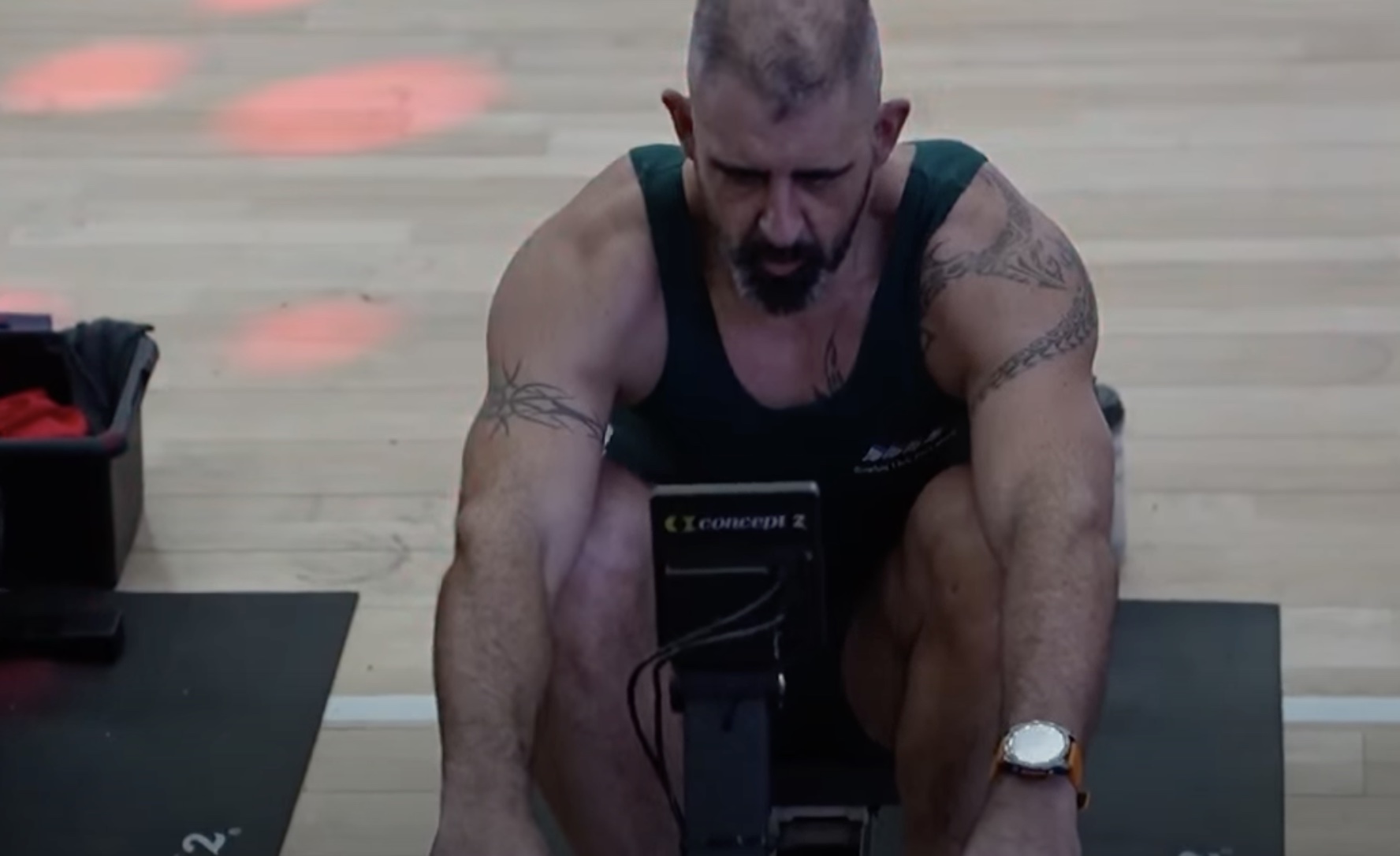
If you're not doing dedicated resistance training, you're losing 3-5% of muscle mass per decade. That's literally power leaking away. Two strength sessions per week can stop this loss and potentially rebuild lost muscle.
Focus areas:
- Compound movements (squats, deadlifts, rows, presses)
- Progressive overload (gradually increasing weight)
- Power development (explosive movements)
Timeline: You'll see strength gains in 4-6 weeks, rowing performance gains in 8-12 weeks.
4. Proper Recovery and Periodisation
Potential gain: 5-10 seconds on a 1K
Many masters athletes are chronically overtrained. Simply recovering properly, 72+ hours between hard sessions, adequate sleep, proper nutrition,unlocks performance that was masked by fatigue.
Signs you're undertrained vs. overtrained:
- Undertrained: Feel fresh, rarely sore, workouts feel easy
- Overtrained: Constantly fatigued, declining splits despite training, elevated resting heart rate, mood disruption
Most competitive masters athletes who are "stuck" are overtrained, not undertrained.
Real-World Examples
Case Study 1: Technical Efficiency Focus
Athlete: 52-year-old male, been rowing 3 years Starting 1K: 3:48 After 12 weeks: 3:35 (13 seconds faster) Primary changes: Fixed catch timing, improved sequencing, added 2x/week strength Quote: "I'm rowing at the same heart rate but 13 seconds faster. I wish I'd fixed my technique years ago".
Case Study 2: Proper Periodisation
Athlete: 48-year-old female, competitive background Starting 1K: 4:02 After 6 months: 3:42 (20 seconds faster) Primary changes: Reduced volume by 30%, added strategic intensity, prioritised recovery Quote: "I'm training less but racing faster. Turns out I was just tired all the time".
Case Study 3: Strength Training Addition
Athlete: 55-year-old male, rowing 10+ years Starting 1K: 3:52 After 6 months: 3:38 (14 seconds faster) Primary changes: Added 2x/week strength programme, maintained same rowing volume Quote: "The strength work made rowing feel easier. My power per stroke went up measurably".
The Limiting Factors
You Can't Improve If:
1. You're training through injury Pain is your body saying "stop". Rowing hurt doesn't make you tougher, it makes you slower and eventually broken. Fix the injury first.
2. Recovery is inadequate No amount of perfect programming works if you're sleeping 5 hours, eating poorly, and doing high intensity 4x per week. Adaptation happens during recovery.
3. Technique is fundamentally broken You can't fitness your way past terrible mechanics. Major technical faults need correction before performance improves.
4. You're not consistent Training 3x one week, 6x the next, skipping weeks entirely,inconsistency prevents adaptation. Four consistent sessions per week beats six random ones.
Timeline Expectations
Week 1-2: Adaptation to programme, may feel harder before easier Week 3-4: First technical improvements click, workouts feel smoother Week 5-8: Measurable power increases, steady state splits improving Week 9-12: Race-pace work feels more sustainable, 1K test shows improvement Month 4-6: Continued refinement, additional 5-10 second gains possible Month 6-12: Marginal gains phase, optimising details for final improvements
Related Questions
- Why am I getting slower at rowing even though I'm training hard?
- What's the best training programme for masters rowers over 50?
- How long does it take to see improvement in masters rowing?
- Is it realistic to medal at masters nationals if I'm 55?
Get Structured programming for Measurable Results
Our Masters Performance programme has helped 400+ masters athletes drop 15-30 seconds off their 1K times through:
- Periodized training designed for 40-65 age group
- Technical video library to fix efficiency killers
- Integrated strength protocols for power preservation
- Recovery optimisation strategies
Stop guessing. Start improving.
Want free training insights? Join our newsletter for weekly evidence-based tips on getting faster after 40.