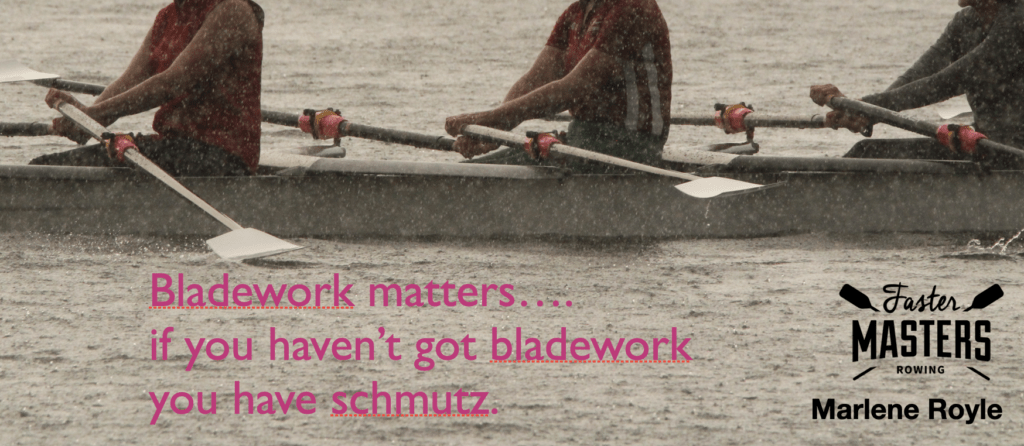
Marlene-ism for masters rowers quote from Larry Gluckman
Managing to control a 3-4 meter long stick with your hands is difficult - doubly so when you are sculling and have two to work with.
Bladework skills are acquired with practice and three key underlying concepts
A correct grip in rowing and sculling is comparable to the grip you'd use to hold a kitten or a small bird - light enough to allow the animal to feel secure in your grasp but not too tight so you strangle it and cause pain.
Mostly your grip is about controlling the handle and managing the mass of the oar using just the part which is in front of your body. This requires an understanding of how the principle of the fulcrum and a lever work. One centimetre vertical adjustment on your handle is 3-4 centimetres on the blade tip.
Using the fulcrum of the oarlock, your hand can affect how high or low the oar is above the water during the recovery and also how deep or shallow the oar is during the power / drive phase of the rowing stroke. The oar pivots around the oarlock and is designed so that a small amount of downward pressure on the handle can lift the oar spoon high over the water.
Teaching yourself how to "feel" the weight in the palm of your hand is a key bladework skill. It takes little effort and certainly will not exhaust your fitness, but it does mean you decide where the oar moves through the air. This is particularly important on windy days when a gust can blow the oar spoon when it's not being controlled by the athlete.
As a cyclical movement, rowing and sculling should make it very easy for the athlete to prepare for each part of the stroke. Good bladework reflects this and you can see an athlete square long before the catch / placement at the start of the power / drive phase, You can see them extract the oar at the finish and press the handle down so the oar clears any waves and feathers high above the water surface.
Less skilful rowers slide forward into the catch position and only square after the seat has arrived and their body is at full compression. They fail to extract the oar by pressing down on the handle ( frequently cocking a wrist to feather) and you see them feather the oar partly under water.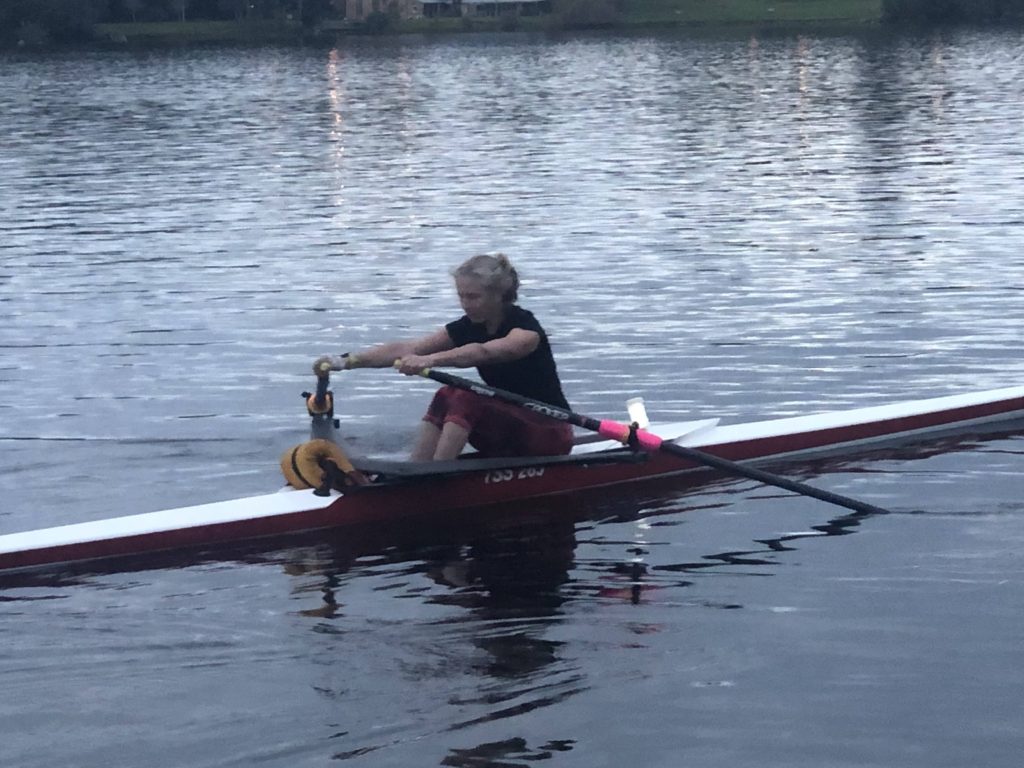
The Faster Masters Rowing training program teaches drills and exercises to learn good bladework.
Join our community and get our exclusive Faster Masters Rowing Magazine, packed with tips, techniques, and inspiring stories. Includes four new articles monthly.