Rowing can create harmony at home or rowing can rock the domestic boat. For a masters racer who regularly competes in addition to a busy work schedule, time-blocking to give enough attention to a non-rowing partner has its challenges. If the scales are not balanced, all-day weekend regattas, early morning practices, long rows, mixed boat partners, travel, and a focus on your training can leave a spouse feeling ignored or resentful. An endurance sport like ours is time demanding so the extra demands of racing season can make it even harder to combine your interests with your collective needs as a couple. Being able to reach a common ground and resolve conflicts will go a long way to reduce frustration for the non-rowers and keep your lives in sync which, in the long run, will help your boat go faster.
John Gottman, PhD, author of Masters of Marriage vs. Disasters of Marriage, cites that successful couples have three things in common:
According to Gottman, the highest predictor of a failed relationship is a low ratio of thoughtful acts. For example, to your non-rowing partner, an early morning long row on a Sunday morning might be considered an emotional withdrawal. But its negativity can be canceled out by leaving a nice note on the table to say good morning, bringing home their favourite coffee, or telling them you will be home at a certain time and you plan lunch at their favourite restaurant. Gottman says, surprisingly, it doesn’t matter how big or small the emotional deposits are as long as there is a large ratio compared to emotional withdrawals. So what is the right ratio? Gottman suggests the magic number is at least five emotional deposits for every emotional withdrawal.
One strategy is to give your partner opportunities for supportive roles such as the travel planner, the race photographer, or coordinating your gym schedules. If a regatta is far away or in an interesting place, you can turn the trip into a holiday and spend some time together after the event. Including your partner helps make your rowing become a shared experience and your partner can develop a better appreciation of all that goes into you performing well. Because you do want to do well.
The first step is to get your partner on the same page. Express your feelings of accomplishment, your goals, and how great you feel after your row. List your positives: I weigh 2kgs less, I eat healthier, I am happier so I perform better at my job, I enjoy being good at something. The second step is to find out what bothers your spouse about your involvement in rowing. Do you fall asleep right after dinner? Is care of the children disproportionate on the weekends? Does your husband want to go out to a show one night of the weekend but you always have to go to bed early? The third step is to clear up the issues that knock your relationship off kilter and work together to reduce those emotional withdrawals and build up the emotional deposits on a daily basis.
Here are some strategies to try:
Stay socially active-individually so you both develop your talents and have experiences to share and discuss. If your relationship is fundamentally healthy you will be able to work together to support each other’s interests and goals. Paying attention to feelings, honesty, openness, and genuine interest in each other’s well-being will help rowing be a positive factor in your relationship. If training has to be scaled back, focus on quality versus quantity.
Stay flexible because in the end it is all about equilibrium. Maintaining a positive emotional balance with those closest to you will help you manage the intensity of competition with the ever-important down time to regenerate and recharge between events and seasons.
By Marlene Royle, Faster Masters Rowing
How London Rowing Club strategised to win at the British Masters Rowing Championships for the second year in a row.
Timestamps
British Rowing Championships winners of the Victor Ludorum trophy sponsored by Faster Masters Rowing were London Rowing Club. Hear how they prepared for the event and to defend the title they won last year.
01:00 James Sexton-Barrow is Captain of London Rowing Club he is talking about their Victor Ludorum Trophy win - they won more points than anyone else at the championship regatta. It is more special as the whole club got involved.
Masters groups can change a lot from one year to the next. Staying on a podium is harder the second year. We went straight into planning the next year's racing after the regatta in 2024. This year we realised other big clubs could copy our strategy.
We needed to be better athletes and performing at a higher level than the prior year. Two other clubs had more entries than we did this year - we got more medals showing that the standard of performance was higher. We won 8s and 4s which got more points as big boats.
The club was very proud of our achievement last year - this became a driving force for the impetus to keep going and to improve, bringing in more participants to train regularly.
The age range is from 36 to over 75 within the club so the coaching plan had to be flexible and reflect the different abilities and time availability. We could not mandate everyone to row on Sunday mornings or to erg on Tuesday nights as work/life balance was so varied within the group. Any good masters group h as to acknowledge the vast differences between individuals' ability to train. The approach is that there are times in the week when we try to get as many people on the water as possible and coaching will be available e.g. Sunday mornings. We aim to get as many boats out as possible then for side by side pieces - get value from togetherness. We ask those who cannot make it to go out at another time to make up the session. For land based training we put out a schedule and we don't dictate which day you have to do it - flexibility enables more participation. Fit in training around your own diary.
Selection was focused on several regattas - Henley Masters, Brit Masters - selection was "age banding" and also availability for both events. We started in March/April with a squad meeting and to do early lineups. We reviewed erg performances over winter, race performances in head races, age-banding for selection. Last year we were too strict in crew selection and left it a bit too late. Last year it was when we did the entries - we didn't look back at past training performances, it was only based on age. Training in a unit together for a long time contributed to better success.
We have our second peak regatta next weekend. World Masters is following and some of us are going there too. It feels like a 'bigger machine' this year. We also love going to local regattas like Kingston and Molesey. The website has a masters page londonrc.org.uk/masters if you want to join. The rest of the club is more respectful because we won there is a growing sense of this group as a serious entity within the club.
LRC was founded to win medals at Henley Royal Regatta - which we did this year this is the club focus. We are a big club and the masters play a big role in running the club organisation. Prior to last year's win the masters were left to "do their thing" and as long as the masters are happy then that's OK. The club doesn't put a big emphasis on the performance of that group.
A big change this season is now the club sees that we can win, are noteworthy and are out there making a name for themselves. There is recognition that the masters are going faster, and that they should be supported adequately, with equipment, coaching, training and access to trailers to go to regattas. We have had huge support this year and we hope it continues. Winning it 3 times would the real trick!
A minor collision, a scratch or hitting a water obstacle can all contribute to your boat losing its pristine paintwork.
Despite many boats being “white” most are an incrediblly diverse range of shades of that colour. And with outdoor use ultraviolet light fades the colour from its original.
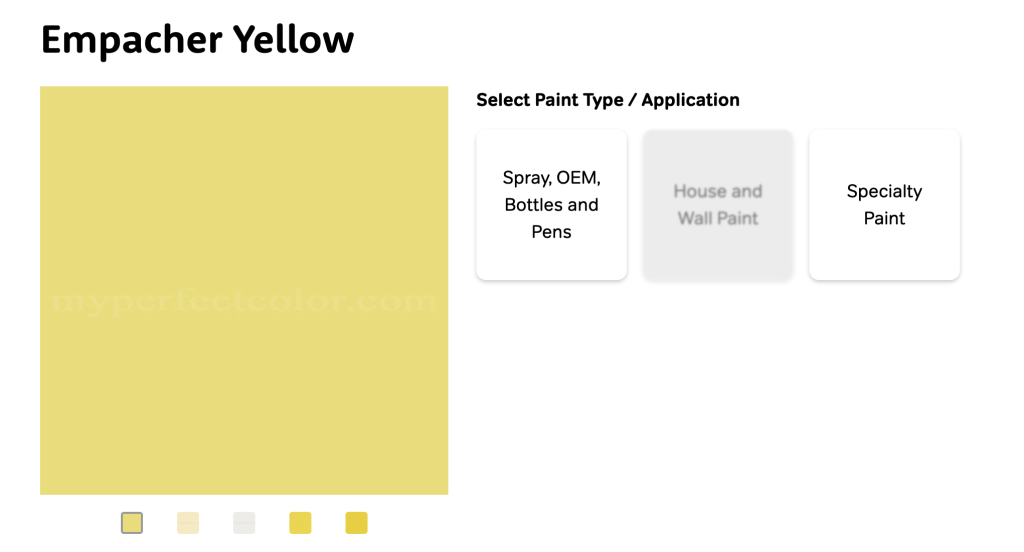
I have bought “touch up” miniature pots of boat paint and found that they don’t match my hull.
I found this service online – My Perfect Color. And a rower has already uploaded “Empacher Yellow”.
So bookmark this helpful page for the likely future when you’ll need a touch up on your boat paint.
This article first appeared in the Masters Rowing Magazine February 2024 edition.
Weather events happen that can cause safety concerns for masters rowing clubs. We got htis quesiton on the Masters
Rowing International Facebook group link
What is your club's policy about rowing in extreme heat?
The answers were very helpful. Note some use Farenheit and others use Centigrade.
Converstion page.
Some remarked that they use common sense - but that it's not very common for people to be sensible!
US Rowing has developed a Heat Safety Guidelines document published in November 2024. Designed to help identify and mitigate heat illness risk in our sport. The guidelines were developed from the World Rowing Heat Safety Guidelines, the recommendations of the Stringer Institute, and with the USRowing Medical and Safety Committees.
Rowing Australia Policies also has published Extreme Heat Recommendations. These apply to regattas but could easily be adapted for club use. It uses a helpful measure called the Heat Index
The Heat Index shall be determined from the Heat Index Table enclosed by using the Ambient Temperature and the Relative Humidity measured at the course at the same time. For example, if the Temperature is 35°C and the Relative Humidity is 40%, the Heat Index is a value of 37. If the Temperature is 35°C and the Relative Humidity is 60%, the Heat Index is a value of 45.


A hat and a water bottle were requirements for other clubs - some just said they could not allow rowing without a water bottle.


How to streamline your workouts in order to maximise your time on the water. Learn how be a good student and arrive prepared for your workout.
Timestamps
Imagine parking your car and walking through the front door - what's the signage like, is it clean and orderly? Is the lineup clear? Is the coach boat ready? What about cox box and life jackets? What do you need to do before you can get safely onto the water each practice?
Masters are often time-poor and busy people. Anything we can do to streamline the necessary tasks means more time on the water for your workout.
Get prepared early - get out all your clothing, gear. Know your departure time from home and list all the things you have to do before leaving. What's the weather report - does this affect traffic? What's on the training program? Who is in your crew lineup and which boat/oars are you using? Have your rowing electronics, gloves, cap, rain jacket ready and your post-workout clothing too.
Get to the boathouse in enough time to get everything ready. Be clear about the time of the practice is pushing off from the dock (not walking through the front door). Know what needs to be done and find out what remains to get ready from others who are already there.
Put everything onto the dock. Ideally, nobody goes back into the building after you have put your boat on the water. Water bottle, oars, stroke coach, PFD, light, cox box etc. Put them on the back of the pontoon so they aren't trip hazards.
Sign out in the safety register - names, boat, circulation, time going out. Be friendly - say hello to others. In your crew agree the seating order and who will steer and who will do the calls. Know the workout and the warmup as well as the focus point for the outing (heart rate, effort, technique points). Confirm hazards like buoys and other water users - where could clashes happen?
Know about when should you change the outing plan? Weather conditions are often the deciding factor and running out of time. How do you cut it down - the repeats, the rest, turning round early? Decide together what to do in your crew.
Wind direction changes and waves can make it unsafe. Where can you go for safety in flatter water? Can you see other crews and what decision are they making when a change is needed? Where will you cut across your planned route?
Experienced rowers will know what to do if the wind or tide changes, how to make changes to your safety plan. Remember the water is safe until that you forget that it is dangerous.
Want easy live streams like this? Instant broadcasts to Facebook, YouTube, LinkedIn. Faster Masters uses StreamYard: https://streamyard.com/pal/d/5694205242376192
The policy leadership masters sport needs if it is to grow. What can public policy measures do to improve and grow masters rowing?
Timestamps
Sophie Harrington is researching recommendations to improve access to womens and girls sport using public policy measures. Her focus on the male/female side opened up masters sport as a new area where sport for life outcomes could work.
To grow masters sport requires finding the inhibitors which exist and prevent improvement. Some are structural - how we organise, think and run volunteer sport.
Ways to improve access and people's enthusiasm and interest in masters sport. Constraints include memberships - many clubs are annual fees/dues. Can we offer pay-to-play memberships? Also what about time of day pricing as our rowing equipment lies idle for 22 hours a day. Training at quieter times of day between early mornings and school afternoon sport times. Sweat your assets to get more money in for use when not in demand.
05:15 Coach education
Teaching methods used for youth are not as appropriate for older adults. Consider psychology and physiology of athletes so coaches know how to work with a broader range of athletes.
Competition structure is a growth inhibitor. We need 3 layers - local / regional and national competitions including those which are participatory not races e.g. Park Run. What is the rowing equivalent? Scrimmages, touring row or visiting another club. Some people take years before trying racing. Competition for those new to competing needs to be organised so you can go to hyper-local events with low friction (no equipment trailer).
08:00 Athletic pathways for masters
Ways for those of limited experience to go to races against those whose experience is similar. Age doesn't work as a level playing field when years of experience is considered. Having plural athlete pathways which incorporate fitness rowers with challenges (not necessarily races) that move folks into competition gently.
Social inclusion - having a coffee after the workout is important to build friendships and encourages them to stick around as a group.
Facilitating sport for life is the outcome goal.
Want easy live streams like this? Instant broadcasts to Facebook, YouTube, LinkedIn. Faster Masters uses StreamYard: https://streamyard.com/pal/d/5694205242376192
This is a thread from Facebook Masters Rowing International Group. Reproduced with permission
Hey folks, boat repair advice welcomed.
I posted this in a fiberglass and composite tips page already, but thought I could probably get some more specialized advice here.
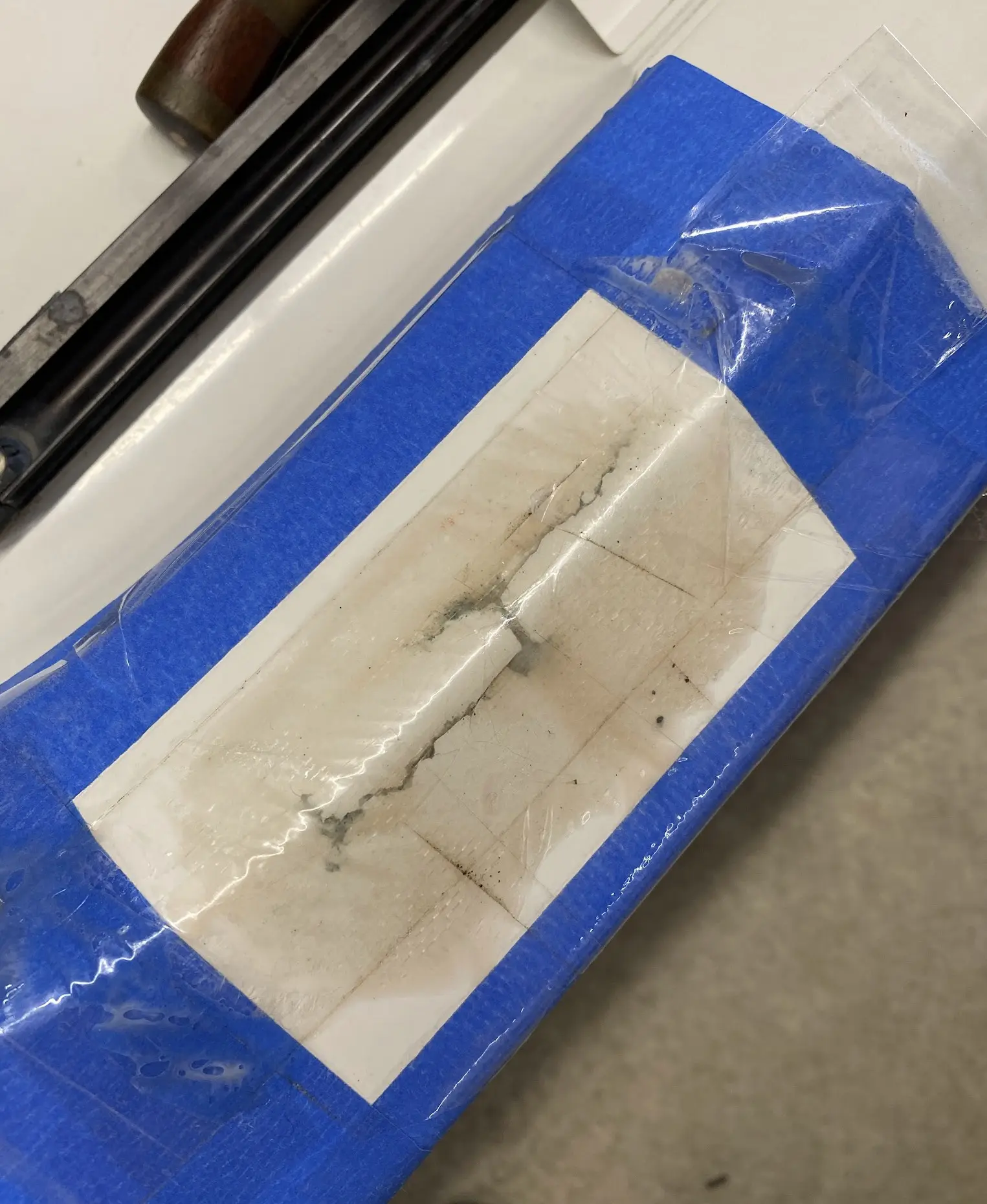
This is repair I did last week on a rowing shell, the crack is along the edge of the deck next to the seating area. The boat is only 1/16" thick here, and these boats are exceedingly thin all over since a 27ft boat weighs just ~25lb without the seat and aluminum rigger.
The approach I took was to squeegee epoxy into the cracks with a credit card and then lay one patch of 6 oz glass over the area. I sanded and taped off around the repair ahead of time, once the glass cloth was saturated I laid a piece of thin plastic over the patch and squeegeed out excess resin with thin credit card type piece of plastic, (an old health insurance card if you know the type). I then covered the whole area with layers of painters tape to keep the edges down while it cured.
I was pretty happy with the result and sanded to 220 to clean up the edges and painted with one good coat of white enamel spray paint. The plastic overlay allowed me to get nimimal excess resin and a smooth finish. the plastic layer I used was just 2 layers of packaging tape assembled glue face to glue face so it wouldn't stick to anything but I'd like to find a better option, I bought some plastic file folders from the office store yesterday and I'll try those. Or maybe just order some proper Mylar from a composite supply house since I need a few things anyway.
I'm curious to hear advice on similar methods. I want to try a similar job with peel ply, and maybe experiment with peel ply, and vacuum bagging the area to get larger laminates saturated and pressed down well.
I have another repair coming up that will need a lot more strength, another crack in a racing shell, but in a more structural area, but above the waterline so I can tolerate a little thickness. I'm thinking about using a few layers of 3k carbon over the area. The area is mostly in compression since its up by the gunnel. I'm not sure what laminates are best in compression, I know carbon is much better than glass in tension, and lighter weight.
Instead of mylar tape, use peel ply which is a fine woven nylon cloth. Cover your repair laminate with the peel ply and squeegee excess resin to the edges wetting out the peel ply. When cured, pull off the peel ply. The peel ply gives you a textured surface that allows to be faired and painted.
Sounds about right. You can also lay wax paper on top of the wet resin to use when you squeegie the excess…. Leaves a better surface and will be removed when sanding.
I have a small fleet of these aeros,24s in about 4 programs. This is a typical repair. Will only tell you how I do it, not whether better than other methods.
I grind the surface off to fiberglass an inch or more around the wound.
I use a belt sander. The wound will have some gaps. I cut up some carbon twill and fiberglass into fine threads.
I paint the edges of the wound with marine epoxy, and work it into the tight splits. Then pack small portions of my glass,carbon threads into the wound, abit at a time, and painting more epoxy. I'll use a spreader to force the thick mix into wound and on the edges of the wound.
I won't cover this patch, trying to leave the wound patch slightly raised bead.
Allow to harden.
Sand the patch with 80 grit to get somewhat level surface that is level with exposed fiberglass around wound.
Should hAve a sturdy black line where the open wound was
Cut heavy carbon twill same rough size as sanded area.
Cut lightweight fiberglass surfacing cloth to similar size. Cut another.
Paint marine epoxy over sanded area
Lay carbon twill over area. Press in with spreader.
Lay down a couple strips of unidirection carbon to raise and support the gunwhale edge.
Paint more epoxy, lay down glass layer
Over, press wit spreader, paint more epoxy.
In my experience, these two layers should lay slightly above previous surface, if not add another glass.
Then do your plastic and tape trick.
I use freezer bags and cut to size.
I lay the plastic, use the spreader to smooth surface, and paper towel with acetone to clean excess epoxy that squeezes out I mask over everything and run spreader over tape.
Do some surface sanding, primer and fill when that dries.
Ideally you’d cut off the top section of damage, check/replace the Nomex, sand back 0.5mm and build back up with a layer of carbon. Rub down when cured and possibly need another piece of glass over the carbon. Go down through the grades, up to 1500/2000 and paint. I sometimes use shrink tape to squeeze out excess resin.
I’m sure every boatman has a different method, if the repair is watertight and painted, you’ve done a good job. 
The photo is so close we can't see the location of the damage. Sorry to be negative, but I have two main concerns with the repair: it looks as if you have prepared a paintable surface without tackling any underlying strength issues and if if you haven't sealed the back of the damaged area water will get into the structure and gradually turn it into mush.
Drill small holes at the end of each crack. Then follow all the other recommendations. The holes stop the spread of cracks.
Boat weight classes across your fleet can be assessed against members' weights.
Many masters group 'inherit' boats but for optimal club alignment match the boats with the membership needs. Assess the current fleet - look for the manufacturer's label - serial number, year of construction and athlete weight. Log these for your whole boat fleet.
Different boat moulds accommodate the water displacement for heavier and lighter athletes. Variations can be built in by lowering the deck or the saxboards. When my club did the survey we added in a "state of repair" for each boat. Some are used more than others. And the frequency of boat use - we have some which are favourites and get used a lot more than others.
All members were asked anonymously what their weight is in kg and if they are men or women. We had fallen into the habit of calling boats "mens boats" or "womens boats". This was erroneous - we had men and women in three out of four weight categories. Masters do a lot of mixed rowing and so we need boats suitable for mixed and single gender users.
We found a spread of needs across 4 ranges of boat weights. Remember crew weights are averaged to align with the boat. 4 Sizes of boat - Lightweight 60kg boats - Mid lightweight 70kg boats - Mid heavyweight 80kg boats - Heavyweight 90kg boats 48% of our members could fit into a 60kg lightweight boat; 60% of our membership can fit into a mid lightweight boat; 44% can fit a mid heavyweight boat; and 23% fit a heavyweight. Our club is skewed to female members and older females who are smaller in height and lower body weight. This affects the fund raising, boat purchase plan and the boat maintenance plan where club resources are focused.
10:30 Considerations for purchases
The resale value of second hand boats is important to consider. This is not just about the boat's age and state of repair - it's who wants to buy this type of boat. Resale values for coxless quads is high in New Zealand due to a lack of supply. Few clubs choose to buy 60kg double sculls because lightweight rowing is being phased out of schools and international rowing.
Boat builders can advise what size of boat they typically build. Size inflation has happened in boat weights - classified at one weight but will fit a bigger range of athlete weights than previously. It used to be +/- 5 kg and I believe it's larger than this now - maybe 10kg range. I believe that you want the oarlocks to sit half way up the pins for the average weight of the athletes when they sit in the boat with oars squared and buried at the finish.
Too heavy athletes in a boat and you find insufficient freeboard to get the oars out at the finish or to row square blades. Too light athletes in a boat and you find you have to hold your handle higher up your chest in order to keep the oars buried at the finish and you cannot keep your wrists level with your elbows in the power phase.
Gain an understanding of the number of years you use a boat before you replace it. Plan a replacement strategy so you can get the right range of boats for your needs. For example, we boat a lot of quads and now have a quad in three of the four weight ranges. Champagne tastes on a beer budget - we always want more equipment than we can afford to buy!
Want easy live streams like this? Instant broadcasts to Facebook, YouTube, LinkedIn. Faster Masters uses StreamYard: https://streamyard.com/pal/d/5694205242376192
You've likely seen it happen - a female rower acquires status and authority within your group and you notice things have changed. Their will determines what the group does, they select lineups they want to row with, they always seem to get the coaching and the "best" equipment.
Somehow if you don't ingratiate yourself, you get left out and feel increasingly frustrated.
Queen bee syndrome is a social phenomenon where women in positions of authority or power treat subordinate females worse than males, purely based on gender. It was first defined by three researchers: Graham Staines, Carol Tavris, and Toby E. Jayaratne in 1973.
Frequently there are more women than men in a masters rowing group and so you may find that this situation arises in your club. It's a difficult situation to handle because the person's authority and standing enables their behaviour and makes it hard to challenge them without finding yourself on the 'outside' of the favoured group.
Any sort of clique behaviour is death to a masters rowing group. It's a slow death yet a certain one.
What happens is that the in group run themselves, they ignore the leadership and the accepted group behaviours that everyone else has to follow. In the medium term, natural wastage means the group size reduces (people stop rowing, move away) and the queen is left with fewer and fewer people in her inner circle. You'd think this would reduce her power - but it doesn't. The favouritism is doubled down and she likely invites a couple of newbies into the group to make up the seats for folks who have left.
If you are invited in, it's appealing - you get to row in the best gear with the favoured athletes.

Rowing with your friends is fun and should not be discouraged. But the attitudes and mores which build up a community rowing club are based on inclusion.
As a leadership group you want to enable people to improve, to move through the training groups from beginner to racing (and to loop in and out of them if your life circumstances change). You want enthusiastic participants in club social activities, in camps, regattas and volunteers to help with fund raising and running your local regatta.
Members need to know the names of other members, the more experienced should be offering their skills to the less experienced at least a couple of times a month in mixed ability crew lineups. And a clear pathway of progression from one training group into other training groups needs to be visible to all. People must know what they "need to do" and what skills they need to have in order to put themselves forward for each group.
Any activity or favouritism that undermines these principles will cause resentment. Few members will challenge publicly, most vote with their feet and leave the club - and you'll never know why.
Having a couple of workouts each month when club members are obliged to row in mixed ability crews is one good method of breaking down these silos. The less experienced learn from the more experienced athletes, plus they get to know each other while in the boat together.
When you notice that the Queen Bee is not showing up for these practices - and she likely won't show - leadership can make it clear that participation is part of your volunteering requirement for club membership. Giving your time to help the less experienced is on a par with helping at the regatta or boat maintenance. If you don't check this box, then privileges get withdrawn - like being able to request to row with your friends, request the best boats, get entered in the races you want.
You may need to re-write your club membership documentation to enshrine the principle of volunteering and community engagement so that any behaviour which doesn't align can be easily spotted and disciplined.
Webinar: Masters v Juniors covers ways to manage training groups, equipment allocation and membership dues to balance the club
Webinar: Club Management discusses how to avoid cliques, digital tools for club administration and fund raising using social media.
In the Masters Rowing International Facebook group we got another discussion on this topic. This message string shows some of the dialogue and solutions.

Coaching Mixed-Gender Masters Rowing Groups is one tool coaches can use to improve the goodwill and common bonds among members. Rowing has a strong reputation as a sport that enables friendships and we know many masters value this aspect of a rowing club.
Unlike nearly all other rowing, masters is nearly always a mixed gender group training together. This presents challenges because of physique - people are different heights, weights and of differing strength.
As a result, many groups choose to train in sculling boats because it is easier to align a crew when each person has two oars, rather than sweep rowing where they have one oar each.
Aside from the training fitness we gain from rowing, community is a major reason why adults choose rowing as their sport of choice. We make friends, real, lifelong friendships with people we meet at the rowing club.

Later in life it is harder to make friendships - there are many reasons for this which I don’t want to dwell on. Today let’s focus on how rowing clubs can facilitate the growth of community and friendships. Because there are many, many reasons why people choose this sport and so it’s incumbent on clubs to understand their membership’s motivations so that the club committee/board can deliver experiences which keeps their members returning to the club each season.
When organising lineups and workouts, club organisers should be planning in three month blocks. What are the events you have on the calendar which will appeal to your members?
Some will surely want to race - and so crew lineups for single sex and mixed crews who want to race together will suit one constituency of your membership.
Socialising after workouts will also suit these people - can you arrange to have a coffee or breakfast together at weekends after your row? Some can use a club room with a kitchen, provide a coffee machine and a toaster so that everyone can get some food, sit down and chat and pay a small sum for the pleasure. Other clubs will prefer to go out to a local cafe where there’s sufficient seating to allow a large table to accommodate a group of rowers in sweaty kit.
How about organising a scrimmage? This is an inter-club meeting with another masters group in your locale. Arrange to go and train at their boathouse one weekend and socialise together afterwards. If you can do crews which mix up the two clubs, all the better. And coffee too!
Jamming sessions are a way of mixing up groups of different abilities. Say you have a novice group and a more experienced group - why not “jam” together [like a band] and put the two groups together for one workout every so often? The less experienced learn from the more experienced and they get to know each other as well.
Social activities like pot luck dinners, picnics, weekends away to row at another club, a coastal rowing adventure, a rowing vacation overseas, or a camp are other ways to build community. You learn a lot about people by spending time together.
When someone new joins the club do you have a person who takes the lead on welcoming them, introducing them to the group and ensuring that they come back for a second time? A simple text message can be enough to encourage them to return.
Your learn to row class is another great way to build community. I get the prior learn to row class to come and be helpers for the new learners. This builds their confidence in the skills they’ve learned when they see that they really do know quite a lot about the sport. It also enables you to have a buddy system for guidance and to use fewer coaches to run the session because you have more helpers.
If you have a clique of rowers who will only row with each other, beware. This is a major reason for a club shrinking, failing to recruit new members to replace those who leave and can become a downward spiral.
If you are too grand to row with other people, you probably shouldn’t be part of a masters rowing club.
Elite clubs do exist (frequently they are virtual ‘rolodex’ crews) and they’re a place for high performing masters athletes. But we all know that there is no way to expand membership, fund raise for new equipment and improve access to the sport with a shrinking membership. Even within an elite group there will be people with more and less experience and fitness - so there is always a need to row with people who are “less good” than yourself.
This is one of the key truisms that underly masters rowing. How does it apply in your situation?
Why are you here?
This is a great question to ask your membership. And the answers will tell you a lot about what the current members value about your club and what it provides its members.
Consider doing a membership survey regularly.... and look for the gaps between what you want to do and what the members appreciate and enjoy. Then you can focus your membership offer to close those gaps.

Join our community and get our exclusive Faster Masters Rowing Magazine, packed with tips, techniques, and inspiring stories. Includes four new articles monthly.
