What rig should masters rowing boats and oars use? How can clubs set up their equipment to suit as wide a range of athletes as possible?
00:45 I got a pair of mis-matched sculls and so I'm on a rant.... this is easy to improve. Comfort in the boat and ease of use are the most important for rigging club boats. All clubs should have standardised rig across the boat fleet.
Your rig enables you to move the boat in comfort - your torso and legs. Be able to sit comfortably at the boat in the finish. Look for your shins not hitting the deck, hold the oar so forearm at the same height as the oar shaft and at the catch that you can get your hips through the work - at least hips level with the face of the gate. [If you don't know what this is, buy our Sculling Intensive course and learn how to find work through the pin and ways to adjust to suit your needs.]
03:30 Oarlock height and forearm height are related It's important that your forearms are level with or above the shaft and the oar handle. Otherwise you cannot get weight into the hands as you press the handle down.
04:20 Standardise the boat rig
Sculling spread of 159 or 160 cm; seat to heel measurement of 16-18 cm; oars /sculls 286 cm long and 87 cm inboard, maybe longer oars for men or younger athletes. Note the inboards are the same because men/women use the same boats.
Sweep rigging span of 84 cm; seat to heel 16-18cm. Oars 370 - 373 cm long. Inboards standardise from 114 for an eight down to 117 for a pair.
Put tape on the oars with measurements e.g. 370:114 so it's easy to see what the oar is supposed to be set at.
Height spacer washers - put one above and one below the oarlock/gate on every boat. So the oarlock sits at the midpoint above the oarlock to saxboard sill height. So you can easily see if the heights have been moved.
08:20 Shoes with adjustable sizes - we bought ours from Ankaa with velcro adjustment around the heels. Also home-made velcro instep straps for ladies to use larger shoes are cheap to make.
09:20 Spacer Placer tool - if you want the lanyard when you buy it, mention Faster Masters Rowing. Buy from Revolution Rowing
10:00 Oar designs for easy adjustment include Croker's clamp on the button to release and reset the position without needing a screwdriver and tools. Give your rowers autonomy so they can adjust the boat and oars to make them comfortable for their needs.
Want easy live streams like this? Instant broadcasts to Facebook, YouTube, LinkedIn. Faster Masters uses
StreamYard: https://streamyard.com/pal/d/5694205242376192
How do masters club groups organise their priorities? Covering training, equipment, coaching, racing/trips/camps, finances - this is a must-listen to episode if you're frustrated by your club leadership.
00:45 Managing your "champagne tastes on a beer budget".
01:00 The State of Masters Rowing 2023 report. The structure of our sport needs revision - learn to row classes are set to grow and that has implications on clubs.
03:15 What are the priorities for your masters rowing club?
Rowing club strategy for masters includes operational requirements. Boats, equipment, oars, electronics and indoor rowing machines. List what you'd like to have access to and what you have now - a gap analysis.
Equipment review - list all the boats available, its age and the athlete weight it's designed for. We found 3 types - women only (70kg), mixed crew weights (80kg), mens boats (90kg+). Also consider their state of repair - are they at the end of life? Which suit beginners (flat bottom boats, pontoon floats); which suit more experienced crews?
What are the workout priorities for your club? Do you race, do tours, coastal, fitness workouts and what times of day do people want to train?
09:00 Training for racing - ideas from James Dundon of 612 Endurance Rowing Club. A set of principles which members sign up for. Access to the building shared with other groups. Where can masters be flexible and give priority to other groups in the club.
What would you like to do during a rowing year? Do you train harder before regattas when more people train together - could you get priority at that time?
Each of the training group leaders or coaches can name their priorities (boats, club access times and regatta dates). Where is there overlap in desire between the groups?
Masters are well-placed to support the whole club with fund raising. This can be part of the group needs discussion. The members were surveyed to ask for their perceived priorities.
18:00 The influence your first coach has on your rowing. Beginners get ideas about rowing from their first coach which they take into their intermediate rowing experience and which hold back advancement. When should you square the blade? The answer is 'it depends'. This is not satisfactory for intermediate athletes - let us explain why.
https://fastermastersrowing.com/member-register/vip-day-focus-on-boat-skills/
Bonuses include a self-test assessment for benchmarking your rowing skills.
I got this message from a master's rower which was very telling. Equal treatment in the eyes of the club as a whole speaks volumes.
"Our masters squad are having a bit of a rethink around our operational requirements and training principles as a group. Have you got access to any other clubs “rules of engagement” that we might be able to have a look at? We don’t need to reinvent the wheel - just keen not to miss anything and ensure we have equal treatment in the eyes of the Club as a whole."
Masters committee member
If this is an issue for your masters rowing group, have a read of the resources I shared.
Rebecca Caroe wrote this article Frustrations of masters rowers as a good starting point because the inverse of the frustration can be an operational principle.
- Our training boats are shared with the junior novices.
- We get access to borrow racing boats from the main boat fleet before our major regattas
- We can use coach boats when the main club aren't using them
- We run the club's annual regatta and support other club fund raisers.
- We get one vote on the main club AGM and we have a representative at all club committee meetings
- Our equipment is owned and insured by the main club and we fund raise for boats suitable for our needs which we get exclusive use.
And 612 Endurance club wrote a mission statement about coaching principles for masters rowing.
James Dundon (the coach) shared it with Faster Masters Rowing.
James Dundon, Coach, 612 Endurance Rowing
- 612 Endurance believes in creating a training environment that fully supports the pursuit of mastering the sculling stroke (and the rowing stroke).
- We appreciate the complexity of that pursuit by breaking it down to the essentials of catching the boat without disturbing its run, hanging smoothly through our shoulders during the leg drive, and dynamically harnessing our hip, back, and arm power to complete the drive.
- We doggedly work on a wide variety of drills to perfect our balance and improve our rhythm.
- We believe in creating a competitive culture at practice that encourages all participants to share in providing positive and honest feedback to one another.
- In these regards our practices can best be described as a Non-Zero Sum Game. In a Non-Zero Sum Game all participants could achieve a gain or all participants could experience a loss. We attempt to achieve this standard by creating handicapped margins, demonstrating best possible technique as we teach and perform drills, rowing in team boats with one another, and monitoring and adjusting our approach as needed.
- Achieving our standards works when every participant communicates in a tone that demonstrates a sincere interest that the recipient will benefit from our observations.
- Our confidence in one another derives from the feeling of respect we share. Passive aggressiveness destroys that respect and we will not tolerate its use.
- We are excited about testing our skills in competition.
- We support one another in that pursuit by creating a competitive environment at practice that exceeds the difficulty of our races.
- We push one another at practice in creative and surprising ways to enhance our adaptability. In that realm we occasionally fail. In those moments, we gather our composure, complete our work to the best of our abilities, and we leave it all on the water.
- We do not cling to anger or resentment. We recognize that those emotions arise in the pursuit of extraordinary challenges and we embrace them as opportunities to learn and grow.
- We believe in mastering the sculling stroke in the single as preparation for success in both the single and team boat rowing.
- We select team boats based on single speed, athlete synergy, and proficiency of sculling technique.
We need to map an athlete pathway for masters. All other parts of rowing have this as it guides federations, funding, coach resources and competition. Why don't masters have a pathway?
01:00 Rebecca's advocacy work to get masters taken seriously, our needs to be noted. Speaking out on behalf of masters as the fastest-growing part of the rowing community. Would people who run the sport and set policy acknowledge the needs of masters?
We are not the same as youth rowers - what's right for them is not right for us.
This is one aspect of big-picture policy setting for masters. Pathways guide policy for sport and I hope this will enable masters to be part of the overall plan for sport in your club / region / country.
04:00 Systems thinking is a framework we can use to find answers for masters needs. A call for a working group to create the pathway and change our sport to become masters-friendly. Rebecca's slides are below.
06:00 Systems Thinking for Masters Rowing speech
The situation in 2019 - what is broken in masters rowing? The Frustrations of Masters Rowers article.
08:45 How masters come to the sport and how the sport of rowing organises around masters - clubs and federations' roles. What is needed for "Rowing For Life"? 1
0:15 Four things that help us to solve the problems faced by masters rowers. A list of solutions already in place to help masters overcome the frustrations listed earlier.
Three of the 9 solutions are:
15:15 The Athlete Pathway for masters
As it is now - starting with learn to row. The learning journey is not smooth and needs to include intermediate stages where athletes masters parts of what's needed to race well in competition. It's rare for someone to jump up these levels.
Includes 2-5 years of racing with people whose learning is equivalent to yours. Masters train fewer times a week compared to young athletes and so it takes us longer to acquire the same level of skill and capability at the end of a novice year.
Federations should acknowledge this as a status - providing credibility. Clubs need to continue learn to row classes. Regattas should offer racing in these classifications. Hyper-local events are needed for this group of new masters learning to race.
Diversity and inclusion fails if it doesn't also include anti-agist work for masters.
20:45 Get the free advocacy articles for yourself or your club.
Please invite Rebecca to speak to your group and hear this presentation.
Motor cars need annual assessments that they are road worthy and it's good practice to do the same for your rowing boat.
This is a good time to check on things you might repair (cosmetic) or upgrade.
Here's our helpful guide
Checklist for boats
There are plenty of things you can do to improve your boat and to replace the "consumables" which are things that wear out over time.
Boats break, crews crash but it's not always terminal. What you can do to maintain rowing boats yourselves, keep costs low and how to find good rowing boat repairers.
02:00 Rowing Boat damage - goal is to minimise.
Causes of boat damage:
04:00 For things which slot together or touch, consider both parts. Wheels of seats, tracks / slides, wheels, oarlocks and oar sleeves/buttons. If one is worn also look to replace the other nearby parts e.g. tracks AND wheels; oarlocks and sleeves.
Keep an eye on them so you can decide when they need replacing.
06:00 Regular Boat Maintenance
Check boat before going out on the water. Put the boat on trestles. Quick scan for tightness of thumb screws. Also when wiping down the boat after rowing - did you notice a rattle?
Weekly boat washing allows you to check if things are broken. Things work loose and so vigilance is a good trait.
Keeping boats clean goes a long way towards reducing wear and tear.
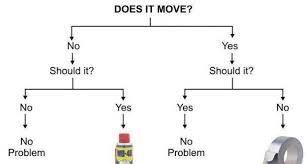
WD40 lubricant is not good for sealed bearings so don't use it, choose a silicone spray instead. Dirt clogs up moving parts in a rowing boat.
Spare parts for clubs. You need a tool box and a supply of consumables which are kept easily to hand for quick fixes while washing boats. Make it easy for your members to fix these things fast.
Our suggested list of spare parts:
Washers and nuts, adjustable pusher-outer spacer washers, shoes, seats, gates, steering wire, hatch covers, undercarriages, metric and imperial nuts/bolts, oarlocks, wing nuts, top bolt nuts, foot stretcher bolts, seat wheels, shoelaces, slide end stoppers, under-slide wing nuts, bow balls, scull handle grips, sweep handles.
If you buy replacement parts, always buy two!
The most common thing that happens is a small nick in the hull under the water level. Use tape to cover dings in the gel coat and paint. Cut the tape with scissors. Rub over the damaged area to warm it, cut the white tape and put it on when the area is a warm so you get a good bond.
Larger dings that go through to the honeycomb layer - this needs a waterproof repair. Get epoxy and a repair kits for hull holes to do yourself. Micro-balloons are like a fine powder which you mix into the epoxy to make it thicker to pack into the hole. Makes it more solid.
Buy a small pot of touch-up paint from your boat builder. Or if you have coloured boats, a boatbuilder recommends making it look nice by using a PVC wrap like they use on cars. It costs less than a respray. And if you have a problem, it's easy to replace.
Get the skill in the club - find people confident to do a repair. Keeps costs down. When equipment looks nice people look after it better.
17:30 Find a local repair shop. Use a professional who understands carbon fibre. They don't need to be boat / rowing experts. Some boats have to go back into the mould to repair if it is more substantial damage. That is a professional job.
20.00 You can get a boat resprayed. Remove the internal fitments yourself, get it sanded back, resprayed and then refit the foot stretchers and internal fittings yourself.
Marlene helped a team repairing a wooden Stampfli quad in blond mahogany.
A challenging topic you need to have a club policy. Know what the insurance excess (deductable) is. Some clubs levy members when they don't want to make an insurance claim. Some portion of membership dues can go into a repair fund for parts, materials and professional help.
Trailer repairs were paid for with a 20p (UK) levy on all people going to race. Can you get a fund large enough to pay the insurance excess? Plan over the long term for the recurring costs e.g. trailer tyres.
26:00 Look at the lifespan on equipment.
Do you sell boats second-hand? What is the best age to sell a boat so you get a good price and invest into new equipment. Or do you use boats "to the limit"?
What can you do with old boats so they don't go into landfill? Can you sell them to restaurants?
Without a strategy your club will struggle to articulate goals, to align the disparate needs of members and coaches and to deliver a high quality rowing experience.
A strategy can by written by a board or committee, a sub-group or in a working session with members.
Be clear on what you want to do – why does the club exist? Have a “vision statement” by all means, but mostly I prefer this wording because it is clearer to members. Don’t forget your club’s history, but also look to the future.
A word of warning, don’t get lost in “We want a bigger boat shed / larger membership”. Something like “We are here to encourage people to row or achieve the best they can achieve” is probably what you’ll end up with.
Divide the statement up into roles – these could be departments and a committee or sub-committee jobs.
Then write a focusing statement for each one of these. Coaching – the vision statement for coaching could be “To provide opportunities for all potential coaches to reach the level of coaching they desire.”
The vision statements for each department should be similar to each other – don’t just leave the vision for the head of the organisation or Captain / Chairman.
Then list a maximum of 5 things you want to achieve for a 3 year period.
Identify the three things you can do now. It might be the whole 5, if you are really resourceful, but focus on the top 3!
For these three indentify the skills and qualities you require in the people to lead each area and do the things that need doing.
The central group (a maximum committee size of 5) is your starting point, then identify the individual people the committee are going to approach with those skills. Matching the tasks with the skills is really important.
Go to each person with a well-prepared little pack explaining the situation and ensure that throughout their job/ tenure one person from the committee will be there to guide and support them throughout.
Committee people guide and support rather than doing the hands on work.
Too often clubs sit there and wait for people to come and volunteer their services. When Australian sport was at its peak in the early 80s they were approaching people in just this way. That’s how they built the grass roots which led to a fabulous Olympics in 2020, 15 – 20 years later. In my view, England is probably doing better at this than anyone at the moment of writing.
Kiwi Sport came out of Australia’s “Aussie Sport” organisation. They were breaking things down into bite size chunks for all clients. This meant miniature versions for children e.g. rugby fields were smaller and netball goals are 8 feet rather than 10 feet off the ground so little girls could score. Made everything appropriate to a client group.
If you identify “departments” within the club to cover the main areas of activity (coaching, equipment, membership, social etc). Then make a list of things to do over the next 3 years. Ideally your list will have some things for this year/season and some that are for next and then year after.
It may be that you have 30 jobs to do on your list. To get these done, you must target 30 people to do the job; ideally each one with an assistant. Why so many? Well by focusing each person on a single task, you’re far more likely to get things done. If 30 people is too many or you don’t have that nubmer available, go for fewer tasks.
The reason to recruit a young assistant for each task in your department is to get someone onto the team who helps for 2 years and then they can take over the whole job.
In theory every coach should have a young assistant coach. Every secretary should have a young secretary assistant.
If you think you can’t do this – you’ll be amazed how many young people are keen on this sort of thing but get scared off it – my friend's daughters wanted to umpire netball but were told there was a 4 week course to learn first. However, I believe they could have been given small umpiring tasks alongside an experienced umpire and gradually cover the 4 week syllabus over a 2 year period.
Have a written values statement that covers the purpose and philosophy of the organisation [that was step 1]. That becomes your “bible” and keeps everyone on track and answers most questions. If anything is presented to the committee, they can judge the proposal against this document which will show whether the proposal supports and furthers the aims of the club or not. Makes decision making easy.
In the contract document [which could be your membership application form] you put:
Parents and children both sign the contract when they join. This should have a back-up statement covering:
This sets out expectations and the boundaries of each role and prevents conflict.
The wrong reasons to write this is as a result of having troubles with parents arguing with the referee on the sidelines and it became confrontational.
The right reasons are to create a positive environment for everyone – create it as passively as you can – welcome people to the set-up and say we’d love to have you and here are our expectations.
Masters rowers are in an unique situation in many rowing clubs. They are often athletes, volunteers, parents, coaches and committee members. They run the club.
Most are selfless and deliver amazing services in pursuit of the club goals - often these are skewed towards the young (under 18) members.
As masters we are frequently members for many years - most children are members for 4-5 years; young people for 3-8 years by comparison.
Challenges masters groups face
All of which points to the necessity of having a plan for the whole club so that different groups' needs can be balanced and priorities agreed and set.
Boat damage and repairs happen - what can we do to mitigate?
Crashes, prangs, nicks and scratches happen to rowing boats.
We row on waterways containing debris. We fail to land our craft carefully, and carry them carelessly, hitting riggers, doorways and other boats.
Boat damage is a constant issue for boat owners and clubs.
Many choose to add covers, mats, towels or other ‘defensive’ wrappers to their boats when they are on the rack. I’ve got a tennis ball over the rigger pin and others use foam pool noodles and rubber stoppers.
Adding protection may encourage a lack of care from other boat uses who think that because it’s covered, they don’t need to keep an active watch.
Our club tries to enforce a rule of no talking when carrying boats in and out of the boathouse. You can hear the person who is doing the commands.
Has anyone's club managed to implement a culture for reporting boat damage that works? We have tried to convince people time and time again that they won't be blamed, we just need things reporting but to limited success. Boats are frequently damaged in ways that the people doing it must have known and we find out down the line when someone notices it....so frustrating.
Discussion on Masters Rowing International Facebook Group
Nobody wants a broken boat preventing them going out rowing.
These are the reasons club members don’t take responsibility for reporting issues
We have to do better.
Find reputable Boat Repair services from the Rowing Directory.

Masters rowing is very different from club and youth rowing. So much so that finding a “mission” or “vision” for a rowing club that includes masters has stumped many clubs and groups.
We masters know what we want from our rowing.
Mostly it’s these 5 things (grow membership, more regattas, social events, get coaching, & good boats to use).
Our frustrations are often due to mis-alignment of club mission with the aims of the masters training group.
James Dundon coaches at 612 Endurance in Minnesota, USA and got in touch to share the detailed mission statement that his group has crafted.
My interest in it stems from the incorporation of expected aspirations, behaviours and also the concept of a “Non-Zero Sum Game”. Read the full mission statement below.
If your masters rowing group hasn’t yet got a vision or mission, ask us how to craft one. We have a couple of articles which we can share to help you ask the right questions of the group members so what you come up with suits your unique situation.
Join our community and get our exclusive Faster Masters Rowing Magazine, packed with tips, techniques, and inspiring stories. Includes four new articles monthly.