
When did you last walk past your club’s erg room and think, “that looks like fun”?
A journalist writing for The Economist once admitted to peering into her university boathouse at 7am and seeing 30 sweaty men rowing in silent, robotic unison. Her verdict: boring, joyless and elitist. Later, on a trip to New York, she tried two indoor rowing studios, then a high-intensity class back in London. Candlelight, thumping playlists, instructors cheering the newcomers. She left a convert.
What hooked her wasn’t the machine. It was the crowd, the music, the numbers on the monitor and the chance to beat the person next to her. (Her stroke rate went from 35 to over 50 at a sprint. We won’t be coaching that, but we admire the enthusiasm.)
Studios built whole businesses selling rowing as sexy. So what does this mean for those of us who row on the water with clubs who struggle to fund raise enough to keep going?
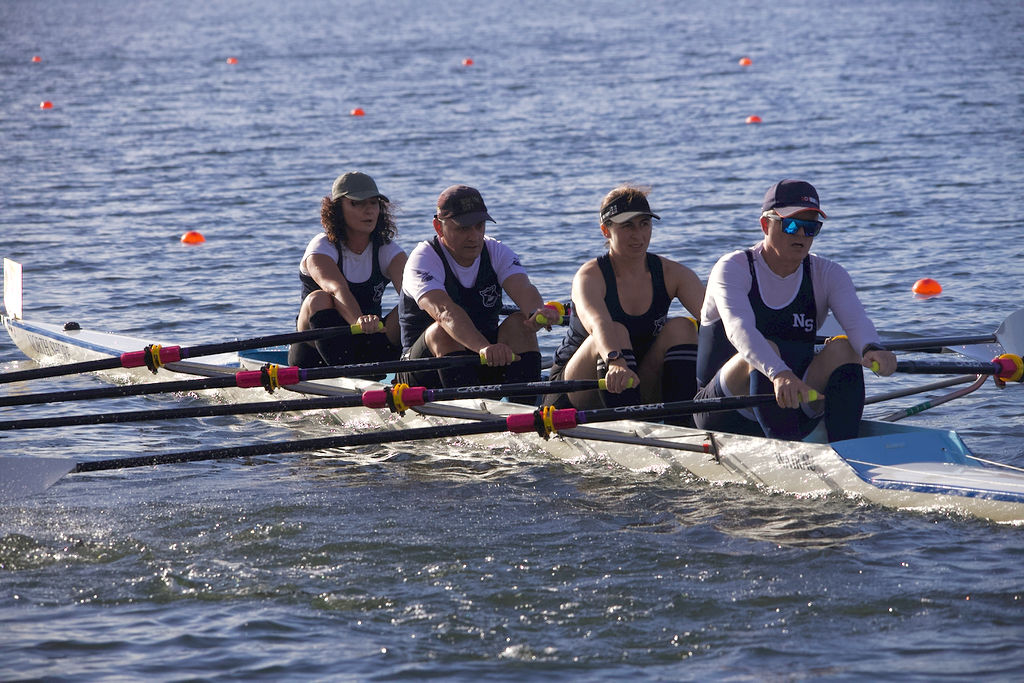
What’s in it for on-water rowing?
More people than ever have now sat on an erg, know the catch from the finish and understand what a hard 500m feels like. That is a ready-made pool of potential club members, already fit and already curious. Rowing’s image shifts too, away from blazers and boat races towards something ordinary people do on a Tuesday night.
But indoor numbers don’t convert by themselves. In UK, an estimated 10,000 school students take part in indoor rowing competitions each year, and one writer asked why so few of them make it onto the water. Interest needs an invitation.
Is growth good for your club?
Yes, if you can hold on to the people who come. Derby Rowing Club ran back-to-back learn to row courses for 68 people and kept 82% of them. Their insight: retention was highest where a squad already existed for newcomers to join. Indianapolis Rowing Center got 120 adults through the boathouse door in a single month, and 40% stayed. My club, North Shore in Auckland retains over 80% of our learn to row class - but only if they form friendships and enjoy the challenges set during the course.
Growth also has costs. Irish clubs surveyed by Rowing Ireland named coaching capacity, equipment, safety cover and facilities as their main barriers. In New Zealand, masters make up nearly 30% of club membership, and many already struggle for water time in peak season. Recruiting without boats, coaches or a squad to move into creates frustrated novices and resentful members.
The Boutique Effect
Call it the Boutique Effect. The studios didn’t change the rowing stroke. They changed the experience around it. Here is what we can borrow.
- Make it social. Rowing together in rhythm is the product. Welcome newcomers loudly and by name.
- Make progress visible. Erg scores and simple benchmarks give new rowers proof they are improving.
- Feed the competitive streak. Short internal races and erg challenges hook people who would never enter a regatta.
- Give a clear next step. Every learn to row course needs somewhere to go afterwards: a squad, a coach, a crew.
And the club doesn't have to run these sessions themselves - find a local personal trainer, offer them your gym or ergs in off-peak times when the club members aren't using them.

Sweat your assets
Most boathouses are busy at dawn and on weekend mornings, then sit empty. Erg rooms, gyms and clubrooms are assets your club has already paid for. Personal trainers and fitness coaches are always hunting for space, so invite them in. A trainer running lunchtime or evening erg classes brings paying clients through your door, earns the club hire income and introduces dozens of people to your building and your sport. British Rowing’s Go Row Indoor Club scheme is built on the same idea.
Out-of-hours hire only works if it doesn’t land on one volunteer’s inbox. Venue booking software such as SpacetoCo lets you list your spaces, take bookings and collect payments online, so the boathouse earns its keep while you’re at work. Or you can install their venue booking software directly on your website (SpacetoCo works in UK, Australia and New Zealand).
| KEY TAKEAWAY Growth is only good for your club if the pathway exists before you open the door. Recruit to your capacity, then build more capacity. |
Masters are well placed to lead this. Around one third of masters rowers started as adults, so we remember what it felt like to be new. We’ve shared ideas on running better adult learn to row classes before. If you’d like to talk through a growth plan for your club, book a confidential Rowing Concierge chat.
Self-assessment: is your club ready to grow?
☐ We know how many seats, boats and coaches we can offer newcomers each week.
☐ Every learn to row graduate has a named squad or crew to join.
☐ Newcomers are welcomed by name and celebrated at their first session.
☐ We know when our boathouse sits empty, and who could use it.
☐ We have talked to at least one local personal trainer about hiring our erg room.
☐ Beginners get simple benchmarks to measure their progress.
☐ We run at least one fun internal competition each season.
☐ Existing members still get the water time they need.
