Alex Wolf & Sam Dutney in conversation. Two leading thinkers and innovators for masters rowing discuss strength training for masters.
The principles around maximal force applies everywhere. Teach athletes how to express maximal force. Learn the ceiling of what you can do. Turn muscles on and off.
Practice being forceful really quickly.
Building habitual capability - your day to day. Take a small change from what you do now and a little bit more than you can already do. That's enough.
Strength training is one of the most potent stimuluses for our health. The only thing which can repair your muscle structure is targeted loading, not rest.
The knee takes a load of up to 2 times body weight for rowers - masters it will be 1.2 to 1.7 times body weight. When squatting the leg is not the limiting factor - the lumbar spine tolerance is the limit. This is not the case in a rowing boat because the forces are horizontal.
The 7 stroke max test has a strong correlation to performance. Increasing this has got a 1:1 correlation with improvement.
How can you know if the improvement will come from force production or maximal force?
The rowing stroke is primarily concentric force production. Does eccentric have an effect? Yes, it's a long stretch shortening cycle. The end of the drive back to the catch has a significant contribution to boat speed.
The Reactive Strength Index. How you control a decelerating force and turn it round into an accelerating force. Rate of force is how much, when and how quickly.
Utilise each exercise efficiently is key. The king of exercises is the one that reaches your outcome. You must lift enough to create an adaptive response.
Want easy live streams like this? Instant broadcasts to Facebook, YouTube, LinkedIn. Faster Masters uses StreamYard: https://streamyard.com/pal/d/5694205242376192
Learning new things as an adult is not the same as when we were younger.
With any endeavour, there is a progression of acquisition of skill and I like to think of this as a ladder of learning - you start on the bottom rung and work your way up.
This metaphor is helpful for coaches as well as athletes. Because if you can work out where you are, it becomes clear where the next step is and the next skill you need to acquire. This makes coaching lesson plans easy - it's obvious what to teach next and this applies to self-coaching as well.
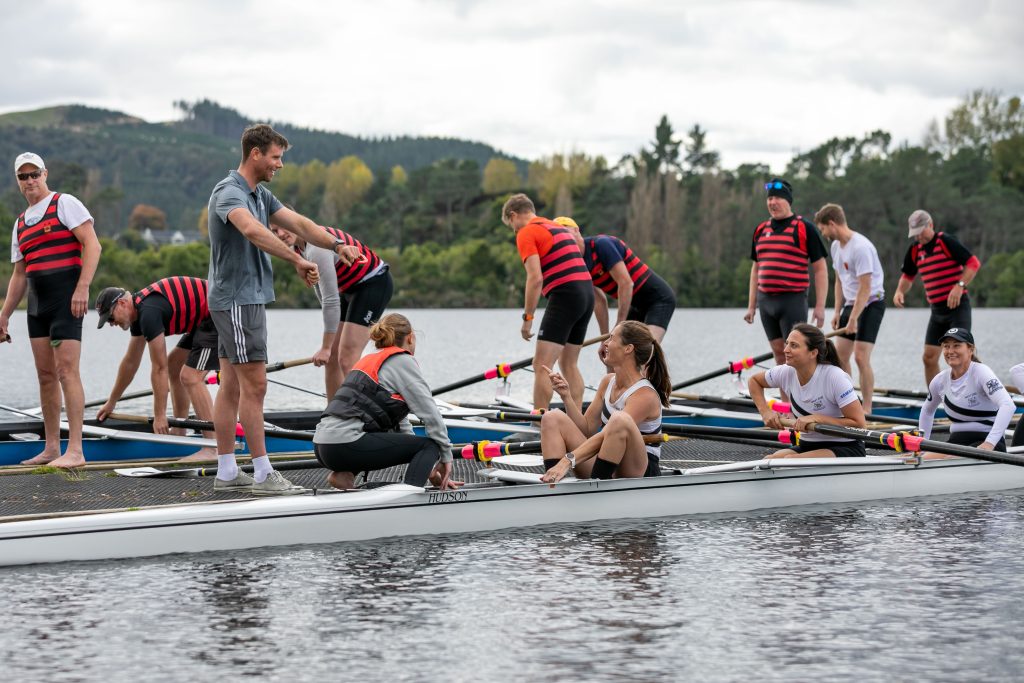
You can work out for yourself where your rowing and sculling skills are using our Rowing Skills Checklists. There are 3 - Beginner, Intermediate and Advanced.
Within each are groups of skill
Each checklist sets out things which you should be able to do if you are moving towards that skill level. The beginner level includes turning the boat and being able to follow your local navigation pattern; intermediates should be able to row or scull with the oars not touching the water on the recovery and having experience in small and big boats.
These are flexible checklists - you don't have to do every beginner skill before you start attacking the intermediate ones. In my experience as a coach, most athletes have to master the basics before advancing.
Use these lists for your club by adding in your local navigation rules, information about other water users (e.g. if you are on salt water or a tidal river) and local "conventions" in navigation. Some clubs use these to test skill before an athlete can move into a training group or take a single out unaccompanied.
Get the full 3 checklists - Beginner, Intermediate and Advanced in the Coach Mastermind product - join for $10 (1st month) renewals are $25 per month. Cancel any time.
Friends and business associates of Faster Masters Rowing have the following camps planned.
Not an exhaustive list.
2026 - Masters Rowing February Symposium
Camp Dates:
What is offered: 2 day or 4 days of rowing, rowing and more rowing with unmatched coaching! Sweep and Sculling options—you can even do both! The symposium will combine on the water rows, with in-depth video sessions and on-land convention style seminars to help you do a deep dive into becoming a better and smarter rower.
Please visit the following link to register! https://sarasotacrew.org/index.php/joinus/campandclinics/mwintercamps?id=32
— at Nathan Benderson Park.
Hosted by Club Naval Infante D. Henrique located near Porto. 25km of stable, sheltered water, on-site accommodation for up to 42 people.
Events: Regata Internationale de Gondomar in May; Aerobic Monsters Singles Regatta in October.
http://www.cninfante.pt/
Enquiries to [email protected] +351 224 831 194
Specialists in beach sprint rowing.
Flexible Training Options: Understanding that national teams often bring their own coaching expertise, we offer two training options:
Self-Coached Camps: Utilise our top-tier facilities, including on-site gym, wellness activities, and boat equipment, while maintaining your team’s coaching structure.
BSA-Coached Sessions: If desired, benefit from our experienced coaching staff to provide additional expert guidance tailored to your team’s needs.
Details & registration: https://www.beachsprintacademy.com/book-our-facility
Small-group sculling camps for 4–6 participants, mostly in singles.
Five days, two sessions per day.
2026 Camp Dates:
Details & registration: https://aramtraining.com/ref/13/?campaign=Newsletter
We do not run camps. Our self-guided online courses Sculling Intensive Camp, Erg Intensive Camp, Nutrition Intensive Camp, and Square Blades Challenge can be purchased - go to Online Courses and browse Skills and Technique.
Rebecca Caroe and Grant Craies are available to visit your camp as coaches.
Camps in Montenegro, Croatia, Slovenia, Italy, Austria, Bulgaria, plus:
Various dates; check their calendar.
2026 International Camps:
Details: www.allamericanrowingcamp.com
2027 private group camps (4–12 people) also available.
Sabaudia, Italy
Aviz, Portugal
Aiguebelette, France
Please check the Masters Brochure for more info.
April and September 2026
Advanced sculling technique.
scullingcamp.rojabo.com
Tailor-made rowing camps for all levels.
Row in mixed crews with Olympians and receive coaching from Italian National Team coaches.
Various dates and locations across Tuscany (Florence, Pisa, and more).
rowingintuscany.com
Located in Vermont USA camps run from May to September. Sculling only in 3,4 and 6 day formats.
As of the time of writing (Dec 2025) all camps are full for 2026.
https://www.craftsbury.com/sculling/camps/camps-home
Three-day sculling clinics
December 1, 2025 – May 3, 2026
floridarowingcenter.com
No in-person camps for 2026.
Offering virtual indoor rowing classes:
Nov 2025 – Mar 2026 (USA Eastern Time):
$15 per 60-minute class.
Fundamentals + interval work.
p3pe.net
Five-day rowing retreats combining yoga, breathwork, wine tasting, and cultural experiences.
No rowing experience required.
2026 Dates:
http://mindbodyrowexperience.com
Intermediate/advanced 3-day sculling camps.
2026 Dates:
Kevin McDermott Camps
Dan Duxbury Camps
Coaching available on request for clubs, organisations, private groups, or individuals.
Sessions can take place in Amsterdam or at your location, by arrangement.
Best suited for personalised technical coaching and small-group development.
enjoyrowing.com
How to increase stroke power using three layered drills.
Timestamps
These are all part of the Drills Compendium (24 drills + 3 ebooks bundle). Masters rowers tend to row a good leg drive and arm draw but neglect the back swing. The back is crucial to joining the leg drive and arm draw. How to ensure back swing adds to the speed of the boat.
From the catch (where boat is slowest) the stroke power takes the boat to its fastest speed. After the leg drive is half completed you need to start to layer the back swing so it overlaps with the end of the leg drive. Later the arm draw overlaps with the end of the back swing. Learn how to use each body part in turn without dropping boat power at the changeover.
This is the least intuitive part! Start with legs straight and arms straight with blade in the water while leaning forwards. Swing your back to take the stroke and take the oars out when your. back swing is completed. Do this square blades and then once confident, add power to the stroke by engaging your core and glutes.
06:00 Body and arms and half slide rowing are the second and third parts of this drill. The glutes provide the connection between the legs and back. By building up the stroke progressively you should feel the spoon of the blade accelerate through the water - as you add in more body parts this must continue. The arms have to pick up already moving water (from your back swing) and make it faster still. In a crew add in more people so the boat goes faster - notice how your body movements have to change to take account of the boat moving faster. If you aren't adding to the acceleration you should feel that you have no pressure on the end of the blade. Try an exaggeration by rowing at half slide and finish your legs/back/arms at the same time.
The way we teach is designed to work for adult learners. We teach how we row and then make it progressively harder so you can continue to challenge yourself, continue to experiment with ways to make the movement and lastly check your experience with your crew mates - am I getting the right feeling here? Even the most experienced rowers can do these alongside the less experienced.
Do the drills at least 3 times in a single practice so you're familiar with the drill and can see your progress as you do it better each time.
Want easy live streams like this? Instant broadcasts to Facebook, YouTube, LinkedIn. Faster Masters uses StreamYard: https://streamyard.com/pal/d/5694205242376192
Learn steps towards getting a good catch using drills.
Timestamps
00:45 Am I done learning the stroke yet? Asked an athlete.... only once!
The catch is challenging to learn - supporting your learning with drills means you can self-coach as well as getting coached.
Michael sends his crews the drills video the night before practice. Athletes need to know what to do in a drill and (importantly) why they are doing this drill. There are two main types of drill - exaggeration drills and isolation drills.
This is where learning the catch starts - the height of the handle has to be understood so you know how high/low the handle needs to be. Describe the stroke cycle in high/low handle heights including the "ramp up" towards the catch position. Learn this stationary in the boat. When the oars are flat on the water at the catch, the handle height is the same as when the oars are squared. Teaching how to arrive at this height the drill is "Slap Catches" so the athlete knows the precise moment their handle reaches the correct catch height - and the aural sound helps to align timing on both sides of the boat. Learn when to go up "the ramp".
You have to actively lift your hands to make the catch 'shape' with the handle. Learning when and how to do this is the next stage in progressive learning. After squaring the blade, if you make the catch shape too early, the oar hits the water.
If you square and your handle is too high on the recovery the oar will hit the water. An early square helps and you can figure out how high (low) the handle needs to be on the recovery so as to not hit the water. When to make the shape? Use the second drill - backsplash drill - so the lower edge of the oar hits the water just as the handle lifts. You can hear and feel the backsplash.
This is relative to your body movement and the seat. Your seat is a good proxy for body movement because there's a short moment when the seat rolls forward and stops as it changes direction. That's when you need the oar to already be under the water. The third drill (sweep) is to row with inside hand holding the back of the seat so you can tell when it changes direction. In sculling row with one oar only (someone holds the boat level). Watch the height of your knees too as this is also a good visual marker.
Our discussion continued around ways to keep handle moving towards the stern while placing the oar at the catch. This series can be learned in a few practice - do two each time you go on the water. Take care that you understand the why as well as the how.
Want easy live streams like this? Instant broadcasts to Facebook, YouTube, LinkedIn. Faster Masters uses StreamYard: https://streamyard.com/pal/d/5694205242376192
What attributes does a Masters boat have as accommodations for increased age? Van here, in Massachusetts US.Masters Rower.
For the last 15 or so years I have been rowing in a Graeme King designed single I built in 2007..
I added a Rowfit wing rigger, in consultation with the designer, to replace the side mount rigger that the boat was designed for.
It has been a great boat and I have rowed it every year at least 70 times a year in all sorts of venues. I have even raced it a few times although I never did very well, I am not a fast rower and I was carrying 40 extra pounds until a few years ago. I have attached a photo of "Boanne" (the Celtic goddess of rivers and poets)
But last year, rowing with other people which I rarely do, no judgement please, I was on a strange river and got caught in a whirlpool below a bridge abutment and I capsized into cold water. It was a bad situation but I survived the hypothermia thanks to the kindness of strangers. However the incident left me rattled and in fact fearful.
I was forced to look hard at the whole activity of rowing and how I approached it. I am back now rowing to my usual schedule of 3 or 4 times a week now. But I can't feel the total lack of fear that I had known for many years. So I am rethinking the whole thing.
I am 72 but I absolutely am not going to stop doing what I love and what is such a critical part of my self image.
However I am only going to row in really good to excellent conditions, being retired and only working part time now gives me the freedom to do that.
I love my boat but it is getting on but I think it may be time to build the "last boat". I have rowed boats I have built for myself for the last 30 years, all wood and carbon. I have no interest in rowing a factory built boat, I respect those boats but I don't want one.
I recognise that I want a boat with more initial stability and I keep thinking back on my old Kingfisher that I built and rowed in the late 90s. However that boat is based on more traditional sculling designs and I would like a more modern boat.
This is a long way to get to my question for the Masters rower community.
"What attributes does a Masters boat have as accommodations for increased age?" Production boats are useful for comparison but I am not going to buy one.
Incidentally I have been communicating with King about this project and we both agree that the KIngfisher design is the logical starting place. If you don't know that boat you can look it up in the "Wooden Boat" magazine archives.
I built and rowed one back in the late '90's, I regretted selling it, the most comfortable boat I was ever in. But it was an old fashioned style boat with soft decks and open seat deck. It also had a hard chine because it was initially designed to be built with 3mm plywood. I would make some changes to a hard deck and enclosed cockpit. I would keep the hard chine and width simply for the increased security and comfort, this is not a boat I will ever race.
Thanks for all you do, Van.
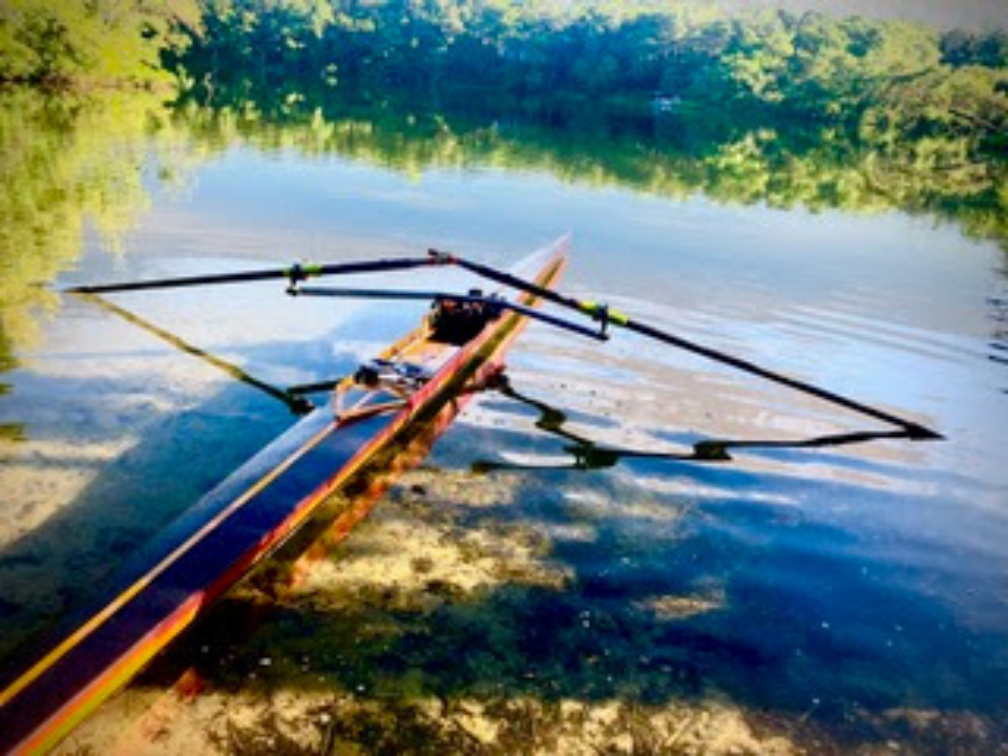
There was a lot of advice and recommendations - I've listed below the boat designs mentioned.
And some of the comments, to read the full post you have to join the group [please answer the membership questions - these help us to filter out spammers].
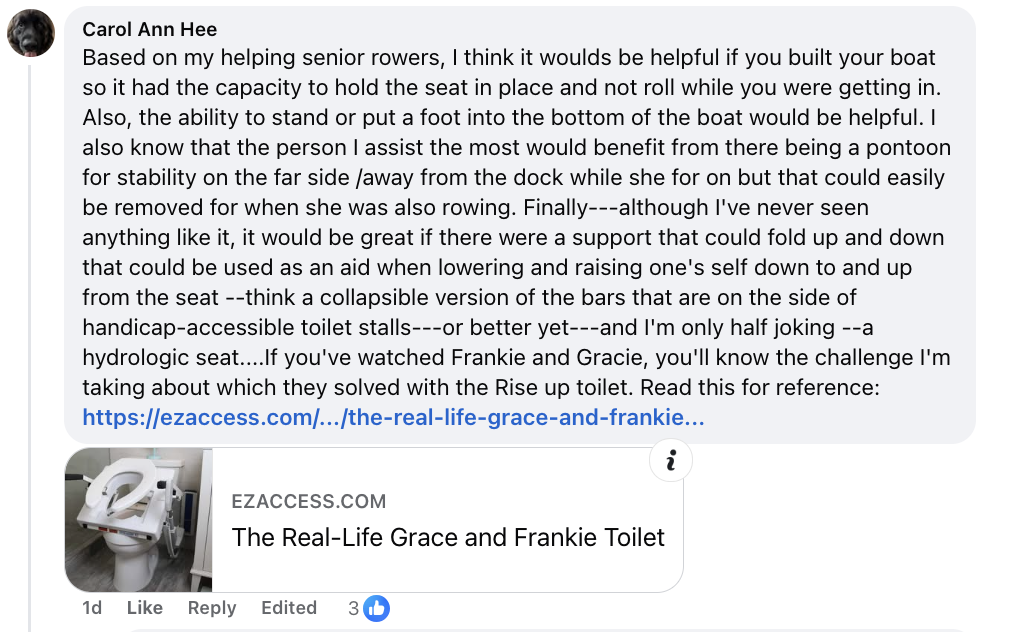
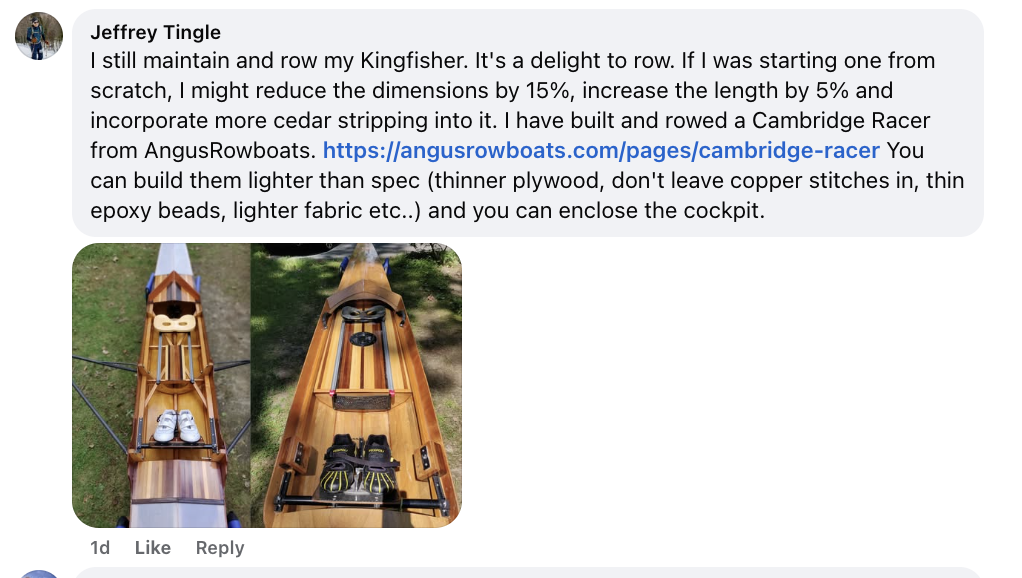
The principal design changes discussed include
 mind. Also why I lift. Regarding “tenderness” (stability) I would say use it (balance) or lose it. I teach adults how to scull with pontoons — for like an hour, then I invite them to learn how to row for realz without em, i.e. “strugglefest”. All that said, the stable AF CLC okoume ply wherry my partner built can be rolled to the water near me, and can be rowed in any conditions, including 30F water. Always draws compliments from the shore. But yes, does use the fairly limited Piantedosi drop-in rig. Note to any entrepreneurs who have read this far: please invent a better rig to compete with the Piantedosi!!
3 weather data points you need to know in advance whether you can row the next day.
Timestamps
Mostly we want to know in advance and apps are useful. What should you be looking out for? Easy choices are - will it be sunny or raining? However the really important data is wind speed and wind direction for the time you plan on going rowing. Also consider air temperature / water temperature plus tide if you row on a tidal waterway.
WindFinder and WindGuru both track wind (designed for sailing). They layer information such as a map graph animated to show wind movements over time.
Wind Direction: Where I row if the wind is coming from the East and is above 10 knots speed we can get on the water. This direction blows straight onto our pontoon. Finding the wind shadow on our lake can enable us to row when winds are higher.
Wind Speed: The limits for us are about 12 knots for big boats, less for singles and doubles/pairs. The WindFinder app shows gusting wind speeds as well as the base wind speed. This enables us to interpret the data in a more nuanced way. Knowing the time of high and low tide is helpful too (for our other boathouse location) because low tide means navigation is more congested and hazardous.
This is a Norwegian app - using the same base data points but their own unique algorithm to forecast ahead. Where I live the weather can often move through quicker than forecast. This app is much more accurate than the others and it also gives hourly updates rather than 3 hour increments.
Finally- when you thin the weather is going to be marginal, we found that deciding whether to row when you're at the rowing club is better than trying to decide the night before. Decide In The Shed; Not In Bed is our mantra.
Want easy live streams like this? Instant broadcasts to Facebook, YouTube, LinkedIn. Faster Masters uses StreamYard: https://streamyard.com/pal/d/5694205242376192
Many coaches started doing rowing video analysis markup with a tool called Coaches Eye - sadly it was withdrawn September 2022 and so we have all been on the hunt for a replacement.
We have found some for you to consider.
This is free on the Apple Store. You can import your videos into it, run at slow speeds down to 1/8 speed, annotate, measure angles etc. Also offers In-App purchases for distributing video to athletes.
You can upload two videos side-by-side and compare them.
This is a tool which does physiological measurements for you - it scans your video of rowers and tells you angles between the limbs and the stroke length and sequencing. The process is called "telestration".
Clearly useful for tracking progress as your crews adapt to a particular style of rowing. Downsides, it's THEIR analysis, not yours and it is only numbers. The coach needs to first have a good idea of what numbers they want. The app is free at the moment as it's in beta.
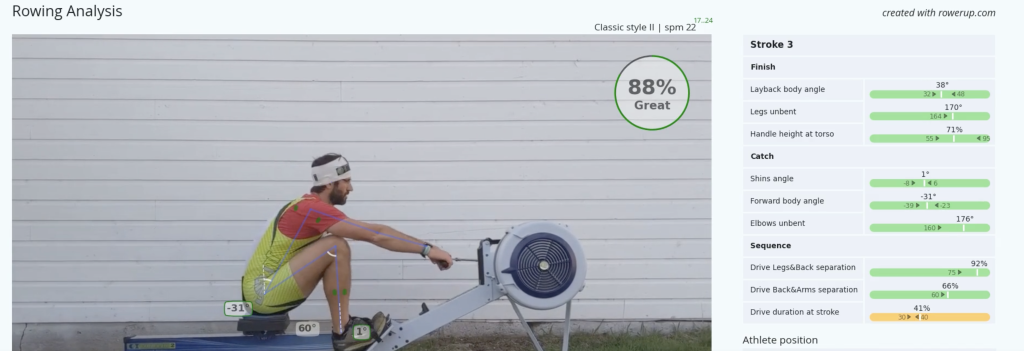
This is the closest alternative to Coaches Eye - annotate your video with lines, angles and comments. It also offers semi-automated angle tracking (like Rowerup). Most usefully it allows side by side comparison of two videos which you can synch e.g. to the catch of one stroke.
The app is free and the creator asks for optional Patreon subscription support.
This is an app and designed to offer simple annotation and most usefully "skeleton mapping" - a stick man drawing tool. So you can automatically see where the rower's limbs are and how they move. That saves a lot of time drawing lines! It has slow motion replay, and side by side options and also allows text messaging to your athletes from inside the app.
The coach version is only available in the Apple app Store for iPad users. The Athlete version is in the Google Play store as well. The coach version includes in-app purchases.
This article was first published in the Masters Rowing Magazine in May 2023.
How to make swapping easier, the differences, visible signs of what goes wrong and drills to help you swap sides and codes.
Timestamps
Masters frequently get asked to swap - first couple of times you are clumsy and have lost fine motor skills. Differences are about oar handling, movements up and down the boat and round the rigger.
Get videoed or ask the person sitting behind you to tell you what they can see.
Practice these in the warmup.
Want easy live streams like this? Instant broadcasts to Facebook, YouTube, LinkedIn. Faster Masters uses StreamYard: https://streamyard.com/pal/d/5694205242376192
Coachability is a key skill for masters. Because you can change your technique after getting instruction.
A coach wrote to me this week asking for advice. This is what they said.
The most frustrating aspect I find is the athletes who you spend time coaching that change during the outing but then revert the moment your back is turned. I've tried diagrams, analogies, drills, even crying!
I'm sure you aren't THAT athlete. Look from the coach's perspective. What is it that prevents us from making progress when we are getting coached?
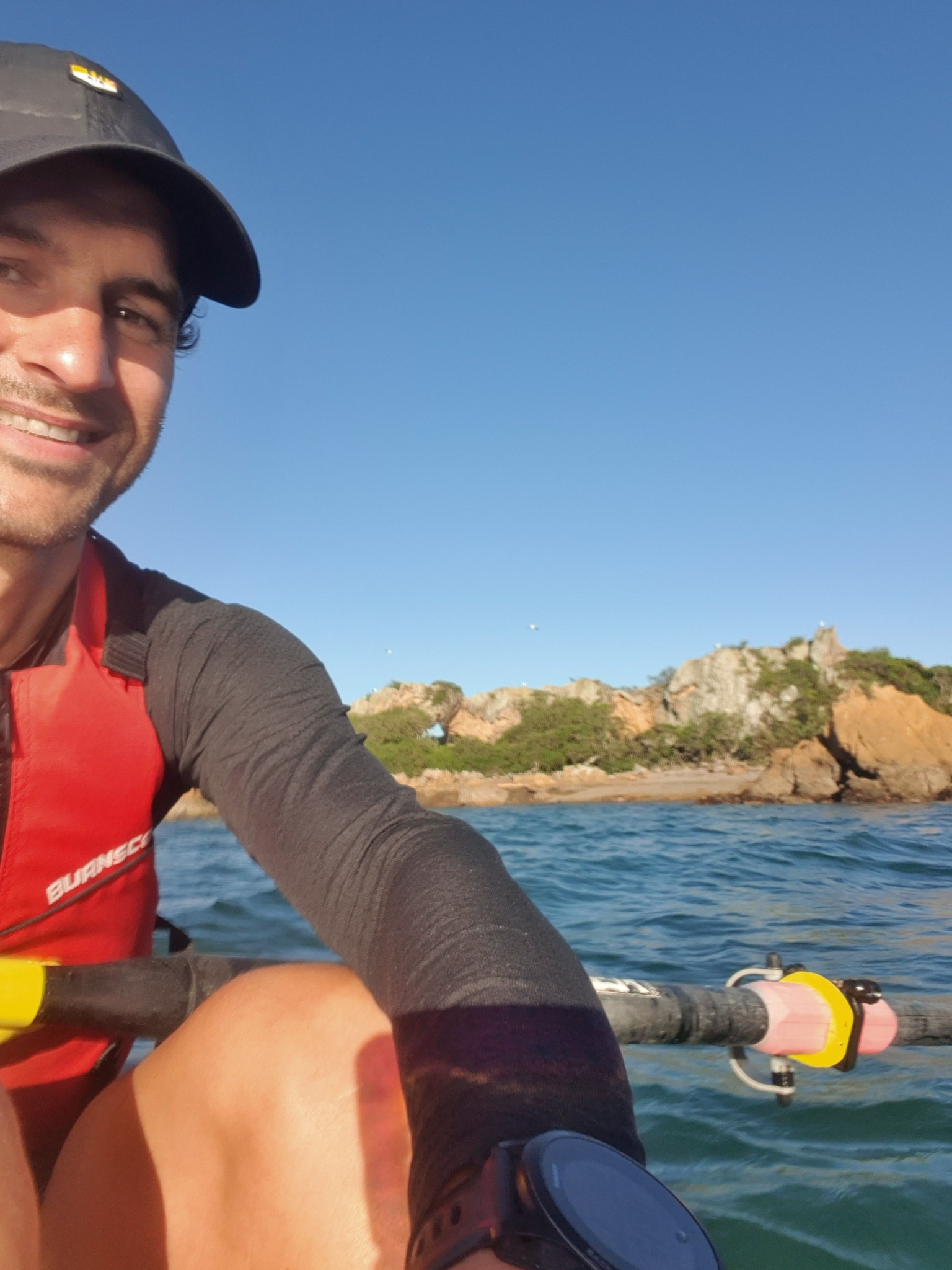
Oooh, love this one. Tom Terhaar once said I was the most coachable athlete he’s ever worked with. I don’t take credit for this: mostly, it’s innate proprioception that I was born with. But, if I had to name what I consciously do, it would be:
It’s a bit more difficult to understand in an adult, but I suppose it still boils down to the reasons why someone is rowing: I’m not saying that receptiveness to coaching is solely or universally an issue among L2R masters, but
I wonder if understanding what different people want to get out of the sport might give coaches an insight into what will make them more receptive to technical guidance.
Join our community and get our exclusive Faster Masters Rowing Magazine, packed with tips, techniques, and inspiring stories. Includes four new articles monthly.