Coaching adults makes it hard to give feedback. Three things to consider.
00:45 Masters may not have a coach. We help each other with in-boat coaching. There isn't an obvious person who is a leader.
Feedback is a delicate topic. Some people may not want to hear what you have to say and you may not have sufficient authority in the eyes of your crew mates.
Is there a focus for this workout practice? By setting a framework of expectations before you start rowing, there's a structure which everyone can use during the workout and at the debrief afterwards. Ask each athlete "how did it go?" and "What were you working on?" So you can align your feedback to their needs.
The group dynamic risks whatever is said in the first person who talks tends to lead everyone else to follow their theme. Say one positive thing about the workout. Avoid a spiral of self-criticism. Give each person one thing to work on and one positive message about the workout. Strike an appropriate balance that the athletes are ready to receive and understand.
The tone can be different for this as the whole group watches together. Set the framework at the start - after watching the video you can say anything you like about yourself and your rowing. But observations about other people can only be positive remarks. This helps show that care is needed when choosing words.
06:30 What to look for in a video
First ascertain what the athlete can see from their own technique. Playing the short video on a loop means people can watch fast and several times before getting bored. Up-skilling your "eye" watching rowing and sculling so you know what pattern of technique you are trying to achieve and how that compares to your rowing video. Can you help the athlete to see what you can see? Do they realise they are squaring late? Small refinements require skill at looking and seeing subtle movements.
Ask if they want feedback or coaching first. The other party has to agree to receive feedback first before you give it. When someone says yes they want feedback you have prepared them mentally to receive what you are going to say. They will be more minded to do something about your advice afterwards.
11:00 When coaching masters only focus on one thing per workout, It's hard to think of more than one thing at a time, So wrap up the discussion with the one thing you want then to work on next time. Set up the best ways of enabling each other to hear the advice and act on feedback offered.
Want easy live streams like this? Instant broadcasts to Facebook, YouTube, LinkedIn. Faster Masters uses StreamYard: https://streamyard.com/pal/d/5694205242376192
What is a rowing mindset? Do you need one? And can it be trained?
Timestamps
01:00 Rowing for life Welcome Jack Burns from Edge Rowing who has an interesting backstory. He enjoyed the process of learning to row rather than the external competitions and winning. His struggles were around injury and mindset. He learned the systems and tactics for mindset improvement in a systemised way.
03:45 What is performance mindset? Ability to handle external factors, to perform to the limit and ability to visualise what you want to achieve. Where is your attention going, how to handle distractions and nerves while dialling your focus to what really matters. The Edge Rowing business is about getting the edge. Bringing high performance focus to anyone. Jack wanted to say he had put everything he could into achieving his fullest potential.
08:00 Rebecca's 19 year old self also worked out how to focus.
09:45 Rowing gives transferrable skills for life. Jack's early rowing progress was based on his drive and his will. He got injured with a good mindset and a good trajectory. When he returned he had a bad mindset and was lying to himself about this. He trained inconsistently with poor focus. Jack now helps rowers shortcut the process of learning rowing mindset.
15:00 Why Edge Rowing is different The approach is to be athlete obsessed to deliver the best service possible. Row to the best version of yourself. Data analysis and tracking individually which is used to make changes to programs. The coaching mindset is for Edge Rowing to be so good that it could take someone to the Olympics. Attitude, motivation, understanding new concepts are all part of the athlete experience.
Masters' ability to recover means we cannot do 12 sessions a week - physiology and balance is key. Each decade as you age through the sport of rowing is very different as this article explains. Jack thinks recovery is overlooked as an aspect of performance. He believes rowing is behind the curve in the application of science to training. if the athlete doesn't succeed in the programme, it's the athlete's fault. But if the coach changes things and it doesn't work, the fault is laid at the coach's feet.
25:00 Rowing Mindset webinar April 23rd 2024 An early bird discount will be shared with members who receive the Faster Masters newsletter.
It will help you find the process you need to focus on within your mindset. Get yourself a free self-assessment from Edge Rowing - you get a mark and it gives you a clue to whether you are rowing to the best version of yourself with a feedback report including what you need to improve.
Racing is 90% in the brain - a lot of successful outcomes can be trained. Set up your rowing in a way that will suit you.
Want easy live streams like this? Instant broadcasts to Facebook, YouTube, LinkedIn. Faster Masters uses StreamYard: https://streamyard.com/pal/d/5694205242376192
What changes are needed when doing big or small boats - length / inboard.
01:00 It's all about gearing.
How long are your oars and what is the ratio for the outboard to the inboard? Small boats versus large boats. You have to carry your share of the total mass of the hull, riggers and oars. In a single scull you are carrying around 14-17kg. As the boat gets bigger, you carry less mass because it's shared between more people. If you have a bigger boat - you can afford a heavier gearing on the oars.
Coaches try to give each athlete a consistent load to move the boat so you don't have to work a lot harder in small boats compared to big boats. They adjust the rigging to make this broadly consistent.
03:00 So you should be able to rate a similar strokes per minute almost regardless of which boat type you are rowing in. Generally people rate higher in larger boats.
03:50 The span and spread affects the load.
Last week we reviewed the arc through which the oar tip moves each stroke. You want a wider span on a smaller boat (single = 160 cm) but in a quad it may be tighter 159 cm. Sweep spread is measured from the mid point of the hull out to the pin and these will be wider for smaller boats.
You have to be strong enough to move the oar past the fulcrum. A 1k race is around 110 strokes and you need to be able to deliver each stroke to a similar power. For most clubs you will find that sculling oar lengths - sculls will be set at a length of 287 - 288 cm long Sweep 370 - 374 cm. These rigs are what you expect for younger rowers.... and oars get passed around the club and the lengths aren't changed. Masters needs are different from younger athletes. We need shorter oars and sculls.
07:20 Jim Dreher invented the adjustable length oar - the story behind the invention.
Masters are a hugely divergent age and strength group of athletes. Increase the load for younger masters, tailwinds and for beginners. Decrease the load for older athletes or it's a headwind. The more experienced are more dextrous and can cope with a higher load and can rate higher. You have to be able to put the oar in the water at the same speed the boat is moving past that part of water.
How long are your oars and span/spread? How old are you, how fit are you? Rigging for Masters webinar - Volker Nolte has a detailed chart for oar lengths and span/spread for masters. He considers most masters to row on much too heavy a gearing.
If you are older you probably want to decrease your load. When buying oars and sculls the spoon size and shaft weight / flexibility are different options you can choose, Cut an oar shaft in half - the internal diameter isn't spherical - there are more layers of carbon on the front and back edge. This gives more or less rigidity / flex to the oar shaft. The tensional stiffness in the shaft comes from the thicker carbon which is on the front / back of the shaft facing the direction of travel when the oar is square in the water.
Buy the Rigging for Masters webinar and get Volker's oar and scull charts.
Want easy live streams like this? Instant broadcasts to Facebook, YouTube, LinkedIn. Faster Masters uses StreamYard: https://streamyard.com/pal/d/5694205242376192
The masters rowing cohort is the most physically diverse of all the groups of athletes in our sport.
Think about juniors - yes they may start rowing aged 13 or 10 but most are on a clear pathway of physical growth as they mature through puberty up to age 18. Similarly with under 23 or open athletes. They may be physically mature, and with training most are getting fitter and stronger over time.
Masters are different.
There are two types of masters athlete - those who return to the sport after learning in their youth and those who are new to the sport. The first group’s mobility and strength will probably start to decline after age 40 or 45; while the second group will have mobility similar to the first group, but whose rowing strength will increase as they acquire more years training in the sport.
Either way, you can see that their training capability is varied.
Think about the athletes you know already - what’s the age range within the group? What about personal mobility and flexibility - how many can touch their toes, sit comfortably at the catch, rotate their pelvis to sit in a forward position with legs straight?
Even on this limited range of measures, I know you’ll find huge variation within your group. This is normal for masters rowers.
It’s a good illustration of why we need to educate masters rowing coaches about different things than youth coaches. They need to deliver a high quality experience to their athletes just like other rowing coaches. But the parameters are different.
Your masters athletes will be able to work together as a group as long as you can present your workouts, training program and technique coaching around the masters coaching framework.
Here are five essentials for your coaching methodology which will help you to effectively coach masters
Those five short items contain an enormous depth of background insight and information to put into practice.
Each is explained in detail in the Masters Coaching Certification modules on training (module 7); on physiology (module 6) and on how to run a masters program (module 8).
I am using a daily monitor app to better understand my need for rowing rest and recovery.
00:30 US Masters Rowing Camp April 2024 includes Rebecca as a coach.
02:30 March 2024 Masters rowing training programs by Faster Masters Rowing
Head race program includes a taper week. The 1k May and June program is for sprint racing. Imposter syndrome in rowing and how to cure it. McGill spine stabilisation big 3 exercises. Technique sequential versus concurrent stroke profiles. Get yourself a program including discount coupon.
06:00 Heart Rate Variability tracking
This tracks the variation between heart beats and is is a good indicator of your state of rest and recovery. How ready are you to do a workout today?
Masters often row on the same rig as they used when younger - clinging onto what we used to do rather than testing and re-measuring your physical state and strength.
09:30 I use HRV4Training app
A daily one minute measure of Rebecca's recent measurements. This is very individual. Homeostasis - my body's reaction to stress and the autonomic nerve system to keep the body in balance. Read the HRV4Training blog post
11.00 HRV case study
After getting a very low score and a red warning on HRV4Training. I backed off my training. I was getting a virus - some was normal body stress, and some was post-training stress. It took 3 days before the HRV score came back to the normal range. A clear indication that the invisible virus had enabled me to recover quicker.
12:30 Medical conditions affect heart rate
One community member had an ultra-low heart rate. Another member has "slightly haywire circuitry" in his heart and knows this affects his HRV measurements.
The HRV measurements are taken by putting your forefinger over the camera light on your phone. It takes a week to get enough readings to set a benchmark.
ull disclosure - Faster Masters Rowing is a brand ambassador for HRV4Training.com
Want easy live streams like this? Instant broadcasts to Facebook, YouTube, LinkedIn. Faster Masters uses StreamYard: https://streamyard.com/pal/d/5694205242376192
The masters rowing cohort is the most physically diverse of all the groups of athletes in our sport.
Think about juniors - yes they may start rowing aged 13 or 10 but most are on a clear pathway of physical growth as they mature through puberty up to age 18. Similarly with under 23 or open athletes. They may be physically mature, and with training most are getting fitter and stronger over time.
Masters are different.
There are two types of masters athlete - those who return to the sport after learning in their youth and those who are new to the sport. The first group’s mobility and strength will probably start to decline after age 40 or 45; while the second group will have mobility similar to the first group, but whose rowing strength will increase as they acquire more years training in the sport.
Either way, you can see that their training capability is varied.
Think about the athletes you know already - what’s the age range within the group? What about personal mobility and flexibility - how many can touch their toes, sit comfortably at the catch, rotate their pelvis to sit in a forward position with legs straight?
Even on this limited range of measures, I know you’ll find huge variation within your group. This is normal for masters rowers.
It’s a good illustration of why we need to educate masters rowing coaches about different things than youth coaches. They need to deliver a high quality experience to their athletes just like other rowing coaches. But the parameters are different.
Your masters athletes will be able to work together as a group as long as you can present your workouts, training program and technique coaching around the masters coaching framework.
Here are five essentials for your coaching methodology which will help you to effectively coach masters
Those five short items contain an enormous depth of background insight and information to put into practice.
Each is explained in detail in the Masters Coaching Certification modules on training (module 7); on physiology (module 6) and on how to run a masters program (module 8).
And join our coach newsletter too, we'd love to hang out together.
Compromises are needed sometimes in rowing. What happens to you and what can you do about them? How can you decide what to do?
00:30 Happy new rowing year.
What's in the January training program? 1k base preparation for those racing in April-June; 2k-5k Head racing in March; Crash-B program. CRASH-B Date change to Feb 4th from Mar 5th in prior years. This caused us to have to adjust the program to race day being 4 weeks earlier. 4 weeks of training you can't do. Land training to align with the training program; analysing force curves on the erg, the year in review, sleep monitoring and sculling right over left.
Review our training programs https://fastermastersrowing.com/our-courses/
We discussed among the coaches - this is not something we could influence or change. The race date is fixed. Review our planned workouts and the end goal for the last month and the taper week before the race. Review the test days planned and were these dates appropriate given the new race date. Review individual workouts especially race distance, higher intensity, race ratings. 07:30 The compromise we chose to make for CRASH-B training.
Athlete availability is an area where you may need to compromise. Ways to keep continuity while supporting members who are absent. To boat a regular eight you need twelve people available. Use the extra people to build the next eight crew you want for the group. This creates club continuity - adaptable athletes who can row with anyone in the group. Everyone rows to the same base pattern.
Dealing with windy days - find a wind shadow if you can. Switching workout to cross training - on the erg you generally can do a straight switch. But if it's higher rate, go two points in rate lower on the erg. The loading is different on a fixed head rowing machine. Bike rides are a good substitute - for an equivalent training session for 1 hour on the water or erg is equivalent to 45 minutes of running or 90 minutes cycling. Get the same physiological benefit.
Who is your planned alternate? Someone who can slot in. In a series of crews - first 8, 2nd eight etc. What happens if someone goes ill or injured and who will move up from the next crew to take their place. Or some masters who will slot into youth crews at the last minute if someone isn't available. Key is don't let these things put you off your stride.
Some things are just too hard to do. In a short period a coach can train a crew to have a faster catch within the context of the existing planned workouts. But in 2 weeks you won't get a lot of base fitness gain. Choose your trade-offs carefully. You may just have to abandon a technical change if they athlete can't learn it fast enough before the race.
Want easy live streams like this? Instant broadcasts to Facebook, YouTube, LinkedIn. Faster Masters uses StreamYard: https://streamyard.com/pal/d/5694205242376192
If you liked our Waterproof socks design, why not use it to make something for yourself?
There are lots of print-your-own services online offering clothing, tshirts, mugs and much more.
Use the Faster Masters Rowing print as the basis for your own design.
Download it here
Dave Houchin is researching masters rowers and intrinsic motivation. What makes us what to do what we do?
01:00 Dave started rowing 18 months ago after retirement at Ancholme Rowing Club. If you row and race, you accept that motivation is part of the deal. Masters are the most diverse population in our sport.
The approach is different from juniors - coached in a different way, explanations and buy-in are different. He wants to know more about masters' motivators and the positive and negative factors affecting your enthusiasm for rowing.
There is little academic research into masters' motivation. Dave is leading the charge. With masters there's no obligation to show up and what you put into rowing is up to you. So the coach needs to be flexible. It's harder to set the learning environment and atmosphere for masters when you are coaching.
Motivation is about how we move into action. Dave believes masters motivation needs a different approach.
This assumes we have 3 psychological needs - competence, relatedness and autonomy.
Dave is researching if the balance of these three alters as we get older. Autonomy is about doing things because we want to do them - self-motivation. How can coaches best meet these autonomy needs?
Help Dave's research with a 3 minute survey. He is gathering survey responses here [12 November 2023 deadline].
Coach Mastermind Group - join our monthly meeting.
Coaching very senior executives is interesting - why are they coming to rowing? How do they take direction from a rowing coach?
Relativity - people are very experienced in what they do with skills developed over decades.
Relatedness is low when you are new to a club.
Autonomy - you hand this over to the coach to guide your learning.
Dealing with these people, most have enough expertise to say what they want, despite being new to rowing.
10:30 Sports coaching is very controlling - this doesn't work for masters nor is what they usually want.
Join The Older Athlete and Aging Webinar 2023
How to find ways to improve your own coaching delivery.
A shift in emphasis - less telling and directing and more asking questions and listening. A coach should probe and explore with questions to get to the core of what the person wants. Sports coaching courses often include athlete-centred coaching information. Give the athlete more responsibility - it makes it easier for the coach.
17:30 an executive coach never takes anything at face value. They are challenging for participants. What does it look like to set out to win the World Rowing Masters Championships? What do you need from me to achieve that? Let the other person come up with the plan and commit to their process.
This is internal commitment. Intrinsic versus extrinsic motivation.
Dave's research is about do these things apply equally to the whole population. The key elements are your age, number of years rowing, the frequency of coaching you get.
22:00 Key takeaways for us to reflect on
Make it a 2-way process with a contract at the start of the session. Challenge your athlete but give them a high degree of choice and responsibility. Give a rationale for what you are trying to achieve and how it relates to what the athlete is trying to achieve. Create shared responsibility by giving more responsibility to the athlete so they're more likely to commit.
Many coaches at a club level are there because they want to get athletes to where they want to be. The coaches need motivation too - so as athletes can you help the coach feel motivated working with you - a shared participation?
Thor Nilsen rower, coach, rowing visionary died 5th October 2023, aged 92.
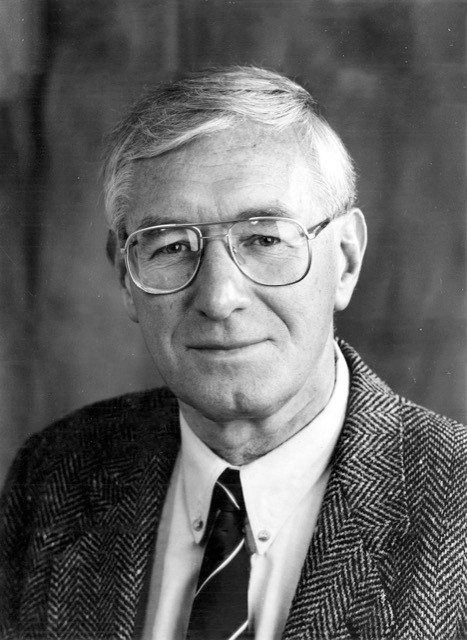
I was honoured to have interviewed Thor in 2015. This article was first published on the Rowperfect blog.
Rebecca Caroe met Thor Neilson the FISA Development Director at his offices in Seville. He kindly allowed us to interview him about his experiences and he gave us some great advice for coaches.
In 1945 after the war, the nearest activity to my home was rowing because I lived in the coast in Norway. All the kids joined and we started to row in the fjord. This was our playground. It became our second home we went there after school.
For juniors we had style rowing not competitive races you gained points based on technique.
It wasn't my cup of tea I wanted to fight I lied about my age saying I was 18 when I was 16 and a half and I started to race. We didn't only do rowing winter was winter and summer was summer and so we did cross country running in spring and autumn and skiing in winter until the ice went in the beginning of May when the rowing started. Everyone was involved. My best performance in skiing was 3rd in my club championship (but 4 of the others were world champions). Rowing was the summer sport but most of the kids did a bit of everything, ice hockey, boxing, swimming and fencing.
I got involved in coaching because I was not really happy with the way my own club was working. I started to lead a bit and disagreed with the coach. He put an ultimatum down and I responded by deciding to coach.
I got input from the USA and taught their style which was considered wrong at my club but when you are young you think you have all the answers. But if you are enthusiastic and work hard enough you can still get results.
Slowly I learnt more and recognised that really I didnt know anything and needed to open my eyes and listed and learn. We went to Karl Adam and sat at his feet and listened and learnt. He made a revolution in Germany (he was a world champion in the Student games in Boxing).
We ended up again with the good old fashioned technique. In the 50s I was using the Conibear style and I thought that this was new then but I found out that Conibear died in 1919. They were still using this style in US until 1950s. I coached and rowed at the same time in the club. I started to coach in 1955. In 1964 I was still competing and succeeded in becoming spare man for the crew I was with. That was my last year in top competition.1952 I was an athlete in Helsinki for the Olympic Games and 1956 I was selected in a pair. Norway's rowers boycotted the 1956 Olympics because of the invasion of Hungary. But the kayakers didn't boycott and came back with medals. That was hard to see. There were such parallels with 1980 and 1984 which was sad.
Technique is there you can't change basic rowing technique – you put the blade in your water and then feel the resistance. That hasn't changed. But style changes. In FISA we teach plain practical mechanical and bio-mechanical principles to teach people how to row. [Thor worked with countries new to rowing to develop the sport around the world.] The person with the biggest influence on me was Ivan Vanier. He was a cox in the 50s and 60s from Dutch Surinam. He had this enormous feeling for movement he was teaching what we can call a natural movement all the way round the stroke. He came to Norway and worked as my assistant. He changed my view not only to look at rowing as a mechanical thing but also for the feeling of how to work with the material and really to utilise your body in the most effective way. His mantra was more a question of feeling than plain theoretical movement. He had it in his body and could just see the feeling. Harry Mahon's strong side was also in this area. I knew him from mid 1970s and he also developed this feeling for movement he could see things that other coaches couldnt see.
I remember Vanier coaching from the cox seat and he would close his eyes and look down while listening and feeling the boat and he would say Number 2 you are too late. And then he would crash the boat because he was not looking where he was going and was concentrating so hard!
All tests must have an objective – what are you testing and why are you testing.
Be clear, are you seeking a profile of your athlete or are you looking for a problem that needs sorting out.
Taking the results of the test and consider the profile of the athlete – [this is about] his development. Focus on weak points resulting from the test analysis. Adapt your programme and the way you are training if the test [outcome] is not right.
Very often you see coaches testing because they think it should be done or just for crew selection. But if you want to do it to develop the athlete and the person you must adapt your next training plan to work on the weak areas.
As a coach you have to accept that in any training programme it is a long term job. Every 4-6 weeks you have to change the programme because the body adapts. You have to change the load or intensity because the body adapts and you don’t get progress otherwise.
You can’t do a maximum test too frequently because of the [high stress] load but also because the athlete must be motivated to do it.
If you want to track progress by testing you must find test systems where the athlete isn’t forced to do maximums all the time.
The answer is sub-maximum tests. These are simple test systems where you can control athlete development without asking for a maximum output.
You can do a maximum ergometer test every 3 months – if you have progress – but this could be a long time elapsed and so you would be better off to use sub maximum tests to trace progress in between.
When testing are you looking for strength or oxygen uptake?
A simple oxygen uptake test is to use the heart rate step test and simple lactate control test equipment.
A strength test is a weights sub-maximum test with 12 reps. This means you don’t need to damage anyone with the weights and you still have a picture of athlete development.
If you have force platforms you can see if the effective test average is over a series of tests. You can test to a certain rhythm or weight and each time increase the weight and see if they can do the same thing.
We have developed a sub-max test where we estimate the maximum we can calculate the potential maximum uptake. 210 watts on C2 = 200 on Gjessing watts. Average of last 90 seconds heart rate gives test result.
A: Develop the eye to see and dont be too static in your way of thinking. Remember, what is good for one [athlete] is not necessarily good for another one. Our bodies are different. You can select people who look similar but if you are in a club you have to take whoever turns up.
It is different if you are a national coach then you have the pick of the crop.
Q: What is important for a coach who wishes to improve his own coaching?
A: The main thing for anyone is to accept that there are different steps of development – both for you and for your athletes. Be aware of that.
With a little knowledge [some coaches] think they know everything. Be open-minded and understand that coaching is a process that you have to learn.
Q: Where can a coach have influence?
A: Have respect for what you are doing and understand your responsibility. Young people are coming to you and you are guiding them. If it is kids you are also a role-model for them. As a coach you sometimes have more influence on their lives than their parents.
This sometimes isnt taken into consideration. Understand this and accept that it is a process of learning you dont get it overnight.
Q: And your over-riding advice for all coaches?
A: Be careful because you dont have all the answers. Do have opinions that is good but understand the learning process.
Advice on difference between the rowing machines from C2 and Rowperfect / RP3
If you start to teach novices on the C2 the feedback is not there and so as a coach you need to control the athlete all the time. But with Rowperfect/RP3 the feedback quickly teaches them.
Concept 2 is a fitness machine, and a good one. But if you are a serious rower and sit on C2 all the time it isnt the best way to develop and keep your technique. On the RP3 you must move and check the timing between the catch and the leg drive if you do it wrong you move up and down the bar. The feeling of the movement is so important. As a rower if you want to use the ergometer for the rowing movement the Rowperfect / RP3 is the one to use.
Rebecca Caroe
Join our community and get our exclusive Faster Masters Rowing Magazine, packed with tips, techniques, and inspiring stories. Includes four new articles monthly.