Marlene and Rebecca discuss
- Synching schedules. It's the hardest thing for a masters group to figure out.
- Injuries outside training
Anything that prevents you doing a full training load. And so a strained muscle, a stiff lower back or a hand blister can be part of you failing to complete a training session successfully.
Clearly there are scales and grades of injury - a blister is not the same as a broken leg!
Masters do not get injured more than younger athletes, but we are more likely to be adversely affected for longer and to take longer to return to full training.
Take injuries seriously - training on an injury usually makes it worse, not better.
05:00 This past week - Marlene is a nordic ski coach; she guested on The Science of rowing podcast and will be studying coastal rowing coaching at the Rowing Canada Aviron conference with Guin Batten.
Rebecca has been reviewing the novice masters status in New Zealand and seeking a rule of racing change. You get the behaviours your tolerate in your club.
15:00 Ways to align your crew schedule. Review your lineups, the number of people in your group and seek regular days.
Cliques in clubs can rip clubs apart. Good leadership is essential.
22:00 No wasted water time. This is something we value a lot.
23:30 Marlene has seen a huge increase in injuries from our athletes. when you get injured you have to heal the injury, rehabilitate it and then progress back to training.
These are non-rowing injuries and were caused by carelessness on land. Your body is fragile. It doesn't take much to derail your training.
Accidental injuries when you are in a fatigued state your tissue is fatigued.
26:50 The further you lean away from your body to pick up your boat it puts you at risk of injury. This is relate to poor judgement.
Be mindful of how you move your body.
34:00 The United Nations list of
Craftsbury Common is one of these heritage sites - the Trouble with Harry movie was filmed there.
35:00 Mike asks are there any good videos that can explain all the basics to a never/never rower - someone who has never sculled before?
Rebecca uses these two videos in slow motion for her beginner class. There's no commentary so you can overlay your own interpretation.
https://www.youtube.com/watch?v=882yriTw1VA
https://www.youtube.com/watch?v=gQMaxr-gxp0
Marlene and Rebecca discuss
- Goodbye to all that
- Review of the year & forward plans
02:00 Head of the Fish trophy
07:00 Rowing From 2020 Virtual Regatta - enter by 3 January on Regatta Central
09:00 Review of the year. We went weekly during Lockdown. Marlene's favorite topic - setting up a home gym. It's important to keep up strength training twice a week. TRX straps and kettle bells, physio ball, elastic bands.
https://fastermastersrowing.com/the-perfect-home-rowing-gym/
Free training program for home rowing during Covid19 lockdown
https://fastermastersrowing.com/register/home-rowing-training-during-covid-19/
12:00 Rebecca's favourite topic - hip mobility for masters - a regular reminder of what to do. How to improve rock over and getting the handle past your knees. Separate stable body from moving up the slide.
https://fastermastersrowing.com/hip-mobility-for-masters/
15:00 What's coming up for Faster Masters? During the past year we have added 3x subscribers to the podcast and 2x the number of customers for our training programs.
18:00 Recovery is as important as training. After the workout you recover and adapt to the load. This is the OTHER training category (recovery) you get into shape after the workout.
20:00 Resilience - do the things to manage stress levels. Sleep and eating right matters.
22:00 Curling my toes reduced stability in the boat.
24:00 Virtual races and the ability to practice mental training. Stay in touch with challenges will help regular competitors.
27:00 Look around to check where the rock island is.
32:00 Electing a team captain for masters. Liaison between the athletes and the coach. What do they do? Outings, lineups, safety tests, regattas? First define the job.
Our next podcast episode will be on 14th January 2021.
See you all on the other side.
Rowers need to have strong fingers to control the oars. Our expert coaches, Marlene and Rebecca, explain
We got this question
Could you recommend some exercises to improve finger and forearm strength? My fingers and forearms often tire from trying to feather correctly without using my wrists,
First it pays to check you have got the basics correct in your equipment and the technique you use to turn the oar (feathering and squaring).

19:00 If you have osteoarthritis - don't push yourself into inflammation and swelling with your rowing practice. Don't use your thumb to apply internal pressure on the oarlock either if you have osteoarthritis.
20:00 How tight should you hold the handles? As if you're holding a kitten, puppy or a small bird - Firmly enough so the animal doesn't struggle, not so tight that you crush it..
23:00 If your forearms wake you up at night feeling restless. You should stretch them.
Do the "Karate Chop" drill on the recovery and Open Palm Sculling drill.
26:00 Trigger finger syndrome can be developed from rowing. The anular ligaments get pulled and swelling happens in the tendons.
28:00 How to train for both speed and endurance simultaneously. If you are doing CRASH-Bs erg race in March and enter the 30 minute and the 500m sprint event.
Follow the Faster Masters Rowing training plan first and foremost - pick the 1k racing plan. If you have extra time include a 40 minute low intensity row or aerobic cross training session.
32:30 Keep the group together - over the holidays stay in touch with your crew mates and become accountability partners. Community matters in masters rowing.
Being the best rower you can be involves having good flexibility and mobility in your body.
As we age, our flexibility typically reduces. Understand your personal range of movement and how each part of your body is used in the rowing stroke.
Our 10 exercise functional movement assessment for masters rowers will show you where you can improve and how it affects your rowing and sculling.
Marlene and Rebecca host Faster Masters Rowing Radio where having a rowing coach only makes you better, following a program gives you a true pathway to becoming a confident sculler who is respected by your peers. Become the athlete you want to row with.
- difference between exercising and training
- functional movement screening for masters
05:00 Early warning that November 24 there will be a podcast about Transitioning to Winter Training - ONLY newsletter subscribers will be able to watch this episode. Please subscribe to get the link emailed to you.
These 10 drills allow you to test your own body and its ability to move in a way compatible with rowing and sculling.
Use these exercises to identify your physical limitations
https://www.row2k.com/features/5323/Functional-Movement-Screening-for-Masters-Rowers/
11:30 Podcast feedback - You Cannot Coach Yourself - Marlene declares that Faster Masters are very aware of the "reality for many masters" with regard to coaching, availability of club support and video assessment.
One of the reasons we set up Faster Masters is dealing with the reality of masters training alone - it is very common. This is why masters like to come to camps because they can network with others.
We recommend you ask your club coach if you can buy a private lesson.
17:00 Coach rowing alongside you is very similar to what you get from a remote coaching video feedback. I'm surprised more people don't take advantage of video review services. They give great insight.
23:00 Tanya from Australia gives her feedback on the Faster Masters programme. Marlene reminds us that Faster Masters programs are designed to prevent under-training and over-training. Both damage your performance.
27:00 Exercising versus training. Keeping things "interesting" and setting challenges in the program is key. Have one objective in mind. Your personal time trial, for example - it should be a performance element. Programs are DESIGNED to add stresses and recovery period. They train the different physiological systems which you are developing as you row.
33:00 Marlene follows Dr Steven Seiler in the low intensity and high volume approach to training.
Technique
Concentration
Focus
Use your training to improve your skill in these 3 areas. Rebeca recommends a drill to help you learn how to improve your skills.
Rebecca and Marlene go on a rant in this week's podcast - predictably they are feeling taken for granted.
01:00 the Head of the Charles interactive map of competitors
06:00 Virtual races coming up
10:00 Newsletter subscription - if you listen, please join us. Yes, we give you free rowing advice and our "payment" request from you is that you join the newsletter.
12:15 We want feedback from you, our listeners.
What are your opinions on investing in rowing training programmes? Why do you like free rowing advice?
You pay to travel to regattas, to camps, to race... and some people won't pay for a training programme. Why?
16:00 Many rowers read books for knowledge. Compared to having a coach this is curious as the coach is a bridge between knowledge and actual practice. By reading do you get better skills in your boat?
22:00 Explanation of the Northern and Southern Hemisphere parallel rowing seasons and how the programmes take account of this. The 1k and 5k head racing programs. The training cycles align with races.
25:00 Free rowing advice on the internet - how does that affect your improvement and your coaching? If you are serious about improving your programme should be written to understand your needs by someone who knows masters rowers.The difference between training for improvement or an event versus training for fitness,
29:45 Faster Masters is a business selling paid rowing training programmes. There's a hierarchy of services affordable for most people.
35:00 Tell us more about what you want from Faster Masters.
nMarlene and Rebecca discuss
Staying mindful is all about keeping your brain focused on what you are doing in the present moment.
The concept of mindfulness lends itself to learning the rowing stroke. Thinking about what you are doing so that your movements are careful and controlled will help you to learn correct rowing technique and improve sculling faults and rowing errors.
05:00 Sacro-Iliac joint dysfunction - has anyone got this from rowing? It’s a sliding joint in the pelvic area. When it does not glide smoothly it is dysfunctional. Quadratus lumorum or QL is tight this gives back pain and is sometimes a sign of SI dysfunction. Flexing forward is harder like putting on your socks.
10:00 If you are prone to it how do you sit? Is it favouring one side or are you tight on one side of your back?
13:00 Returning after injury. If you were competitive a long time ago, we have learned a lot since 30 years ago about athletic bodies and masters older athletes. How long were you out of training? The rule of thumb for returning. Same amount of injury time is the time it takes to come back. You can never see do too much easy rowing training. Be careful you don’t lose your form
16:45 Off water training - mobility and stretching, strength training. Keep a training diary and count your minutes total per week training. Add 500 meters per session. Your body adapts at a cellular level. 10-15% more per week in minutes. Use the Faster Five as a template for learning and improving your rowing
21:00 Isometric work such as seated hold, contract muscles, hold and relax the calf muscles and glutes is helpful. You can reduce inflammation with Omega 3s in your diet and aspirin.
25:00 Mindful practice - perfect practice makes perfect. So many things can lower your stress and help you get better technically.
Drills for technical improvement and low intensity workouts
- row in circles
- slow motion rowing
- shadow rowing
- row in double and take turns to do 30 strokes each then 30 strokes together.
When you are really fatigued you cna get into a dysfunctional stroke patterns and you are best to stop before you get tired.
32:00 Dr Stacy Sims interview with Rebecca on RowingChat link is below. Marlene recommends tart cherry juice which also stimulates melatonin as a sleep aid.
https://rowing.chat/dr-stacy-sims-sporting-women-are-not-small-men/
What Stacy says about menopause and training at 39 minutes in.
Research in menopausal women - peri menopause where you get more oestrogen dominance is the 4 years prior affects your body composition where biggest changes happen.Many epigenetic changes happen. First reduce long slow distance work and emphasise heavy resistance training and increase higher intensity work and plyometrics. Glucose control and when lean mass development and recovery when they flatline or the ratios of each change, you need an alternative to stress. You have to challenge the body post menopause - the longer you go the slower you become. Use the stressors from exercise and specific nutrition dosing to get what oestrogen and progesterone hormones used to do for you.
ROAR. How to Match Your Food and Fitness to Your Unique Female Physiology for Optimum Performance, Great Health, and a Strong, Lean Body for Life
https://amzn.to/3dKQbSb Amazon affiliate link
Feathering is a key bladework skill for rowing and sculling. Marlene and Rebecca recorded this podcast in which they demonstrate feathering and explain
- How to Feather Correctly for sweep and sculling
- Drills to stop dropping the wrist while feathering
Remember that the Faster Five explains all the detail we discuss today and more. The Bladework ebook is what you will need.
04:00 Virtual Races are happening. A round-up.
09:00 Live Races happening at Secret City, TN, Head of the Hog, FL, Head of the Schuylkill / Hooch and Fish all offering erg or water participation. And US Rowing website has a virtual challenge.
14:00 How to deal with friction on oars in the oarlocks.
It was recently pointed out that I was dropping my wrists while feathering. This morning I noticed that there seems to be some friction and resistance with my C2 sculls in my C2 oarlocks, making it a little hard to feather with just my fingers. The collars are worn and a bit rough and I plan to reverse them to get a smooth surface for feathering. Any other suggestions to make it easier to feather with just fingers?
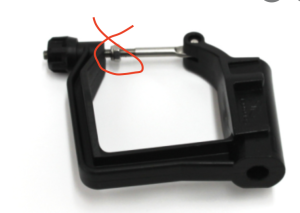
If you have worn collars they should be replaced annually. You can also spread the oarlock by moving the lock nut on the oarlock swing arm to give you more room to turn the oar.
How to feather with your fingers.
Release timing is key - getting the timing correct will ensure your wrist is flat. If you feather out the blade at the finish this makes your wrist bend.
You MUST do drills to change this pattern of rowing.
For all of these Watch your oar as you row. And SLOW DOWN the stroke rate so you can get it right.
Grip is not in your lower palm on the recovery. Check your blisters and callouses aren't here!
The weight of the oar is in your outside hand and the inside hand feathers. It is OK to bend your wrist in sweep for feathering.
Rebecca and Marlene explain The Faster Five essentials for rowing
Technique, Bladework, Stroke Power, Racing and Fitness Assessment.
12:00 We launch the Faster Five. These are principles which are important to learn, how to practice and what to practice. Things to pay attention to and key reference points.
The Faster Five represents the Faster Masters Rowing philosophy of teaching and a structure for you to plug into when you are studying rowing and learning how to become the rower you want to be.
16:00 Faster Five - Technique . Reference points so you can practice on your own. It takes thousands of strokes to learn the correct technique. It takes 3 seasons to become a sculler and 2 seasons for a sweep rower to feel they can apply good power in both sweep and sculling.
19:30 Faster Five - Bladework. timing and co-ordination is important. When you hold something in your hand (the oar) your brain thinks it's part of your hand. This is why it takes a long time to learn. Reduce your wash and blade is a key part of the learning from the Faster Five. The timing, finesse and precision takes drill work, focus and concentration. Developing high speed co-ordination is key to becoming a skilled rower.
23:00 Faster Five - Stroke Power - this comes after the bladework which brings confidence to your rowing. Power requires you to trust the oars and use your body weight. Learning the sequencing, being explosive and being effective at moving the boat.
26:00 Faster Five - Racing - the principles of racing well. Mental and physical, starts, steering and race strategy. What works for you and your crew. Back up plans. Relevant for all rowers whether you race or not because you can test yourself and get progress markers.
30:00 Faster Five - Fitness Assessment. A battery of tests to gauge your quality of rowing including stroke power, VO2 max, anaerobic threshold. Comparing the results works on both an erg (watts) and on water (500m spit to watts). The relative comparison gives proportional fitness measures. This changes over time.
34:30 If you are injured and come back to rowing your test shows you the right level of intensity you can manage.
38:00 Where to get the Faster Five. Link is in the website footer
https://fastermastersrowing.com/courses/the-faster-five/
When you subscribe to ANY monthly recurring program on Faster Masters Rowing the Faster Five is included as a welcome gift.
When athletes stop doing our training program you lose a lot. You lose commitment, you lose engagement and you lose someone else coaching and doing the thinking for you.
When you stop doing our training program you lose fitness, you lose your edge and you don't stay engaged and showing up. When successful athletes stop doing the Faster Masters program 100% of the time they never maintain the results they had on the program. Success does not carry on without an ongoing, developing training program.
40:00 Faster Masters is more than just a training program. Faster Masters is not babysitting athletes. Depth of instruction and insight from masters specialists. The Faster Five took us months to complete and includes our years of coaching expertise.
Masters feel like "disregarded" athletes - we are on a mission to get the sport of rowing to appreciate masters athletes. What we can bring to them, the goals we have are important. We deserve respect. We are building a global family of athletes.
It's the time of year that people start to pull crews together for head racing season. Many new sweep crews will be formed for HOCR (Head of the Charles) and other autumn head races. So what can you do to get your crew rowing well together, fast?
It is really hard to get a crew to blend their style and technique quickly. This is one reason why longstanding crews often race faster than "jump in and go" crews.
The best place to start this process is doing drills to get the combination of your movements aligned. Remember, nearly everyone will need to make adaptations - no one individual rows perfectly. Consider a dollop of humility as you approach your practices, especially if you are one of the more experienced in the crew.
As with all rowing drills, it's important to do each drill up to 3 times per training outing in order to really master the method, to improve how you execute it together and lastly to see the effects of the drill on your rowing. Execute to a high standard is a good motto.
Listen to the podcast from 24 minutes when we discuss the drills recommended for crew sweep rowing. And the timestamps below help with a list of the drills you need for your crew,
03:50 The past week - coaching, rowing, getting colder in Canada
08:30 Subscribe to our Newsletter and get confident rowing and sculling
https://fastermastersrowing.com/newsletter/
10:00 National Voice for Masters in NZ - communication meeting about how and what to message
11:30 Row2k published our article Rigging 101 for Masters covering easy adjustments to your boat and the level of difficulty of each. We focus on the cause and effect of rigging changes
https://www.row2k.com/features/5242/Rigging-101-for-Masters/
Rigging feet heel height to seat top is in the 17 cm range. This hugely affects ability to compress and get power in the first part of the stroke
15:00 My problem is I row a men’s heavyweight single and I weigh 115. I dig a bit deep on the drive. I suspect this is operator error but I really want it to be a rigging problem. Thoughts?
Digging deep while sculling in a big boat. This affects the steepness of the angle of the oars into the water.
Drills to improve digging - rowing circles, half blade buried.
Also avoid corrugating through the water.
19:00 Darkness is coming. I was going to ask a question about navigation lights, but then did my own research and bought these Navisafe lights, and wanted to share the information. Two nautical miles range, Coast Guard approved. I got two: one is set to green/red for the bow and the other to white for the stern
Early thoughts about boat lights for rowing boats - Rebecca uses Rail Blaza lights are 360 white lights which can also go on a pole.
https://www.railblaza.com/products/illuminate-i360-all-round-white-navigation-light/
https://www.railblaza.com/products/quikport-mount/
24:00 Sweep crew drills for HOCR and Autumn head races
Start with rhythm drills
- pause drills
- release drills
- blade depth drills
Get keyed into the voice commands of your coxswain
- Wide grip drill is very good
- Row in 6s to get accustomed to the movement
- Reverse pick drill for leg drive co-ordination
28:00 Drive pressure drills
- go from half to three quarter pressure building during the stroke. Light, medium, hard thinking that you’re rowing with glass oars for 5 strokes at each pressure.
30:00 Drills to increase stroke rate
- Half slide drills
- 20 strokes acceleration at half slide every 5 minutes during a longer low rate piece
- Rolling or flying starts are good every 3-4 minutes
Other things to practice
- Plan and practice emergency stops and re-starting as you may need to use that in the race.
- Inside hand on the back stay drill
-Getting familiar with Sweep if you’ve mainly sculled - Use your peripheral vision to watch the blade entering the water.
38:00 heart rate variability testing our recovery. It detects instabilities in our physiology. Marlene and Rebecca both use the HRV4Training app.
Marlene and Rebecca talk about
- Finding a coxswain
- A new video tip
- Have experienced masters rowers got an 'attitude' problem?
Coxswains are essential to rowing eights and they are in short supply for masters rowers. Most of us find that we have to "grow our own" coxes - by that I mean recruit and train them up.
Frequently a cox will allow you to do a trainibg outing - you don't need them to be expert in coaching, just steering. And for getting out on the water that is a great first step.
04:00 Subscribe to our newsletter
https://fastermastersrowing.com/newsletter/
05:30 A National Voice for Masters Rowers in New Zealand
Join the Facebook Group https://www.facebook.com/groups/256708472122650/
07:30 Finding a coxswain
12 week training program for 5k races
https://fastermastersrowing.com/courses/head-racing-12-week-program/
Find someone's child - 8 years old or more. Teach them to steer.
Adult coxswains - build a plank with a rowing seat to sit across the gunwales to sit above the boat.
Get members to recruit their petite friends.
Starting to teach coxing. Be comfortable with making compromises.
We start by getting them steering first. And the commands for starting and stopping ONLY.
Let them repeat the commands relayed by the stroke.
Understand gentle steering. And hook the little fingers over the side of the boat - steer with your forefinger and thumb. Tape the midpoint of the steering wire - a visual reference.
15:00 Coaching the Coxswain book by Chelsea Dommert
https://www.rowperfect.co.uk/product/coaching-the-coxwain-revised-edition-2/
Use the phrase "On Point" and create discipline in the cox to always do this.
17:30 Rent an expert coxswain from the local high school. Take care of your cox and pay their way.
A talented cox even if they are heavy is better than an inexperienced one.
19:00 Some coxes don't want to cox grumpy old men. We recommend feeding them cake
21:00 Slow motion video tips. Use landscape not portrait. And check the slow motion playback on YouTube where you can go 2x and 3x slower. It makes it easier to see your rowing technique.
27:00 Port, Starboard or both? And which is dominant? Maoco Florann Elkins calls this bisweptual or ambidextrous.
32:00 Do rowers have an attitude problem? Consider the situation individually. If the coach says people don't want to be coached - find out what the rowers think too. Do you also get attitude from club junior coaches. Club culture matters. Learning the correct rowing etiquette is important for the culture of rowing.
42:00 If you don't want to learn - just go and row. but if you want to learn new habits then get coached. Use Slow Motion Video recording on your phone because it is much easier for people to see.
Join our community and get our exclusive Faster Masters Rowing Magazine, packed with tips, techniques, and inspiring stories. Includes four new articles monthly.