The rowing world is good at keeping boats and oars in serviceable use for many years - but eventually something happens and equipment gets "retired" or handed on to another owner. I learned from John Leekley that Vesper RC hired a "decluttering" expert to assist in their boathouse clearout recently. Many clubs could use that skill.
We are fortunate that kevlar and carbon lasts a long time and can be repaired. My double suffered a crushed bow when I steered it up a pontoon - the repair guy gave me the long strip of carbon he'd taken out of the hull. And we made it into a new trophy for our club - the "Impact Award" presented for the first time last weekend.

I feel sad when reading appeals for equipment from startup clubs in Africa because it's just too hard to ship boats there (plus import duties are ruinous). Although Eliza Camp managed to get eights donated from UK clubs out to Italy last year to the delight of all involved.
So when I saw an announcement about FindOar I had to investigate.
Johnny Cantwell has started an "oar matching" service. When you break one blade - which often happens - he will endeavour to help you to find a match so you can economically get the oars back to use.
It's not selling anything, just enabling folks to pair up and get in touch.
Currently working only in the UK - but if anyone wants to start a similar service in their country, get in touch with Johnny.
Diary alignment is the hardest thing for masters to figure out. Three tips for you to try
Timestamps
01:00 Regular practice in the same lineups helps you to get better faster.
Avoid agreeing crew lineups on the day in the boathouse - fix crews ahead of time so when they arrive they know who they are rowing with, the equipment to use - boat and oars. Prevent people from only rowing with their friends in the interest of community within the club.
02:30 A masters club that has a goal to grow, to add newcomers - it's more useful to mix up crews. When you're a newcomer it can be daunting seeing a large number of strangers. In a crew you can chat to people in your crew and get to know them.
You can make an easy member division into learn to row group, intermediate, advanced, racing and fitness groups. If you have a group each needs a co-ordinator/captain.
Use 2 types of software to help you.
SMS is immediate and people notice it (email can be lost or ignored). Rowing club software options - listed on rowing.chat/retailers the Directory of rowing businesses.
05:45 Ideally book a long way ahead of time - masters are busy people. It can be hard to organise a week ahead, two weeks ahead is better. With software, each person can check/tick the days they are available. The Club can offer different times of day for workouts. The group organiser can easily see in the software calendar who is available and make crew lineups.
Try to find a day when you always do the same crew - important for large boats. This helps the co-ordinator. The software sends out crew lineups ahead of time (which also serve as a reminder). Acceptable behaviours - ideally if you cannot come, find your own replacement. The responsibility is on you.
You need more than 4 or 9 people to run a crew of a four or eight. It takes 12 people to run an eights group. Running a four/quad can be done with 5 or 6 people. The port/starboard preferences mean you need more people for an eight (unless everyone can row on both sides).
Work with a coalition of the willing - set up the behaviours with those who are prepared to get involved. People who are keen to get better and get into another crew for racing are often the most willing. How do you enable people to move between groups? How can people find substitutes or alternates at the last minute? Can you go to another group to find a final person to make up a crew? Some athletes advance their skills rapidly by being the person available to take the empty seat.
Work out what you can do if you need.... mixing men and women, finding people to fill seats etc.
One person in charge of scheduling (allocating equipment and lineups). They don't need to be a coach, but must know each person's skill level in order to be effective. Try to avoid people hogging equipment - do you allow equipment requests? By having a person doing the scheduling they can be fair and ensure the boats get shared around.
When you sign up can you request crew / boat / tie of day? How can you get consistency for your training group to get more skilful and it's fun to row with a regular group.
Coaching mixed gender rowing groups article
Digitize your rowing club management webinar
Rowing time management podcast & checklist
Want easy live streams like this? Instant broadcasts to Facebook, YouTube, LinkedIn. Faster Masters uses StreamYard: https://streamyard.com/pal/d/5694205242376192
The athlete pathway for masters is different from other groups. What can clubs and Federations do to enable masters to succeed by changing the structure of our sport.
Timestamps
00:40 What is our goal for masters in rowing?
Should masters be allowed to leave and rejoin the club? One of the differences compared to youth rowers is that we remain in the sport for a long time. Youth, school, Seniors all have a long term athlete plan for the pathway of their progress. Masters are not the same. Our goal may be to race and achieve high results - but it is not always. The long term development plan is very different. Some join for participation and to learn how to row; others are there all the time, training and racing. Others like the weekend rows and train for fitness, pleasure and friendship - they may also race but on a shorter term horizon leading up to an event.
04:30 Looping in and out of rowing
Many masters remain in the sport for a long time. What is possible for you right now? Life stage is important. In your 30s you may have a high pressure job. Or a flexible worker who can train during the working day hours. Some masters retire to row - actively. If you have children, under 14s are different from over 14s and can look after themselves for a time. Care responsibilities for aging parents are also another different group of masters. Our goal is continued participation - can you manage to stay involved on a level suitable for where you are right now?
07:00 Club membership structures don't align If you are required to buy an annual membership and are injured, this makes people decide not to rejoin their rowing club.
07:30 Create enabling structures
These allow members to loop in and out of masters rowing participation over time. How can you stay involved while injured? Join social events with the club group. Can memberships be by quarter, term or semester?
Groups in rowing clubs - often LTR, fitness, racing groups are common. As a club how to you enable members to move between groups in a way that reflects their life circumstance? How frequently do you re-assess group members? Can people see a pathway so they can see what the next step is for them in their rowing journey? What does it take to move from intermediate to elite racing?
10:00 Long term athlete development for masters
How can you make it possible for members to stay involved over the long term in your club? These structures might make masters rowing long-term participant so we can remain engaged with the sport over the ultra-long term. Athlete development needs to be aligned with an individual's goals, skills improvement, not necessarily always-upward movement towards high racing achievement. Masters pathways are not necessarily linear - people can loop into rowing and then step away and loop out for a while. Making this happen is structural, requires a strategy for leaders who are involved in masters rowing. What can you do in your club to help?
Want easy live streams like this? Instant broadcasts to Facebook, YouTube, LinkedIn. Faster Masters uses StreamYard: https://streamyard.com/pal/d/5694205242376192
Getting the correct range of boat types and boat weights to suit your club group is important. What to look for, how to assess your fleet and plan for the future.
Resource: Rowing Club Management Strategy - how to write one
3 Value Bombs
Review the stock of boats and equipment in your club and how they align with the needs of your athletes. We realised we needed to workout if our boat fleet matched the masters group needs. Assess the weight class of boat to the athlete weights in your group.
03:00 What weight class was your boat designed for?
Look for the manufacturer's plate - often in the bow or the front of the stroke's foot well. It shows the design hull type, year of manufacture and the average weight of athlete it's designed for. Club asset registers list all the boats in the club ownership. We added the information about the boat design weight.
04:30 List all the boats in each boat class that you own (8, 4s, 2s and 1x) and classify them to the athlete weight they are designed for. Broadly we chose 3 categories - light weight boats (under 70kg), mid-weight boats (70-85kg) and heavy weight boats ( over 85kg).
Our list included boat name, age of boat, weight class of boat and whether lightweight, mid-weight or heavyweight. We added in how old the boat was and whether it was due for retirement.
It was then clear where to skew of boats matched our athlete weights.
Have we got one boat in each weight class? Which are the most popular boats which athletes like to row? This shows you where you are short of boats by boat class and boat weight to align with what your group needs, frequency of boat use per week/month, and which boats your masters want to row. This is not static, it changes each year as membership and priorities change. This information was then put into the prioritisation for refurbishing boats, fund raising for new boats and spare parts / minor repairs list (consumables e.g. shoes, slides, gates).
08:00 Set out a 3-4 year programme to get your boat fleet more aligned with your group needs.
Want easy live streams like this? Instant broadcasts to Facebook, YouTube, LinkedIn. Faster Masters uses
StreamYard: https://streamyard.com/pal/d/5694205242376192
What's masters rowing like in Ireland? Gerry Murphy is Chair of the Masters Representative Committee for Rowing Ireland.
A big increase in member registration has happened and masters are now 18% of total rowing registrations. Clubs see the benefit of having masters groups. There are many other regattas offering masters events - they will put in events entries secretaries are generally willing. Many heads of the river - Galway and Enniskillen - which include masters. Overseas guests are welcome in Ireland.
Most clubs have some form of masters rowing group - including Skibbereen who started a group recently. Gerry's club, Neptune, started an adult learn to row class and most of the graduates are in the rowing leisure group - there are 70 members now. They do tours and exchanges with clubs in France and Portugal. Innovations in masters rowing.
There is a coach education programme.
Most clubs want masters because they see the benefits as they volunteer and grow the club. The 1k Classic (Carrick on Shannon) is a new event which Gerry hopes will become the official Masters Rowing Championships in future.
Future plans - a proper structure for masters programmes development, coaching development, a co-ordinator for masters in every club who can give guidance. It would be nice to get better equipment as well, possibly dedicated masters boats. External guidance to Rowing Ireland may be possible for masters. We love it and we have a smile on our faces - folks are jealous of us. Gerry encourages people to find their level in the sport and enjoying that.
App alternatives for rowing electronics and how to mount in your boat. Phone mounts and taking a phone in a boat so you feel confident using it.
What's in the programme this month? - Two programmes - for 1k racing in May or June and another one for July / August peak. - Land training and strength and conditioning programme. - Lifestyle - ways to prepare yourself before going rowing. - Performance - bladework technique versus erg technique and exercises to get your bladework skills back. - Different warmups for different workouts. - Bonus gallery of rowing tattoos.
Rowing electronics were getting elderly at the club and so we reviewed what we needed. Alternatives considered were - apps which can be used in boats; Lowering the cost to membership of tracking simple measures like time, split and stroke rate.
04:15 A mount for the phone I used a Quad Lock mount phone case which includes the female mount. It came with three different lengths of velcro. I loop this around the wing rigger or the footstretcher in any boat. The Quad Lock I bought was a version for an arm band velcro strap - which is very long.
3D printed mount that goes over a wing rigger. Has an NK mount on one end. The silhouette of the profile of the curve for the mount is unique to each wing rigger design. It isn't a very snug fit because you need flex to get it on and off the wing rigger. The second one has a curve which allows a water bottle to sit on the far side of the rigger. This version has a Quad Lock mount instead of the NK mount. Thirdly a footstretcher metal bracket which slots into the saw tooth adjustment for your foot stretcher adjustment. It tightens with a screw knob and I chose a Quad Lock mount.
11:00 Rowing Mindset Webinar with Jack Burns - teaching how to train your mind to balance the body training you do. Improve your ability to focus and avoid distractions. It will be recorded and then available on demand after 23rd April 2024.
13:00 Buy these from 3D Row in Australia
The Flying Boatman in UK
14:00 Hacks to take phones in boats. Take a look at having phones in boats as an alternative to rowing electronics you've used to date.
Want easy live streams like this? Instant broadcasts to Facebook, YouTube, LinkedIn. Faster Masters uses StreamYard: https://streamyard.com/pal/d/5694205242376192
Microsoft Word - Parent Communication 002 The Role of Parents
The major role of a parent is Support.
Most parents want to do as much as possible to help their children be the best that they can be and in so doing often put pressure on to their children that becomes unbearable and causes them to withdraw from the pressure situations or finish participating altogether.
Often parents are never aware of this situation as the family never complain or let the parents know, as they do not want to hurt them. They understand they were only doing their best and the easiest way to solve the whole issue is to withdraw.
This is the case with some many young people who never realise their potential and adults think what a shame it is and only if this or that had happened.
The facts are that most felt under pressure from parents or adults and felt they could not be sure of coping so, instead of letting parents down, they make excuses to withdraw and find something else to do where their parents were not involved and would not feel disappointed.
By John Parker
A former international cricketer and sports management expert from New Zealand.
Transporting your single scull on a car roof rack can be a convenient way to get your boat to the water especially if you can't get a rack at your rowing club. Car topping to regattas and that important first drive after buying a new boat means you may have safety concerns and challenges. From ensuring stability to adhering to road safety measures, here are some tips to help you transport your single scull with confidence .
One common concern among rowers is whether it's necessary to tie a bowball down when car topping a single scull on a roof rack. The answer? It depends. If your car roof rack is sturdy and well-designed, you may not need to tie the bowball down. However, if you notice any wobbling or instability, it's advisable to secure the bowball to prevent potential accidents or damage to your boat and car.
To tie down the bow ball securely, follow these steps:
Ron Sneddon kindly wrote us with this additional advice.
As the principal means of securing the shell to the car, I would respectfully suggest that the main roof rack and supplemental brackets should be covered first and that the bow ball and stern straps receive second priority. The fore and aft straps should be ancillary, and desirable, restraints.
You also caution against allowing a twist in the straps. I have found that a half twist will most often cancel the tendency of the straps to "flutter", especially the longer fore & aft ones. The flutter is caused by the flow field around the moving car interacting with the strap causing a Von Karman vortex street. I did a Google search and found several illustration of this aerodynamic effect, which is pretty simple and easy to understand. When I had a shell to transport I tied down every strap with a half twist so as to not have to interrupt the trip to fix a flutter.🙂 The strap flutter might be responsible for fatigue failure(s) in lightly built rowing shells, never mind the annoyance.
Ron Sneddon, Masters Rower
2. Stabilising Your Car Roof Rack
Another issue rowers often face is a wobbly car roof rack when carrying a single scull. A shaky roof rack can be nerve-wracking and potentially dangerous, especially when driving at higher speeds. To address this concern, ensure that your roof rack is properly installed and tightened according to the manufacturer's instructions. Additionally, consider using additional support, such as foam blocks or tie-down straps, to stabilise the boat and minimise wobbling during transit.
Before loading your single scull onto your car roof rack, it's essential to confirm that your vehicle is compatible with carrying a boat of its size and weight. Check your car's owner's manual and local road code to determine the maximum weight, overhang and capacity and any specific guidelines for roof rack usage. Additionally, make sure that your roof rack bars are wide enought apart to accommodate a single scull securely and safely. Most cars will need a specialist rowing boat rack attached to the roof rack.
Find local suppliers of rowing boat racks for cars.
While transporting your single scull on a car roof rack, take precautions to protect both your boat and your vehicle. Inspect the roof rack and boat regularly whenever you stop on the journey. Check all straps and tie-downs in case they have shifted during transit. Additionally, consider using protective padding or covers to prevent scratches or dents to your boat and car.
If you are like a friend of mine who has a coastal double scull which is heavy. She uses a roof rack that mounts onto the tow bar - it allows a tip to 45 degrees and she can get the boat onto that, then push it forward onto the main roof rack bar.
I think Rhino sell these and I’m sure other brands do as well. This one has the specifications:
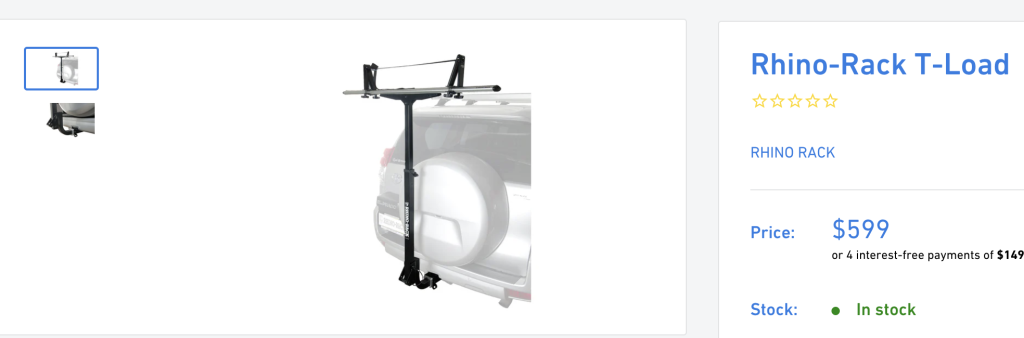
I found all these rowing car rack systems on the Rowing Directory - bookmark the page for when you next need to find a rowing product supplier.
Travel safe!
What rig should masters rowing boats and oars use? How can clubs set up their equipment to suit as wide a range of athletes as possible?
00:45 I got a pair of mis-matched sculls and so I'm on a rant.... this is easy to improve. Comfort in the boat and ease of use are the most important for rigging club boats. All clubs should have standardised rig across the boat fleet.
Your rig enables you to move the boat in comfort - your torso and legs. Be able to sit comfortably at the boat in the finish. Look for your shins not hitting the deck, hold the oar so forearm at the same height as the oar shaft and at the catch that you can get your hips through the work - at least hips level with the face of the gate. [If you don't know what this is, buy our Sculling Intensive course and learn how to find work through the pin and ways to adjust to suit your needs.]
03:30 Oarlock height and forearm height are related It's important that your forearms are level with or above the shaft and the oar handle. Otherwise you cannot get weight into the hands as you press the handle down.
04:20 Standardise the boat rig
Sculling spread of 159 or 160 cm; seat to heel measurement of 16-18 cm; oars /sculls 286 cm long and 87 cm inboard, maybe longer oars for men or younger athletes. Note the inboards are the same because men/women use the same boats.
Sweep rigging span of 84 cm; seat to heel 16-18cm. Oars 370 - 373 cm long. Inboards standardise from 114 for an eight down to 117 for a pair.
Put tape on the oars with measurements e.g. 370:114 so it's easy to see what the oar is supposed to be set at.
Height spacer washers - put one above and one below the oarlock/gate on every boat. So the oarlock sits at the midpoint above the oarlock to saxboard sill height. So you can easily see if the heights have been moved.
08:20 Shoes with adjustable sizes - we bought ours from Ankaa with velcro adjustment around the heels. Also home-made velcro instep straps for ladies to use larger shoes are cheap to make.
09:20 Spacer Placer tool - if you want the lanyard when you buy it, mention Faster Masters Rowing. Buy from Revolution Rowing
10:00 Oar designs for easy adjustment include Croker's clamp on the button to release and reset the position without needing a screwdriver and tools. Give your rowers autonomy so they can adjust the boat and oars to make them comfortable for their needs.
How do masters club groups organise their priorities? Covering training, equipment, coaching, racing/trips/camps, finances - this is a must-listen to episode if you're frustrated by your club leadership.
00:45 Managing your "champagne tastes on a beer budget".
01:00 The State of Masters Rowing 2023 report. The structure of our sport needs revision - learn to row classes are set to grow and that has implications on clubs.
03:15 What are the priorities for your masters rowing club?
Rowing club strategy for masters includes operational requirements. Boats, equipment, oars, electronics and indoor rowing machines. List what you'd like to have access to and what you have now - a gap analysis.
Equipment review - list all the boats available, its age and the athlete weight it's designed for. We found 3 types - women only (70kg), mixed crew weights (80kg), mens boats (90kg+). Also consider their state of repair - are they at the end of life? Which suit beginners (flat bottom boats, pontoon floats); which suit more experienced crews?
What are the workout priorities for your club? Do you race, do tours, coastal, fitness workouts and what times of day do people want to train?
09:00 Training for racing - ideas from James Dundon of 612 Endurance Rowing Club. A set of principles which members sign up for. Access to the building shared with other groups. Where can masters be flexible and give priority to other groups in the club.
What would you like to do during a rowing year? Do you train harder before regattas when more people train together - could you get priority at that time?
Each of the training group leaders or coaches can name their priorities (boats, club access times and regatta dates). Where is there overlap in desire between the groups?
Masters are well-placed to support the whole club with fund raising. This can be part of the group needs discussion. The members were surveyed to ask for their perceived priorities.
18:00 The influence your first coach has on your rowing. Beginners get ideas about rowing from their first coach which they take into their intermediate rowing experience and which hold back advancement. When should you square the blade? The answer is 'it depends'. This is not satisfactory for intermediate athletes - let us explain why.
https://fastermastersrowing.com/member-register/vip-day-focus-on-boat-skills/
Bonuses include a self-test assessment for benchmarking your rowing skills.

Join our community and get our exclusive Faster Masters Rowing Magazine, packed with tips, techniques, and inspiring stories. Includes four new articles monthly.
