I have recently completed coaching an athlete through her 2K test.
This article explains the process I used and gives you a template document which you can use for your athletes. I am assuming readers are either coaches who want to up-skill or athletes who don’t have a coach
Doing a 2K test is daunting for many people and one of the principal things that help make the test manageable is to write a plan for the test. A side benefit of having a detailed plan is that it allows athletes to establish their limitations and identify areas for improvement.
The format for coaching athletes to help themselves is based on allowing them in their own words to organise their thoughts and their recollections of their most recent test.
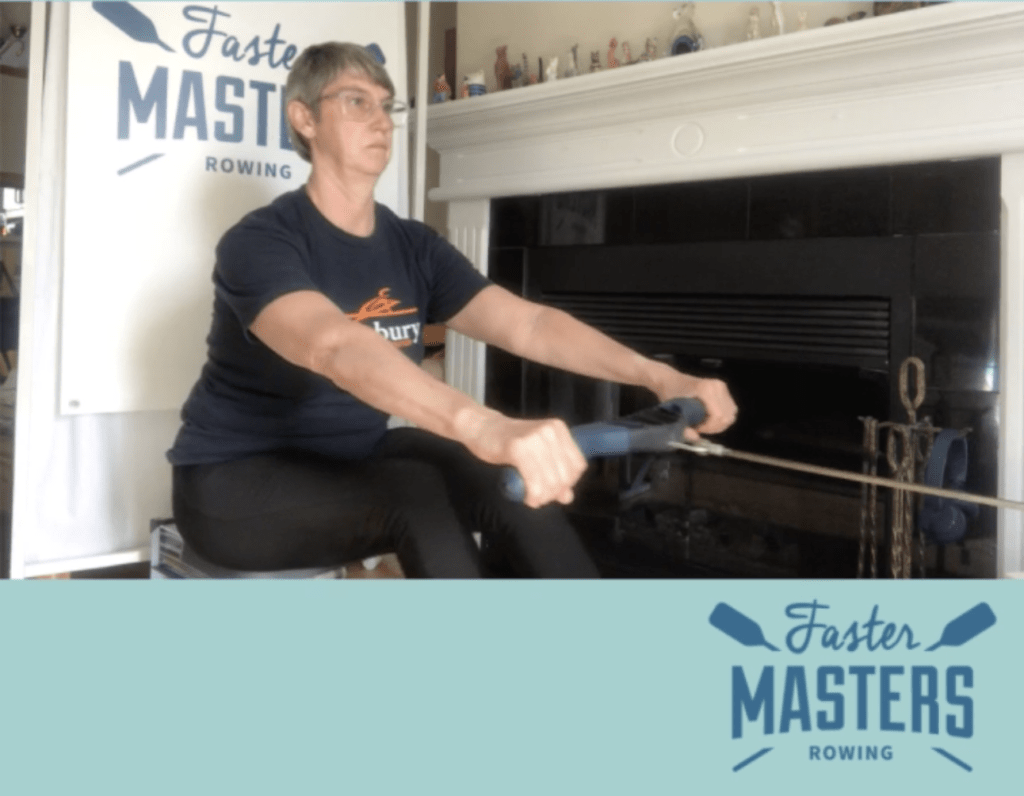
Write out exactly what happened on the day of your last test starting from when you woke up in the morning. Write these as separate items in a list down the left hand side of a piece of paper.
I am expecting that they would write something about the time they woke up, what did they eat for breakfast, what they are wearing, what time they went to the club, what they did in the warmup, what they did in each of the segments of the test and what they did afterwards.
Ask the athletes to separate out what they felt physically from what they were thinking mentally. Obviously this gives a second layer of detail to the plan.
As an example I woke up feeling rested and full of energy I was looking forward to the day.
This statement includes both and objectivists testament of their state of body and their state of mind.
Get them to add to the list of actions from the previous test with state of mind.
Ask the athletes to identify which of the things they have written down are aspects that they can influence or have control over and which are things which they do not have control over.
The objective here is to identify where they can influence the outcome and where they cannot.
So for example the time that they get out of bed in the morning is entirely within their own control. The time they arrive at the club, what they ate for breakfast, what they did in their warmup and so on these are controllable elements.
The elements which may not have been within their control may include the weather, a car crash which slowed down there transit time to the club, at the fact that they had diarrhoea on the day the fact that they were sat at the end of the row of ergs for their test when they actually preferred to be in the middle etcetera.
Have them identify the elements of their plan which are under their control and which they felt were positive and contributed successfully to the outcome of their previous test. The goal here is to work out a series of steps which they can do again on the next test day.
And now they should identify the things which they wish to change for the next test so for example this could include eating something different for supper the night before or having more time to allow for our getting to the boathouse in case there is bad weather or traffic jams.
After having completed these two steps the athlete should have an idea of what things they felt is contributed successfully to their previous test and what elements were not successful, needs changing or need improving.
Get them to write out the plan again for the next test that they are going to do. Have them copy the elements that were successful from the previous test and write out changes which they want to make in order to improve their plan.
While I was coaching an athlete recently we established that she had not identified splits as targets for each of the 500 meter segments. And so based on her target time for 2k we worked out a rating and split target for each of the 500 meter segments. The C2 website has charts you can use for this.
It is important for athletes to have three or four tricks which they can pull out of the bag when they need them during the test which will help them to focus on achieving at 500 meter splits. The focus points need to be positive. As an example you do not want to say something negative like 'don't slouch', instead you need to say 'sit up' as that it is a positive action.
It is my preference to encourage them to have at least one technique focus at least one pressure focus 'trick' and the option to increase the rating in order to achieve the target split.
You do need to explain to them that even if you have a well written plan some elements of this plan must remain flexible. For example you may have a target rating of 30 to 32 during the race and if you are achieving your target splits as a rating of 29 this is acceptable. Conversely if you are not achieving your target splits and you have to take the rating up to 33 in order to achieve the split that is okay it does not matter that the plan said you should be rating 32.
Every plan is only successful if at the end the athlete can say they did their very best to execute all of the elements which are within their control to their best ability. Climbing Mount Everest is only possible if you have process goals along the way.
I like to encourage athletes to keep a training diary so that they have a record of what they did and how they felt as they prepared for a test so that they can reproduce the same conditions next time without having to work it out again.
As athletes acquire skill in pace judgement they will become better at delivering consistently on their plan. You may need to remind them that if you have not tapered your training before a test you may not be pulling personal best scores every time!
Go on rowing camp! The pros and cons of going on training camp. You'll either love it or hate it.
Timestamps
01:00 Going on a camp refocuses your attention on rowing. Are camps useful? There are lots of different types of camp - training camp - selection camp for racing crews - finishing camp before a big regatta
You don't have to go with your whole club. Doing a camp at your own club has disadvantages - people keep their other life commitments and so tend to rush off after the workout. So you lose one of the good aspects of going away to camp which is the luxury of un-pressured time.
Athletes get a lot of individual attention on camp compared to home training. There's time for debriefs, for mini tutorials, one-on-one time, sit next to coaches at meals and pick their brains. Coaches get a captive audience of athletes and can get messages about focus points across to them all.
05:00 Camp issues Increased training load - if normal rows are 60-90 minutes once a day camp workouts will be shorter. But you may do two or three workouts a day.
Overtraining is not an issue in the long term. Camp is only 3-5 days plus travel days when you're resting. Schedule an off day when you get back home while you rig boats. Then pick up your regular training volume.
If you come into the camp injured or recovering - that's a big red flag and needs management. When athletes don't tell the coach that they are injured that causes problems. Doing only part of the camp program is still beneficial.
Getting injured on camp does not mean your time is wasted. Volunteer to go in the coach boat with the coaches, volunteer to film crews, volunteer to help the coaches. Hanging out with coaches, you learn by listening to their discussions. You can train your eye watching crews rowing to find out where improvements are needed. Illness on camp - take care a virus doesn't spread to everyone. Good hygiene practices are needed.
Crew bonding and learning accelerated in a focused period. Plus fitness gains and technique input from coaches. Camp also allows you time to work on technique on your own. Self-coaching discipline and practice is also good.
Want easy live streams like this? Instant broadcasts to Facebook, YouTube, LinkedIn. Faster Masters uses StreamYard: https://streamyard.com/pal/d/5694205242376192
Hear how people deal with an illness but keep up their rowing. Overall advice is "do what you can".
Timestamps
01:00 Many masters try to keep on rowing after a major illness or trauma diagnosis. Getting out on the water feels good - the challenge is around what is possible for you.
Cancer treatment often has regular chemo and radiotherapy and you know the frequency of each session. One solution is to go rowing immediately before the hospital visit. Row when you can with a supportive friendship group. For surgery - muscular rehabilitation and strength training follows a simple pattern over weeks. After a stroke - lingering physical restrictions continue months afterwards.
As we age our bodies may require us to adjust / adapt our stroke. For hand tremors difficulty holding a thumb on the end of the handle was hard. Suggestions include occupational therapists advice, gloves which tape onto the handle, hand exercises using old grips at home, para rowing has many solutions (adaptiverowinguk.com), baseball grip adhesive on your hands, use the little finger or side of your hand to make lateral pressure instead of your thumb.
Carpal tunnel syndrome is a repetitive stress condition - the suggestion was to hold your handle with thumb and index finger curled around the end of the handle and to turn the oar with the middle and ring fingers.
Lady with bone cancer continues to row and to go to regattas to enjoy herself with her friends.
Want easy live streams like this? Instant broadcasts to Facebook, YouTube, LinkedIn. Faster Masters uses StreamYard: https://streamyard.com/pal/d/5694205242376192
Time teaches us a lot - I vividly recall my first ever coaching session during which I picked up my megaphone to say something. And then thought better of it, put down the megaphone. And again....
With time, we get skilled at pattern recognition - coaches recognise situations and know what we did before. This makes it easier to coach because we know what the "fix" is.
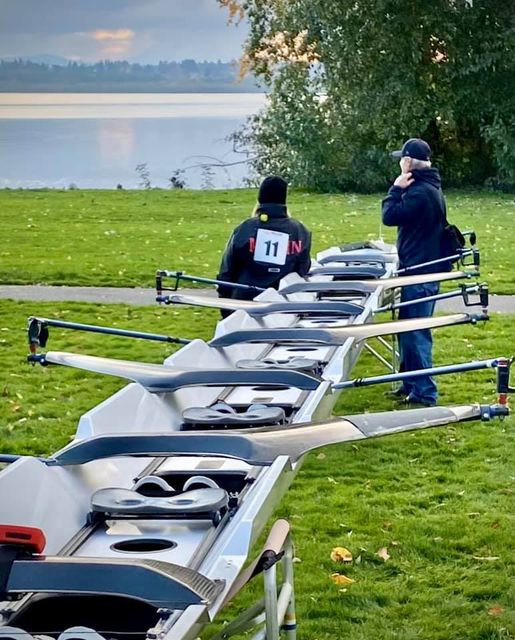
Knowing what to do in many different situations is what underpins a lot of our coaching practice. Likewise, spotting the moment when something dangerous or potentially dangerous is developing is also something we coaches learn over time.
After any safety incident we have to submit a report and the committee reviews it with a view to revising or improving our safety practices. What trade-offs are inherent in your safety choices?
Thomas Sowell (a professor of Economics) is famous for saying
"There are no solutions only trade-offs"
I love this quote because he concisely frames the challenges we face.
This illustrates that layered decision-making is key to getting effective outcomes. When you're round the table with colleagues or your Board, try to see what the trade-offs are inherent in the proposal which is being considered.
Stress-testing a solution can be part of these trade-offs. Fly a kite / set up a straw man and see what reaction you get - when howls of derision follow, you know what a vocal part of your audience think - and if you get stony silence, again you know. What's key is that if people disagree with you, remember that the "other side" is likely not coming from a place of malice, and remember there is no "perfect policy".
I am told that the old Air Traffic Control Handbook used to include this message on the opening page.
Nothing in this book is meant to over-rule your common sense. If it doesn't look safe, don't do it.
Now go and review your own coaching pattern recognition - what can you build on and where could improvements come from?
Coaching Mixed-Gender Masters Rowing Groups is one tool coaches can use to improve the goodwill and common bonds among members. Rowing has a strong reputation as a sport that enables friendships and we know many masters value this aspect of a rowing club.
Unlike nearly all other rowing, masters is nearly always a mixed gender group training together. This presents challenges because of physique - people are different heights, weights and of differing strength.
As a result, many groups choose to train in sculling boats because it is easier to align a crew when each person has two oars, rather than sweep rowing where they have one oar each.
Aside from the training fitness we gain from rowing, community is a major reason why adults choose rowing as their sport of choice. We make friends, real, lifelong friendships with people we meet at the rowing club.
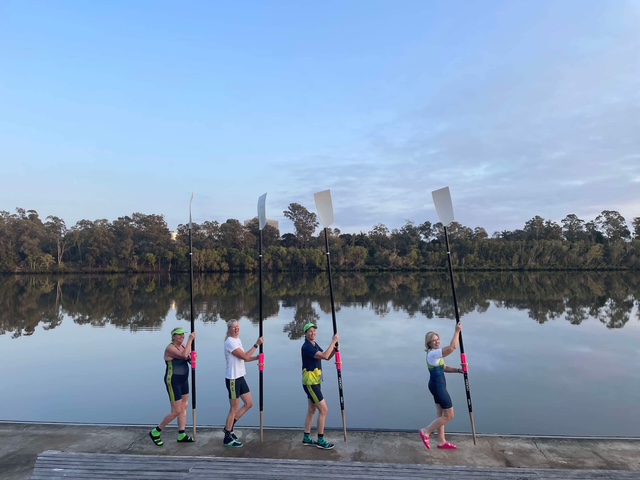
Later in life it is harder to make friendships - there are many reasons for this which I don’t want to dwell on. Today let’s focus on how rowing clubs can facilitate the growth of community and friendships. Because there are many, many reasons why people choose this sport and so it’s incumbent on clubs to understand their membership’s motivations so that the club committee/board can deliver experiences which keeps their members returning to the club each season.
When organising lineups and workouts, club organisers should be planning in three month blocks. What are the events you have on the calendar which will appeal to your members?
Some will surely want to race - and so crew lineups for single sex and mixed crews who want to race together will suit one constituency of your membership.
Socialising after workouts will also suit these people - can you arrange to have a coffee or breakfast together at weekends after your row? Some can use a club room with a kitchen, provide a coffee machine and a toaster so that everyone can get some food, sit down and chat and pay a small sum for the pleasure. Other clubs will prefer to go out to a local cafe where there’s sufficient seating to allow a large table to accommodate a group of rowers in sweaty kit.
How about organising a scrimmage? This is an inter-club meeting with another masters group in your locale. Arrange to go and train at their boathouse one weekend and socialise together afterwards. If you can do crews which mix up the two clubs, all the better. And coffee too!
Jamming sessions are a way of mixing up groups of different abilities. Say you have a novice group and a more experienced group - why not “jam” together [like a band] and put the two groups together for one workout every so often? The less experienced learn from the more experienced and they get to know each other as well.
Social activities like pot luck dinners, picnics, weekends away to row at another club, a coastal rowing adventure, a rowing vacation overseas, or a camp are other ways to build community. You learn a lot about people by spending time together.
When someone new joins the club do you have a person who takes the lead on welcoming them, introducing them to the group and ensuring that they come back for a second time? A simple text message can be enough to encourage them to return.
Your learn to row class is another great way to build community. I get the prior learn to row class to come and be helpers for the new learners. This builds their confidence in the skills they’ve learned when they see that they really do know quite a lot about the sport. It also enables you to have a buddy system for guidance and to use fewer coaches to run the session because you have more helpers.
If you have a clique of rowers who will only row with each other, beware. This is a major reason for a club shrinking, failing to recruit new members to replace those who leave and can become a downward spiral.
If you are too grand to row with other people, you probably shouldn’t be part of a masters rowing club.
Elite clubs do exist (frequently they are virtual ‘rolodex’ crews) and they’re a place for high performing masters athletes. But we all know that there is no way to expand membership, fund raise for new equipment and improve access to the sport with a shrinking membership. Even within an elite group there will be people with more and less experience and fitness - so there is always a need to row with people who are “less good” than yourself.
This is one of the key truisms that underly masters rowing. How does it apply in your situation?
Why are you here?
This is a great question to ask your membership. And the answers will tell you a lot about what the current members value about your club and what it provides its members.
Consider doing a membership survey regularly.... and look for the gaps between what you want to do and what the members appreciate and enjoy. Then you can focus your membership offer to close those gaps.
One of the core differences between youth and adult rowing is physical. Adults rarely have robust, flexible and strong bodies. We’ve been through a lot of “life” and that means that we may be carrying old injuries, we’re likely doing seated jobs and so our flexibility is compromised and it may have been many years since we were last physically fit and strong.
This does not matter one jot, except that you need your athletes to be able to get into the correct physical positions for the rowing and sculling stroke.
All coaches know that getting a crew aligned with parallel blades and bodies moving together is a huge achievement and a thing of beauty to watch. So how do you do this when masters aren’t physically capable?
It’s best to start out testing and checking whether your athletes are capable of sitting still in the catch and finish positions in the rowing boat. You may also want to do a bit of testing so you know what mobility and flexibility they have got. And of course, many will be carrying a bit of extra belly fat and so may be impeded by their own body mass.
When you understand their current physical state, you can decide if this is permanent, capable of improvement or alteration or not.
The rowing and sculling shell has a lot of moving parts which can be adjusted in order to accommodate the range of physiologies you are coaching.
The foot stretcher can move towards the bow for shorter or less flexible athletes or towards the stern for taller and more flexible athletes. The oarlocks can be raised or lowered based on athlete weight and how large the boat they are rowing in is relative to the total weight of the crew. And seats can be raised using seat pads.
The full list of adaptations and a simple easy - medium - hard grading is in this article, Adapting Rowing Rigging for Masters Physiology.
Sam Dutney explains the differences and how they apply to masters rowing.
Different modes of training methodology are polarised and pyramidal. Most of the time people use pyramidal so the training intensity distribution is like a pyramid. It has a large base of low intensity, a moderate amount of mid intensity and a small amount of high intensity. Polarised training skips the mid intensity and has 20% at high intensity.
02:00 Percentages are 60: 30: 10% for pyramidal. Rowing training has been pyramidal for a long time - since 1930s. Polarised became popular in mid 2000s and is based on a study done on elite cyclists in endurance sports.
The benefits of polarised training link well to the benefits of High Intensity Interval Training (HIIT). What drives the benefits are the high intensity training - the top levels are very similar - the top level training is at or near top efforts. A huge amount of rowing performance comes from efficiency and time in the boat. Develop the skill in a polarised model in the low intensity sessions.
Available time - if you can only train 3 times a week. Do a program with one low intensity and the other two as high intensity. If you are doing 4-5 sessions a polarised model may be more suitable. Pyramidal training is effective in the early season and head racing. because you aren't trying to operate at maximum intensity. So pyramidal can be effective at this time of year.
A 2016 paper on runners compared pyramidal and polarised training for 16 weeks; The results from pyramidal for 8 weeks and then shifting into polarised for 8 weeks was very much more effective than all the others. The polarised hard sessions have to be really hard and the easy sessions need to be really easy. As we get older you don't recover as well that's where polarised training can help recovery for masters.
Top Crew Academy is a coaching service run by Sam Dutney.
Want easy live streams like this? Instant broadcasts to Facebook, YouTube, LinkedIn. Faster Masters uses StreamYard: https://streamyard.com/pal/d/5694205242376192
As the sport of rowing continues to grow in popularity among older athletes, the need for effective and safe flexibility training becomes increasingly important. One method that stands out is Active Isolated Stretching (AIS), a technique designed to improve muscle elasticity, joint range of motion, and overall athletic performance. For older rowers, incorporating AIS into their training regimen can help enhance rowing efficiency, prevent injuries, and maintain long-term physical health.
Active Isolated Stretching is a technique developed by kinesiotherapist Aaron Mattes. Unlike traditional static stretching, where a muscle is held in a stretched position for an extended period, AIS involves holding each stretch for only 2-3 seconds. This brief duration allows the muscle to relax and lengthen without triggering the body's protective reflex that prevents overstretching, known as the myotatic reflex. By isolating specific muscles and using gentle, controlled movements, AIS effectively enhances flexibility without causing strain.
1. Improved Flexibility and Range of Motion: Flexibility naturally decreases with age, and for older rowers, maintaining a wide range of motion is essential for effective strokes and overall technique. AIS helps in maintaining and even improving flexibility by focusing on specific muscle groups used in rowing, such as the hamstrings, hip flexors, and shoulders. This increased range of motion can lead to more efficient strokes and reduced strain on the body.
2. Injury Prevention: Rowing is a repetitive, full-body activity that places significant demands on the muscles and joints. For older athletes, the risk of injury can be higher due to decreased muscle elasticity and joint stiffness. AIS targets these areas, helping to alleviate tightness and reduce the risk of common rowing-related injuries, such as lower back pain, shoulder impingements, and hamstring strains. By incorporating AIS into their routine, older rowers can maintain a balanced and injury-resistant body.
3. Enhanced Muscle Recovery: Recovery becomes increasingly important as athletes age, and AIS plays a crucial role in this process. The short, repetitive stretches of AIS promote blood circulation, helping to deliver oxygen and nutrients to the muscles while removing metabolic waste products like lactic acid. This increased circulation aids in faster recovery, reducing muscle soreness and stiffness after intense rowing sessions.
4. Customizable and Accessible: AIS is highly adaptable, making it an excellent choice for older athletes with varying levels of flexibility and strength. The stretches can be easily modified to accommodate individual needs, ensuring that each athlete can perform them safely and effectively. Additionally, AIS requires minimal equipment—typically just a stretch rope—making it a convenient option for athletes to incorporate into their daily routine, whether at home or the gym.
Phil Wharton is a runner and physiotherapist - he demonstrates several AIS stretches here.
For masters rowers, incorporating AIS into a training routine can be straightforward and highly beneficial. It's recommended both before and after rowing sessions. Pre-rowing AIS can serve as a dynamic warm-up, preparing the muscles for the demands of the sport. Post-rowing, AIS can relax and lengthen the muscles after practice.
A typical AIS session for rowers might include stretches targeting the hamstrings, quadriceps, hip flexors, glutes, shoulders, and upper back. Each stretch should be performed for 1-2 sets of 10-12 repetitions, holding each stretch for 2-3 seconds. Remember to breathe deeply and move gently into each stretch, focusing on the quality of movement rather than the intensity.
Flexibility and mobility aide our rowing. What you can do to keep mobility will help your rowing and sculling.
Resource: Functional Movement Assessment – self test
3 Value Bombs
Timestamps
01:00 How can we stay mobile as we age?
Two mornings after a big workout you wake up feeling stiff, tight and tense in your body. Delayed onset muscle soreness (DOMS) has kicked in. Your body does not feel like it normally does.
Mobility and flexibility are words used interchangeably - but medically they have different meanings. Mobility - ability to move through the full range of motion. The rowing positions we want to be able to achieve. Sit at the finish with good poise, no slump in your lower back and pressure on your feet. Rock forwards with a pelvic tilt so your shoulders are sternwards of your hips. Roll up the slide to full compression with shins vertical, arms wide and is your body able to take the strain of the load from the oars in the water, Flexibility - ability to stretch your muscles, tendons and ligaments. IT is possible to be mobile without being flexible.
Webinar Functional Movement Assessment - how does your body move to achieve a particular position. This free webinar can be watched on demand from this link.
10 Screening Exercise Tests
Where is your ability on 10 screening exercises? The ebook (free download) sets out the main positions for rowing and sculling. All are useful for you to work out if you can get into the positions for the stroke cycle. The webinar discusses ways to improve your score on the tests. Rowing with compromises affects many masters rowers. The webinar shows you stretches to help you change your body to improve your screening exercise results. These exercises are useful if you want to make a change in your body.
06:00 Changing your body takes time and regular practice
Muscles, tendons and ligaments take time to change, to lengthen and to strengthen. Old injuries or health issues affect our body postures. Setting up a rowing boat to suit each person's physical mobility is another article. Getting more flexible is something we should all be able to do with regular practice. Morning ritual while brushing my teeth, I stretch my adductors. A challenge for you - improve one or two of your screening tests.
08:00 Coaches can use the tests to screen crews.
Find out whether they can get into the positions you are trying to coach. If athletes cannot get into the positions, you will find it harder to teach technique.
Skill stretch for masters who splay their knees out sideways as they roll up the slide. If you do not have the strength to hold legs parallel. Hold both fists together between your knees and use your legs to squeeze your fists gently. This strengthens the muscles on the outside of your legs and may help to keep your legs parallel.
Find out if your body is mobile and can get into the rowing positions and watch the Functional Movement Assessment free webinar.
Want easy live streams like this? Instant broadcasts to Facebook, YouTube, LinkedIn. Faster Masters uses StreamYard: https://streamyard.com/pal/d/5694205242376192
One of the major standouts about rowing and sculling is that it’s a sport for life.
You can learn to row at any age, leave and not row for years and then come back to the sport.
Clubs love it when rowers return - it’s like having a prodigal son or daughter!
When someone shows up, do find out when they were last in a boat - for some they may never have used carbon fiber oars or used a non-wooden boat. And so some re-introduction may be needed.
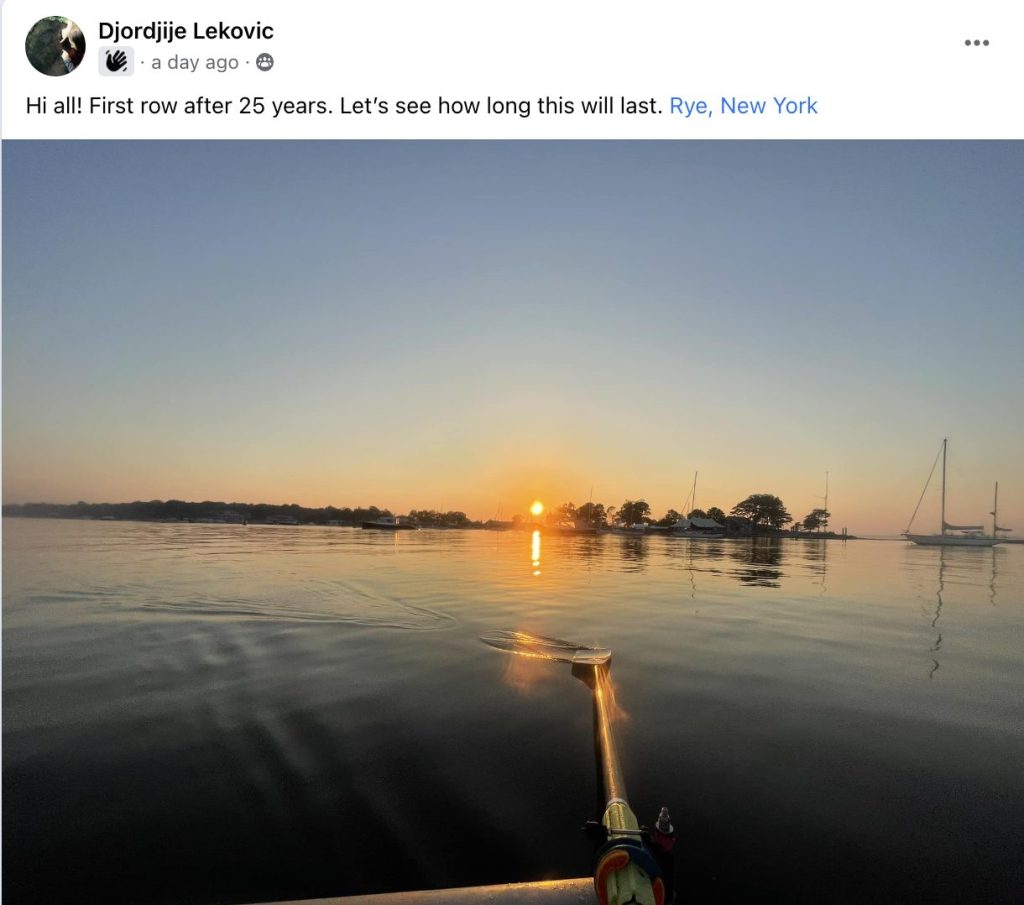
The first thing to do is to welcome them back. They likely remember the feeling of community, shared endeavor and achievement. But the folks they rowed with back in the day aren’t with them now - the club has new and different members.
Friendship is a critical part of the successful masters rowing experience. Invite them to coffee after the row, message them to have them join an outing later in the week or next weekend. Let them feel welcomed and valued.
The second thing to do is to hold them back physically.
When you come back to a sport after a break (even a few short weeks) your mind and body assume, wrongly, that you can return at the same standard as when you last were in a boat. We all know that’s not going to be true. Your muscles will have weakened, your fitness declined but your mind thinks “Hey, I know this.... Let’s go!”
Nobody wants an injury in the very first outing - avoiding blisters too if you possibly can.
Take your time, get them to recall the stroke sequence - do some drills like pauses, like rowing square blades (half the crew only), early square - all designed to remind them of the stroke, the order things happen and what it feels like. Pauses are particularly good because it offers a physical rest and keeps the stroke rate low.
After the workout, do a short debrief and ask them how they feel, what they enjoyed and how their muscle memory was working - did it all come back easily or were there things they’d forgotten?
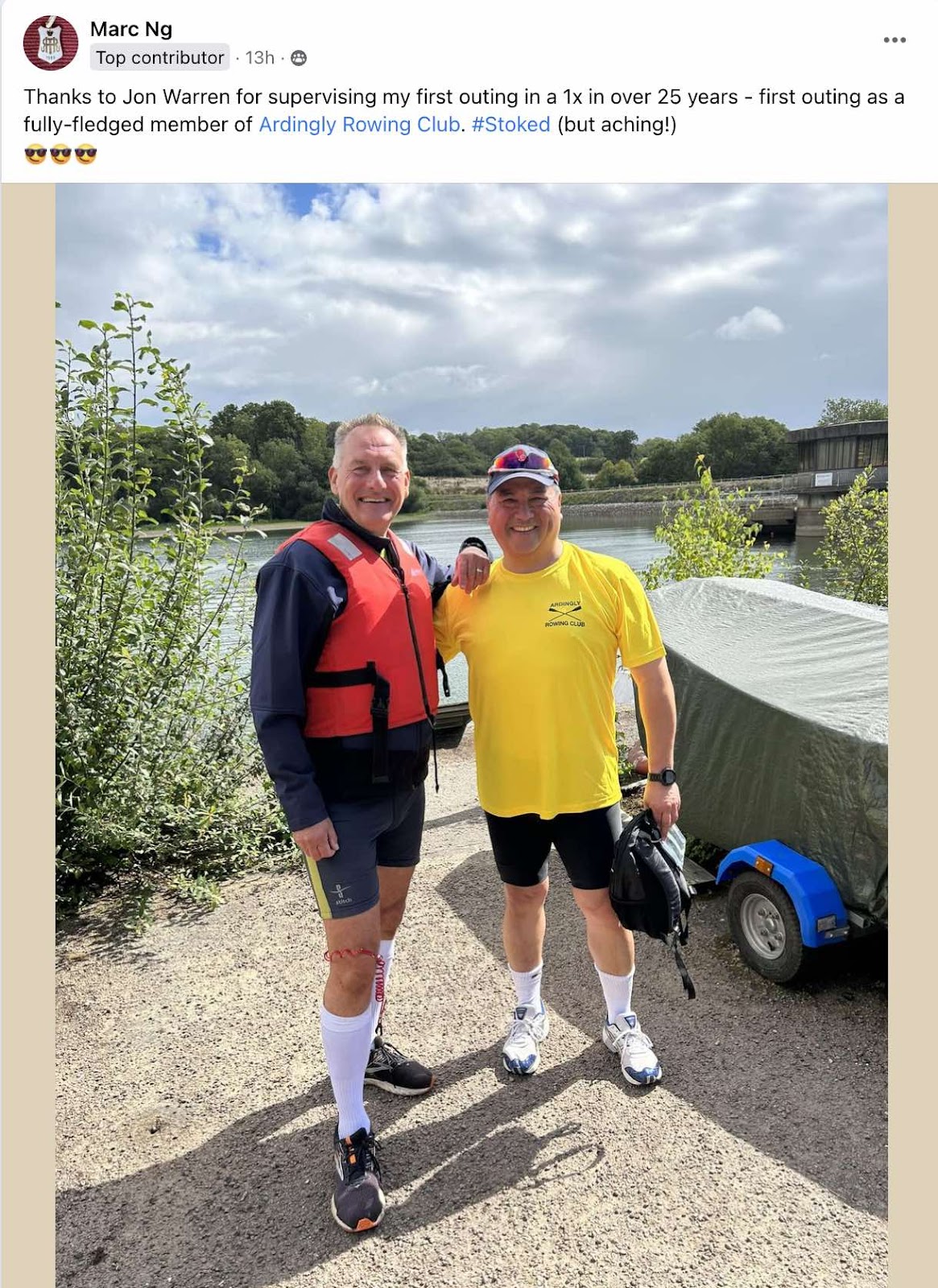
If you can encourage them to make a new rowing habit quickly, that's amazing. They will gradually return to fitness and re-learn the stroke sequence.
As a coach, you will do well to get them to track the length (distance) and duration of each outing so they can gauge how well their body is adapting. Take time to encourage them to work on the basics - use only one focus per outing so you don’t overload them. Remember masters learn differently from youth rowers and having a single technique point which you repeat in drills at least 3 times during a workout will serve you best in the long run.
Racing is the last thing you should re-introduce to the returning rower. It takes time to build fitness and to then be able to rate high as well. So if your athlete rows 1-2 times a week, it may be 6 months before they feel ready to race. Do some trial races during your regular coached sessions so they get a feel for how “racing fit” they are. If they row 3 or more times per week, you can cut the months down - particularly if they remained fit from other sport during their time away from rowing.
Can you give me any tips on how to get started with the programme and how to build myself up from pottering around on the river to actual training? I’m 62 next week, was a successful heavyweight senior rower in the 1980s but always very inflexible and prone to back injuries. I taught myself how to scull a single in 1977 but only raced for the first time in August 2018. I won my first two races but the third regatta in mid June 2019 was a disaster, I felt really weak, lost by miles, and haven’t raced since.
Take a read of this answer to the question
All Faster Masters Rowing training programs are customized to each athlete’s fitness and skill level. As you get fitter, you will be able to row longer duration, higher stroke rates and row further during your workout.
Join our community and get our exclusive Faster Masters Rowing Magazine, packed with tips, techniques, and inspiring stories. Includes four new articles monthly.