Picking your crew lineups for regatta is a delicate task for Masters group organisers and coaches. There are so many potentially “touchy” topics.
Rather than present a vanilla approach, I thought it would give insight if I share the process I use for my club group. We are a mixed club of racing and non-racing members with some who train 1-3 times a week and others who do 5 times plus.
When I am planning a regatta squad I start by creating a spreadsheet with a list of every single event in the order in which they will be raced. The critical issue here is the turnaround times between events. We normally find you need at least 3 races for one athlete to get adequate time to return to the start after racing.
I then make a list of all of the athletes who have signed up to attend including their age, and their sweep and sculling preferences.
Part of our club’s modus operandi is that we encourage members to ask for their number one preferred crew lineup. In this way we allow people to set their own personal priorities. We have an understanding that after you have your #1 crew, you will join any crew for which you are selected without complaint.
Many people say they only want to do two or three races, and we also try to boat crews of people who train regularly together. We find that if there is a group who enjoy training together that makes it super easy for crew selection!
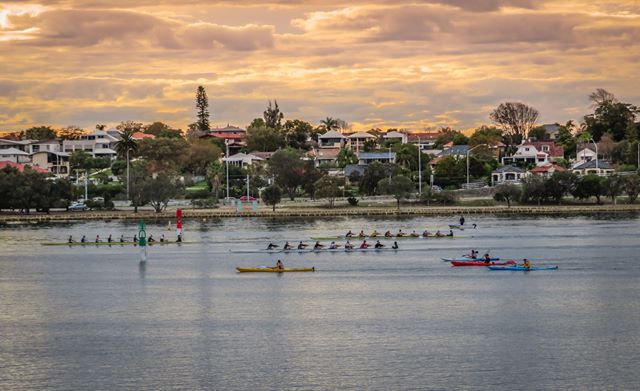
I find it most straightforward to put people into groups of 4 athletes. In this way you have the same people in the same crews at the same time and there are fewer boat sharing and lineup conflicts between races. So for example 4 people may do a quad and then they may split into two doubles and they may also do a coxless four.
My next job is to run through the list of events and to write draft names next to each event. I already have a list of the priority crews so I put these in first.
I then run down the list a second time adding in each crew’s average age based on the people in the lineup. This shows me which age class they are in and which are close to the age limit.
Then I refer back to the list of names and I write the event number that each person is rowing in next to their name.
This quickly shows me that some people have got five races and others only have one! And so I review the list again and move people between boats so that everybody has a similar number of races. Knowing the average age of each lineup helps me to see where I will have to change age category when I switch out an athlete.
My last job is then to allocate boats and oars against each of the events. We have several boats which can be rigged for both sweep and sculling and so this adds in the necessity of allowing time to re-rig in between races.
Then the fun starts! I send the draft spreadsheet to a small group of people who review my work and point out some of the errors, omissions and overlaps. There have been some hilarious ones in the past.
Based on this I do a further revision and then send it round to the athletes as a draft. That allows people to see some of our suggestions and to come back with any objections or changes which they want made.
Another version is done; in the meantime people start training in their crew combinations. The final lineups are given to our entries secretary who manfully does the hideous task of putting in the regatta entries. I’m so grateful I do not have to do this.
And of course, on the day there are sometimes drop-outs and crew swaps... but those are relatively easy to manage compared to the work already done.
Would you like to publish this article in your club newsletter or website?
Join our Masters Rowing Advocates mailing list and we will send you one article a month. Sign up on our Advocacy page.
You can copy the text on this page. Or download the PDF
At last you can start rowing on the water again. Your instincts tell you to seize your oars and row, rejoicing that erging is over once again. No doubt it feels good to go pump out a 15k, toss in some starts, and sweat. You’ll be euphoric; you’ll probably also have blisters, sore muscles, balance and blade work problems. So, if your goal this season is to move your boat more meters per second, should you really just go tear up the waterways? Paying attention to details, while easing back into your boat will shell out dividends later in the season. Avoiding a madcap approach might also mean a little more indoor rowing.
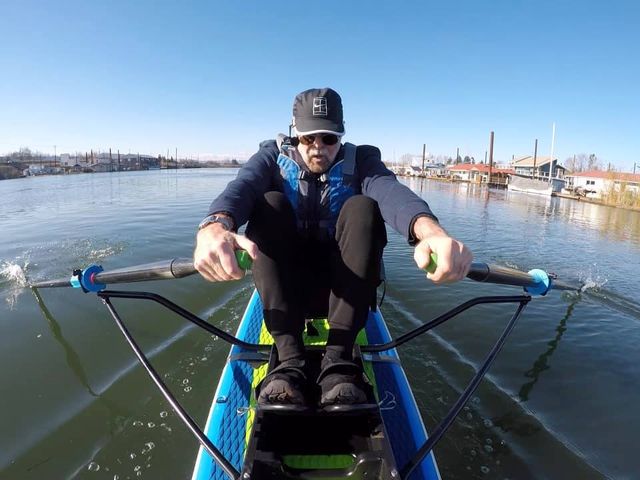
You need to allow yourself a tuning period of a few weeks when getting back on the water. Give your hands time to adjust to a different handle size or texture. Check that your grips are in good shape and replace them if you need to. Remember that you haven’t feathered an oar for a long time so you will have to be aware of correct hand placement and handle manipulation from the start. Sweep rowers again need to isolate the functions of their hands so the inside hand feathers and the outside hand controls the height. Scullers should keep the thumbs at the handle’s end and resist palming the narrow handles. Attending to flat wrists and keeping the forearms level with the water is important to minimize extra motion.
The boat is a reactive environment, so many of your smaller trunk muscles that have not been used during the down time will fatigue before your larger power muscles will. Your initial sessions are, in effect, limited by the endurance capacity of your stabilizing muscles. When you start to fatigue and catch yourself balancing the boat by swaying your knees-you need to go in. During early season rowing, care needs to be taken to row well and prevent any type of overuse syndrome that will linger into the season. Keep in mind that a muscle strain typically can take six to eight weeks to heal.
Scandinavian cross-country skiers have a training motto that says, “Hurry slowly”. When you get back in your boat this season, put technical emphasis on balance and blade work. This requires patient kilometers of low stroke rate work between 16 to 20 strokes per minute and exercises for the entry and release such as pausing at half-slide, one-quarter slide rowing, or legs-only.
Groove in good movement patterns, but be aware that you also can’t afford to lose fitness.
This is where the erg comes in. The initial transition to the water requires lower power applications until you are comfortable, so putting in some work on the erg can be key to keeping your fitness level up during the transition time. Row your workouts that are above steady state intensity on the erg so you can work at a high enough aerobic level. Gradually, build the pressure up on the water until you can maintain technique under more stress. Being diligent about taking the time to practice good blade work which will give you more boat speed once you start ramping up the cadences later in the season.
Next time you get ready to push off the dock for your distance row, remember another rowing proverb, “If you can’t do it slow, you can’t do it fast”.
Would you like to publish this article in your club newsletter or website?
Join our Masters Rowing Advocates mailing list and we will send you one article a month. Sign up on our Advocacy page.
You can copy the text on this page. Or download the PDF
There are five core considerations when you want to row yourself and also have family commitments. These are:
Times of day is an essential consideration - children are active at different times at different ages. While they are young, an afternoon nap may give you time to train and when they are older, they won’t be getting out of bed early and so your training time can be shifted. Look at your schedule and the children’s “normal” waking and sleeping patterns to see if there are some gaps for you to exploit.
A supportive partner is the BEST. Without them it is truly hard to row while you are raising a family. I am not going to discuss details here but having something each of you can do for yourself separate from the family is your goal. Talk it through. Our club had a rowing couple who took turns to row first while the other looked after their toddler upstairs in the rowing club - then they switched places.
Your regular rowing crew mates are also a fabulous resource. You may have a group of five or six people who train together and maybe you decide to take turns doing child minding for the whole group (upstairs in the rowing club or a nearby park) while the others go rowing. There are also the possibilities of sharing grandparent, nannys, nursery care as a crew.
Erg is often second best compared to water training. But remember some training is usually better than no training. Can you sneak 40 minutes on the erg? A comparable session would be 90 minutes on the water because you have to drive to the river and wash / dry your boat and drive home afterwards. Short intensity sessions can be easily done on ergs, bikes or by running. One Mum told us she took the erg in the car to her children’s swimming practice and assembled it for use in the car park while they were training! That’s dedication.
Racing and regattas are special. And to be honest, if you are competing it is very hard to also mind children. Try to bring a partner or friend / relative with you to the regatta so you can easily switch from Dad to Athlete mode without having to run round finding someone to child mind from your team because your race got delayed.
A podcast episode discussing rowing training while raising kids - led by an athlete who was facing personal challenges.
These top tips were supplied by members of the Masters Rowing International Facebook group. Thanks to them all.
Would you like to publish this article in your club newsletter or website?
Join our Masters Rowing Advocates mailing list and we will send you one article a month. Sign up on our Advocacy page.
You can copy the text on this page or download the pdf.
Masters rowers (you can become one when you turn 27) is one of the fastest growing membership groups of our sport. And yet masters rowers are poorly served by many clubs.
This article covers the (rather long) list of frustrations.... and also has solutions .... scroll down.
There are always those whose priorities don’t align with our own. In one club a coach told me the thing he hates most about rowing is masters!
Some clubs ‘reward’ masters with the worst, oldest boats and no coaching support. How long will it be before they vote with their feet and go elsewhere?
When people join the Facebook group ‘Masters Rowing International’ they are asked: “What are your frustrations with rowing?” The answers consistently fall into the same themes:
How can we address these problems?
Masters membership growth is rapid, and the masters regattas are among the best-supported each year.
My challenge to everyone reading this is to go to your club committee and ask what the club can do for your masters group.
Tell us what solutions you’re finding that work for clubs and masters.
Would you like to publish this article in your club newsletter or website?
Join our Masters Rowing Advocates mailing list and we will send you one article a month. Sign up on our Advocacy page.
You can copy the text on this page. Or download the PDF
Marlene and Rebecca discuss
- The Science of coaching masters athletes
- Erg Inspiration - how to make it fun
04:15 This past week we are supporting masters rowing around the world by:
- attending the Rowing Canada conference coastal rowing course
- Marlene was interviewed on the Science of Rowing with Will Ruth - details below
- listening to James Leath on intentional coaching
https://unleashtheathlete.mykajabi.com/
- Running a scrimmage regatta locally for masters
- Reviewing the "new masters" status for post-novice rowers before they become age group racers
10:30 Erg inspiration when you get depressed looking at the rowing machine
- make it fun. Ear buds, play list; podcast
- Groundhog day
14:00 Training programme for the Head of the Yarra - use the Faster Masters programme if you haven't got time to write a programme. Masters like to know workouts in advance because they like energy planning, time planning and consistency helps.
18:00 Rowing in 6s in an eight. What is the purpose of the exercise? If you want a stable platform, or a drill for the best chance to execute the drill, being stable is good.
When a pair drops out - have an agreed way to hold your oar when you change pairs; also an agreed way to join in the rowing; also an agreed way to hold the oar to stabilise the boat (against your knees or arms outstretched with upward pressure).
Discuss whether you want a "soft set" or a "firm set" in the drill and what the crew should do.
It's important to keep the handle pressure upwards (so the blade is flat on the water) to set the boat.
Facebook discussion
https://www.facebook.com/groups/595853370615544/permalink/1606787526188785/
24:15 The Science of Rowing - Marlene video interview with Will Ruth
[To get the video link, please join our newsletter]
The research article (Nova Scotia) is about coaching masters looking at Autonomy, Competence and Relatedness. The athletes who got coached experienced high relatedness and also greater frustration with autonomy.
To improve your coaching outcomes we need to ask if the psychological needs of the athletes being met?
Perceptions of masters are no different between the group who is coached and those with not much coaching. The sense of belonging is directly related to the amount of coaching the athlete receives.
40:00 Groups in your rowing club - how to enable a range of groups to form, un-form and meanwhile still keep the club stable.
Rebecca and Marlene go on a rant in this week's podcast - predictably they are feeling taken for granted.
01:00 the Head of the Charles interactive map of competitors
06:00 Virtual races coming up
10:00 Newsletter subscription - if you listen, please join us. Yes, we give you free rowing advice and our "payment" request from you is that you join the newsletter.
12:15 We want feedback from you, our listeners.
What are your opinions on investing in rowing training programmes? Why do you like free rowing advice?
You pay to travel to regattas, to camps, to race... and some people won't pay for a training programme. Why?
16:00 Many rowers read books for knowledge. Compared to having a coach this is curious as the coach is a bridge between knowledge and actual practice. By reading do you get better skills in your boat?
22:00 Explanation of the Northern and Southern Hemisphere parallel rowing seasons and how the programmes take account of this. The 1k and 5k head racing programs. The training cycles align with races.
25:00 Free rowing advice on the internet - how does that affect your improvement and your coaching? If you are serious about improving your programme should be written to understand your needs by someone who knows masters rowers.The difference between training for improvement or an event versus training for fitness,
29:45 Faster Masters is a business selling paid rowing training programmes. There's a hierarchy of services affordable for most people.
35:00 Tell us more about what you want from Faster Masters.
nMarlene and Rebecca discuss
Faster Masters Rowing announces the launch of the Faster Five.
Find out more at https://rowing.chat/sponsors/
Kanghua single for sale
The team at Kanghua has a single scull available for sale. It's an all carbon Spirit design for athletes weighing 60-65 kilogrammes. You can trial a Spirit single scull near your home club by contacting Eric Sims
https://rowing.chat/sponsors/
05:00 Interviewing and hiring a rowing coach. What to do and what not to do. You are looking for communication skills. Getting along with the group. Can they adapt their teaching style to the learning style of the athlete? What’s important to them as a coach - what do they get out of coaching?
09:00 Specify the goal of the programme - is it competition / fitness / recreational? What are the age range of athletes? Boat sizes - big or small. Write the advert for a rowing coach as specific as possible including qualifications needed
14:00 Interviewing a rowing coach. Get references. Invite them to a practice day. Watch how they interact with the athletes. Observe how they coach. Then ask scenario questions - how do they problem-solve this situation. In their reasoning check they have health and safety in mind and check they ask the right questions.
17:00 How would you select a crew? This is a great interview question to ask. Being a team player has a big influence on culture of the club. Remember unhappy members affect the club culture.
20:00 Coaching technique versus coaching people. They have to be effective communicators. Give the novices the best technical coach.
26:00 Have the crews give input into the selection - do a sample coaching weekend. Get feedback from your members. Use a survey which can be anonymous.
Read the article When Masters Can't Find A Rowing Coach
https://fastermastersrowing.com/when-masters-cant-find-a-rowing-coach/
29:00 Starting work with a virtual rowing coach. Several clubs are working with Faster Masters alongside having an in-person coach. It’s powerful to have a common goal for your group.
32:00 If your coach is not comfortable writing a program this can work well - buy the Faster Masters Rowing program and use it alongside your in person coach.
A client got in touch with us asking a question which we know many of you will relate to.
Hi, I'm a masters rower voluntarily coaching a novice crew; my crew are racing in the first weekend of December so we have 8 weeks basically to get some fitness up.
I'm wanting an erg program for them - ages 35, 59, 50 and 43 - two younger women fitter than the older ones.
Can you help?
Join our community and get our exclusive Faster Masters Rowing Magazine, packed with tips, techniques, and inspiring stories. Includes four new articles monthly.