The risks of abrupt changes of your training and surprising outcomes from practice lineups, rigging, and winter to summer transitions with guest Marlene Royle.
Timestamps
Marlene sees these as a red flag for masters rowers. Her experience as a coach when racing season comes around was a trend from mid-summer on where their season got derailed. All were caused by quick changes, unfamiliar boats and doing a training session from another coach on top of their normal training. These are all avoidable.
Let your muscles and tendons adapt to different stresses like moving from an indoor rower to a boat. The difference between a sculling erg and a sweep boat is clear in movement patterns. All these abrupt changes resulted in injury to tendons or muscle strain. Rule of thumb for moving onto the water is to start at 50% volume in week one and build up to full training in the new mode over 4 weeks. You won't get as fit on the water initially as you did on the rowing machine so use this time for technique.
The temptation is to stop rowing your normal pattern and instead to "flex" and go with what you feel in the boat. This is an abrupt change in technique and not conducive to protecting your body. If you have a sensitive low back, then an unstable boat can cause a flare up. Common sense - think before you do. Common sense is not very common. For equipment make gradual changes.
Listen to podcast
Want easy live streams like this? Instant broadcasts to Facebook, YouTube, LinkedIn. Faster Masters uses StreamYard: https://streamyard.com/pal/d/5694205242376192
Masters rowing has a secret that most athletes in individual sports never have to confront:
YOU. CANNOT. HIDE.
In cycling, running, or golf, a strong performer can carry a result. Not here. Rowing is what Brian Klaas, in his book Fluke, calls a weak-link sport. Speed is a function of synchronisation, balance, and timing. If even one rower in an eight is fractionally off the run of the shell suffers. You are only ever as good as your least coordinated rower. Every seat is load-bearing.
Think of team ball sports like basketball where a strong-link scenario exists “you can ignore the bad stuff and focus on making the best stuff better”. Michael Jordan was a transformational athlete, but it was not essential that his “supporting cast” of team mates had to also operate at his skill level.
This is not the case with rowing.
Rowing is the exact opposite. Speed is a function of synchronisation, balance, and timing. In a crew boat if even one person is a bit off, the boat will lurch creating drag. That crew will lose to a more co-ordinated lineup. Unlike basketball, we’re only as good as our worst athlete. That makes it a weak-link problem”.
As Coach Ted Humphries says
The skill of the boat is the teamwork of the boat. The boat needs continual, repetitive, endless practice. The coach can never be satisfied. Nor can the crew. In our information age, every newsletter and every coach dispenses advice, but advice is not the answer. The answer is repetition until every part of the boat gets it right. Klaas’s refrain is “Everything matters.”
It is the combination, relentlessly pursued; never quite perfected, that produces the harmony former UCLA player Steve Patterson described as “as close to perfection as you can imagine”.

This is why John Wooden, the legendary UCLA basketball coach, would have made a brilliant rowing coach. His Pyramid of Success places Conditioning, Skill, and Team Spirit at its middle layer. He understood these not as separate qualities but as a single, interlocking system. Skill without Team Spirit produces brilliant individuals who wreck boat flow. Conditioning without Skill is just fitness.
For masters rowers specifically, three things follow from this.
Lower back pain in rowing typically stems from two technical errors: excessive lumbar flexion (rounding) at the catch, and early back engagement during the drive. Both create compressive and shear forces on your lower spine. The fix requires specific technical adjustments and targeted strengthening, definitely not just "rowing through it" or stopping entirely.
What's happening: You're reaching forward with a rounded lower back instead of maintaining a neutral spine. Every stroke creates hundreds of pounds of compressive force through your lumbar discs.
Why it hurts more after 40: Your spinal discs have less water content and reduced shock absorption capacity. The same position that you "got away with" at 25 now creates pain and potential injury later in life.
Visual check: Have someone video you from the side. At the catch, if your lower back is rounded (shoulders hunched toward knees), you've found your problem.
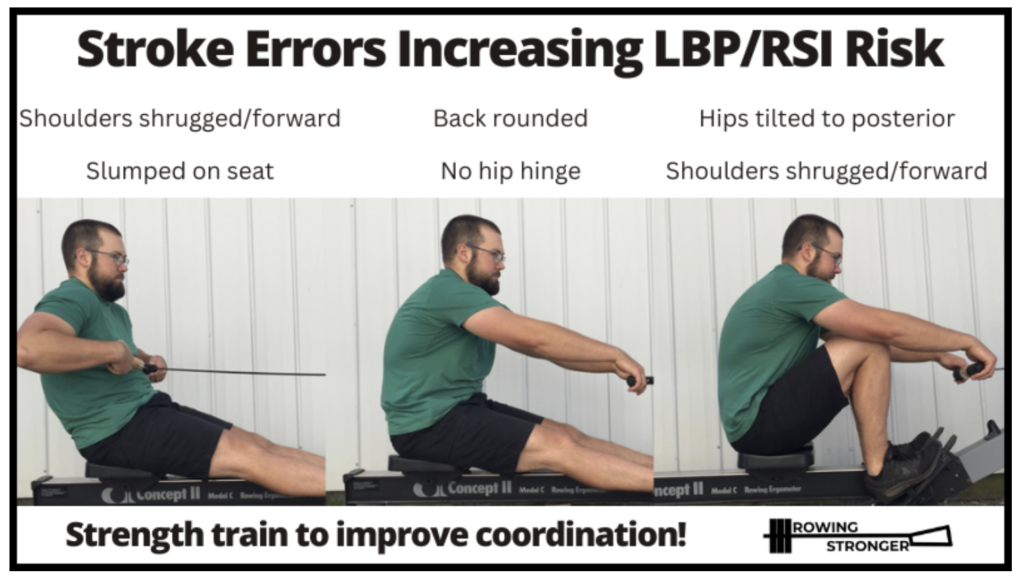
What's happening: Your back opens before your legs finish driving. You're essentially trying to "lift" the load with your lumbar spine instead of transferring power from your legs.
The force problem: This creates massive shear forces on L4-L5. Multiply by 10,000 strokes per week, and you have chronic low back pain.
Feel check: If your lower back fatigues before your legs during a hard piece, your sequencing is wrong. If your lower ribs touch your thighs when you are at the catch and they stop touching early, chances are you lifted your shoulders to start the power phase.
What's happening: Your superficial abs (six-pack muscles) work fine, but your deep stabilisers (transverse abdominis, multifidus) are weak. These muscles should stabilise your spine during the rowing stroke.
Why this matters: Without deep core stability, your spine moves too much during the stroke, creating irritation and inflammation.
What's happening: Tight hip flexors prevent full hip flexion at the catch, or tight hamstrings prevent pelvic rotation so you compensate by rounding your lower back to achieve compression.
The compensation: Your body finds range of motion somewhere. If your hips can't flex enough, your spine flexes instead, and that hurts.
Setup position:
Key cue: Your forward reach comes from hip flexion (folding at the hips), not spinal flexion (rounding your back).
Trade-off: You may lose 1-2cm of reach. You'll gain 10+ years of healthy rowing.
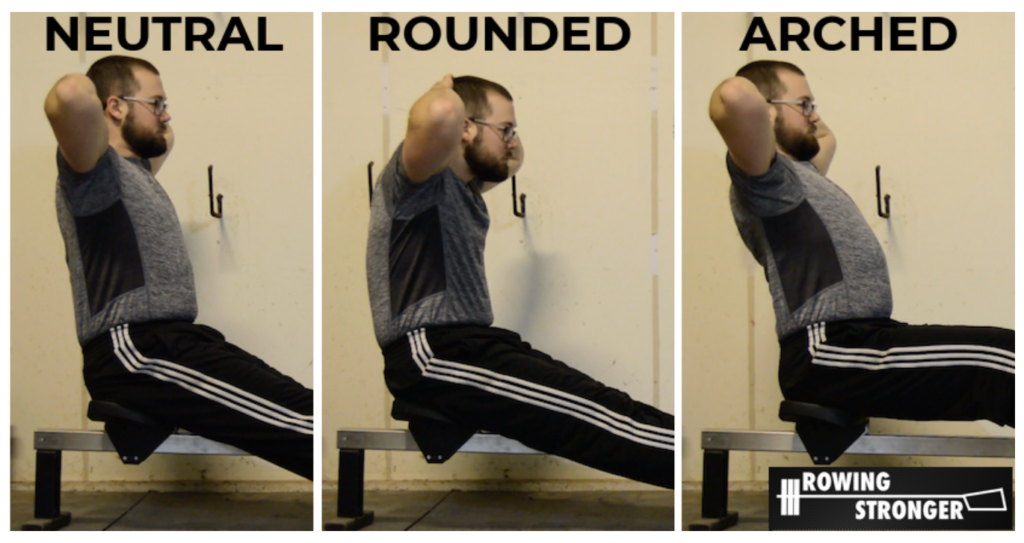
Practice drill:
Correct sequence: Legs → Back → Arms
Not: Everything opens at once, or back-before-legs (shoulder lifting)
Practice progression:
Mental cue: "Push then swing" not "lift and pull."
Feel check: Your hamstrings and glutes should fatigue before your lower back. If your back is screaming and your legs feel fresh, you're still sequencing wrong.
Why this matters: A rushed, uncontrolled recovery forces you into poor catch position, which creates the back pain downstream.
Recovery principles:
Ratio: Recovery should be 2-3x longer than the drive at low rates If your drive is 1 second, recovery should be 2-3 seconds.
Dead bug progressions:
Bird dog:
Plank variations:
Key principle: Quality over quantity. Perfect position for 20 seconds beats sloppy form for 2 minutes.
Kneeling hip flexor stretch:
Couch stretch:
Goal: Improve hip flexion range so you don't compensate with lumbar flexion.
Deadlifts or Romanian deadlifts:
Single-leg deadlifts:
Glute bridges:
Go and see a medical professional who is sports-trained. A family doctor or general practitioner is not suitable for sports injuries. Be proactive - seek a physical therapist who understands rowing. Physiotherapy, osteopathy, chiropractic and sports massage experts may all be suitable for you. Find one who helps your condition - do ask other rowers who they use.
It's important to get injuries seen quickly - do not wait two weeks and hope the pain subsides using pain medication.
Training recovery protocol
Week 1-2: Reduce volume by 50%, focus on technique at low intensity Week 3-4: Gradually increase volume if pain is resolving Ongoing: Maintain technical precision even when fatigued
Warning signs to stop:
Immediately after rowing:
Ongoing support:
Check your settings: Lower your feet - the measurement of shoe heel cup to seat top is what you need to know. And/or use a seat pad to raise your seat further. This effectively improves your compression by making it easier to tilt the pelvis. This can eliminate the need to over-reach into problematic positions.
Heel position: If your heels are popping up early in the drive, your stretcher may be too high, forcing you into excessive forward lean.
Monthly video analysis: Have someone film your stroke from the side. Watch specifically for:
Maintenance work: Even when pain-free, continue daily core stability and hip mobility work. Prevention is easier than cure.
Lower back pain is almost always fixable with proper technique and strengthening. Our Technical Masterclass include:
Don't row hurt. Fix the mechanics.
Join our newsletter for technique tips and injury prevention strategies delivered weekly.
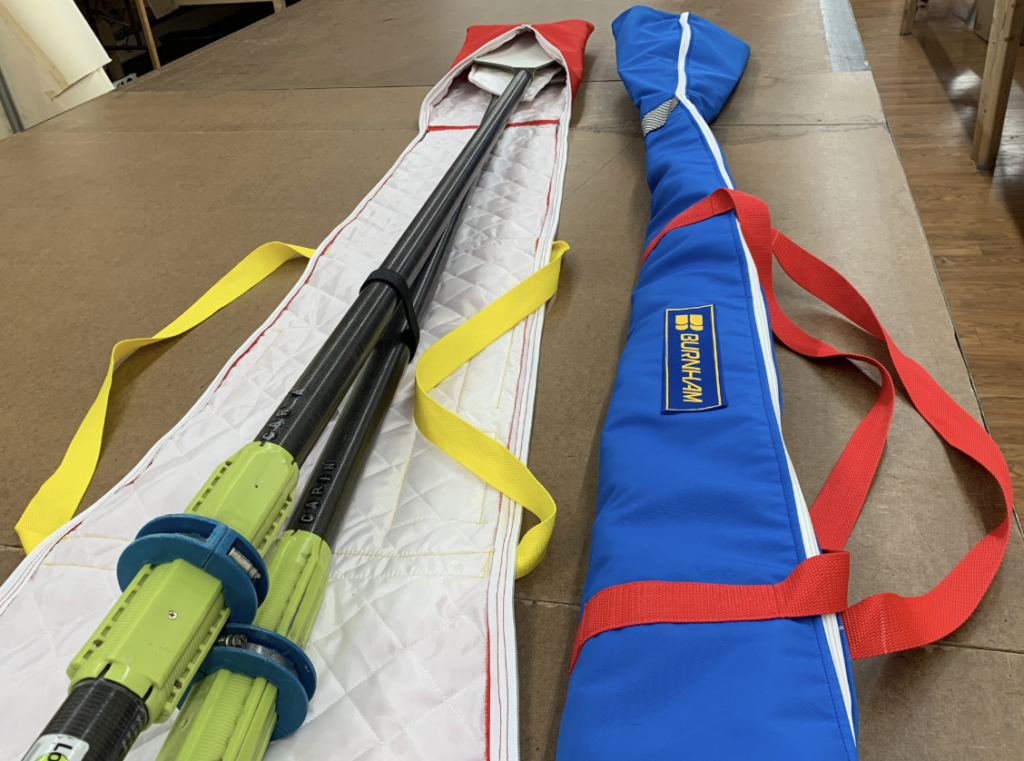
Have you ever tried to fly with rowing equipment? Grant Craies took crews to race in China and (despite checking ahead) the airline changed the aeroplane. The sweep oars wouldn't fit in the hold. The 'helpful' flight attendant suggested cutting them in half. They got home eventually with all the oars.
Many airlines will transport personal sporting equipment. If you do want to fly with oars be aware most airlines limit length to 3 meters. Pack alternate oars end-to-end for compact space usage (many charge by volumetric space), take off the buttons and remove handles so they pack tighter; wrap the spoons in bubble wrap and hard cardboard. Concept2 sell a rugged scull transport case.
When you book, the ticket usually says what type of plane you will be in. So pre-book as specialised / outsize baggage. And I recommend marking the box "Rowing Oars" and "Fragile, top load only".
COXIES! When you travel by plane, do you put your cox box in a checked bag or take it with you as a carry on?
I’ve done checked bag before, but I’m worried about luggage delays/lost but I’m nervous about TSA because the box looks crazy. Heading to HOCR!
UPDATE: made it through TSA, no questions asked! Here's the full discussion on Facebook.
Yes. The original packaging is just within the size limits for a bicycle case and the whole lot is inside the weight limit. Concept2 sell the packaging if you haven’t kept yours. I put a couple of ties round it to help lifting etc. we’ve taken ours from UK to Lanzarote on Jet2 twice.
Concept2 definitely sell box and packaging. Alternatively if you could find someone or a gym who has bought one recently you could “borrow “ theirs?
Here's the full discussion on Facebook.
How watching videos of good rowing can help improve your technique.
Timestamps
Parts of our brain get activated when watching movement. Researchers noticed monkeys' brains were firing when watching the researchers eat lunch - as if the monkeys were also eating.
Mirror neurons help you to understand and internalise actions, emotions and intentions. This is helpful when learning the subtleties of rowing timing points.
When I yawn the chances are you will too. This is your mirror neurons. Dr Laby from Sports Vision researched if you watch correct performances and see the technique being used. He noted that the video needs to be as close as possible to reality. This means you get best results watching at race stroke rates, not slow motion.
Try to create a race situation rather than a training row. You need both - understand the movement first and then be able to do it at stroke rates comparable to a race.
Find videos online to watch - they need to be good athletes, rowing well in high cadence high stroke rate situations. Check out MostynARC YouTube channel for Penny Chuter's video collection.
When a coach tells a story about rowing, your mirror neurons activate as you listen. They make you feel that you are experiencing what the coach describes. Neural coupling with the story teller.
First get the athletes to observe the task done well - demonstrate the task first yourself. This is more likely to trigger the mirror neurons as the athletes think themselves into what you're describing.
Then explain the action at the same time as demonstrating as a second stage.
Our Drills Compendium uses this method and adds written captions as well.
Real-time observation and real time skill correction improves skill acquisition.
The experts recommend peer-to-peer observation as a further stage. Teach observation and comparison to good technique - this also has a permission-based feedback structure allows the athletes to see if they are getting the movement right.
Masters have to pay attention to our range of motion as we age, without it we lose stroke length and raise injury risk.
Timestamps
00:45 What this is and how to get more of it.
Masters rowing is rowing with compromises - we may be less mobile or carrying old injuries. Our goal is full movement potential which helps our performance - with full range of movement we get longer strokes.
Things which limit us are tight glutes, hamstrings or back muscles. Injury prevention gets more important as we age - a good range of motion supported by strong musculature helps prevent injury. Muscle capacity for the rowing movement. It's hard to teach rowing to people who cannot sit with their legs straight, who cannot get into the catch position or whose arm extension is insufficient to get the oar handle around the arc.
Active isolated stretching is different from a traditional stretch you get movement more of the time and it's a short stretch and hold. One muscle group works (agonist) and the opposite muscle group (antagonist) is relaxing and lengthening. Article Active Isolated Stretching in Rowing.
We lose our full movement potential as age causes our bodies to change. Natural connective tissue elasticity reduces with age - strive to retain what you have; joint cartilage reduces too, and muscle flexibility lessens. Scar tissue from prior injuries may also exist.
Things you can do to improve - know what ROM you have at the moment.
10 tests for yourself and video exercises / stretches you can do. Free webinar Functional Movement Assessment.
Simple changes to your rigging which help you to get into the correct rowing positions when you have movement limitations. Article - Adapting rowing rigging for masters physiology.
Start a practice to improve your range of motion - do it with your rowing friends.
Get easy video streams like this https://streamyard.com/pal/c/5694205242376192
Alex Wolf & Sam Dutney in conversation. Two leading thinkers and innovators for masters rowing discuss strength training for masters.
The principles around maximal force applies everywhere. Teach athletes how to express maximal force. Learn the ceiling of what you can do. Turn muscles on and off.
Practice being forceful really quickly.
Building habitual capability - your day to day. Take a small change from what you do now and a little bit more than you can already do. That's enough.
Strength training is one of the most potent stimuluses for our health. The only thing which can repair your muscle structure is targeted loading, not rest.
The knee takes a load of up to 2 times body weight for rowers - masters it will be 1.2 to 1.7 times body weight. When squatting the leg is not the limiting factor - the lumbar spine tolerance is the limit. This is not the case in a rowing boat because the forces are horizontal.
The 7 stroke max test has a strong correlation to performance. Increasing this has got a 1:1 correlation with improvement.
How can you know if the improvement will come from force production or maximal force?
The rowing stroke is primarily concentric force production. Does eccentric have an effect? Yes, it's a long stretch shortening cycle. The end of the drive back to the catch has a significant contribution to boat speed.
The Reactive Strength Index. How you control a decelerating force and turn it round into an accelerating force. Rate of force is how much, when and how quickly.
Utilise each exercise efficiently is key. The king of exercises is the one that reaches your outcome. You must lift enough to create an adaptive response.
Want easy live streams like this? Instant broadcasts to Facebook, YouTube, LinkedIn. Faster Masters uses StreamYard: https://streamyard.com/pal/d/5694205242376192
With any endeavour, there is a progressive of acquisition of skill and I like to think of this as a ladder of learning - you start on the bottom rung and work your way up.
This metaphor is helpful for coaches as well as athletes. Because if you can work out where you are, it becomes clear where the next step is and the next skill you need to acquire. This makes coaching lesson plans easy - it's obvious what to teach next and this applies to self-coaching as well.
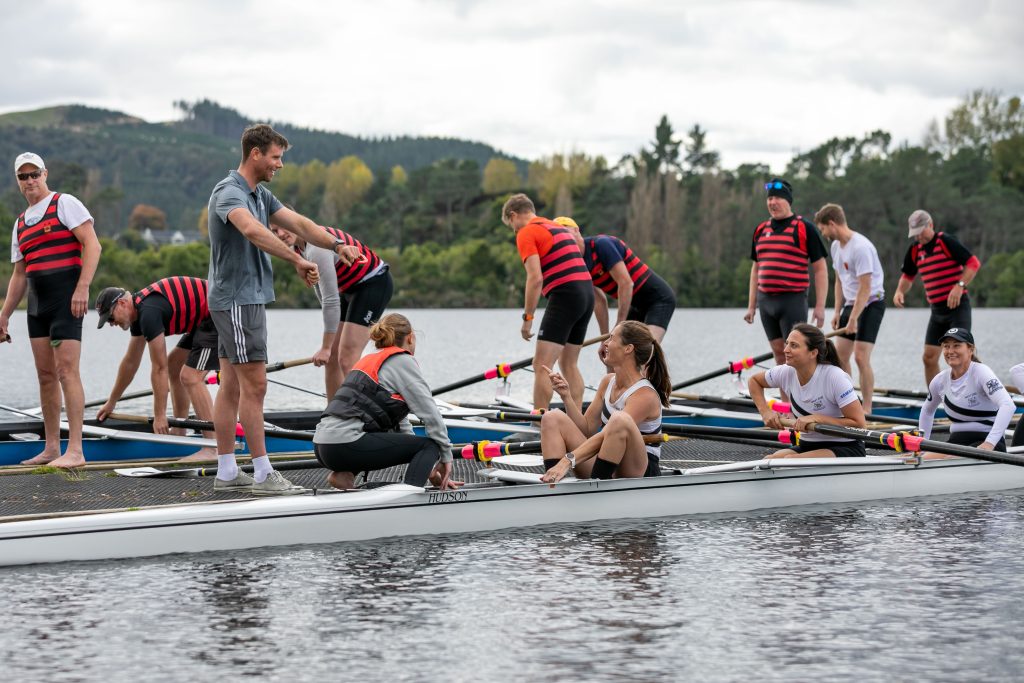
You can work out for yourself where your rowing and sculling skills are using our Rowing Skills Checklists. There are 3 - Beginner, Intermediate and Advanced.
Within each are groups of skills around
Each checklist sets out things which you should be able to do if you are moving towards that skill level. The beginner level includes turning the boat and being able to follow your local navigation pattern; intermediates should be able to row or scull with the oars not touching the water on the recovery and having experience in small and big boats.
These are flexible checklists - you don't have to do every beginner skill before you start attacking the intermediate ones. In my experience as a coach, most athletes have to master the basics before advancing.
Use these lists for your club by adding in your local navigation rules, information about other water users (e.g. if you are on salt water or a tidal river) and local "conventions" in navigation. Some clubs use these to test skill before an athlete can move into a training group or take a single out unaccompanied.
Do a quick self-assessment and decide whether you are mostly a beginner, an intermediate or an advanced rower. Understand this by reading all the skills and marking any which you can do (or have done more than twice).
Take this list to your coach and ask them to teach you the skills to fill in the gaps in your knowledge.
In this way you can be pro-active about your rowing development with the goal of becoming a well-rounded athlete and a strong team member.
Join the Masters Rowing newsletter where >15,000 masters rowers have signed up to get weekly updates, tips, advice, and discussions to share with your rowing friends.
Friends and business associates of Faster Masters Rowing have the following camps planned.
Not an exhaustive list.
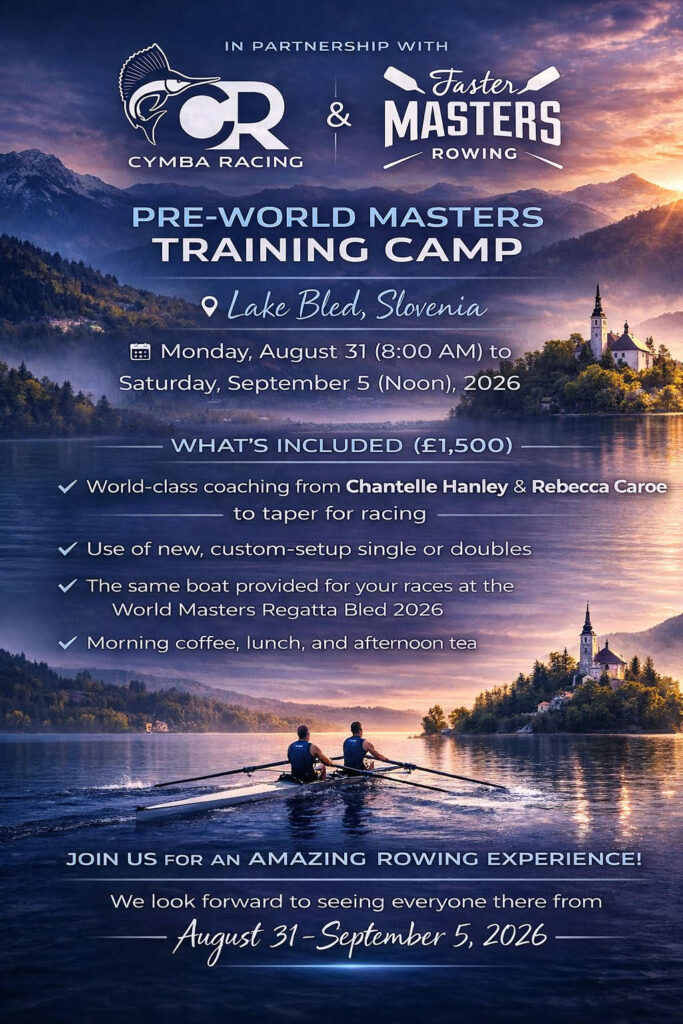
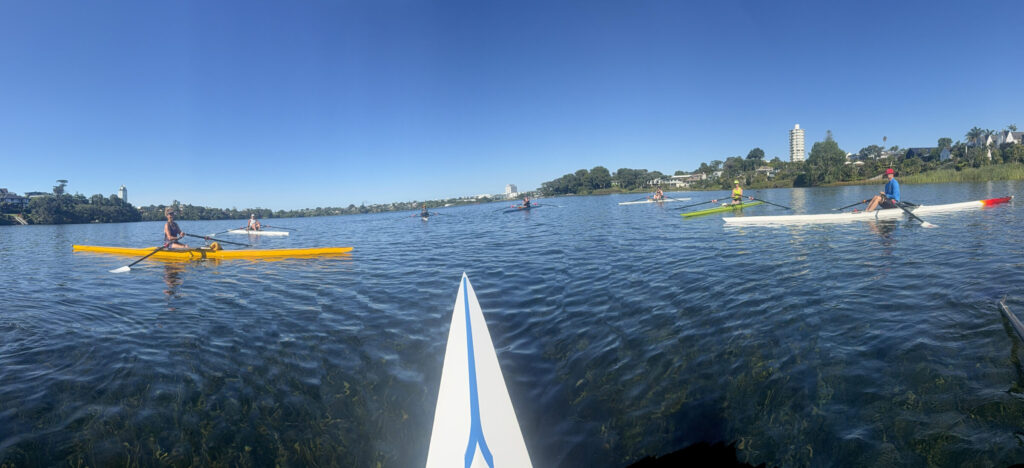
The central tenet of the camps (besides Comfort in the Boat) can be summarized as follows: "Master Small Boats - Faster in All Boats". All coached by Troy Howell (webinar coach at Faster Masters Rowing).
Camps scheduled at Sweet Briar College, Amherst, Virginia, USA.
Visit website for more information https://www.10lessonsinsculling.com/
A rowing week in Portugal
Founded by 3 olympians, Patricia Merz, Jeannine Gmelin and Frédérique Rol.
The G/Rowing Experience is for novice and experienced masters, club and recreational rowers who want to improve their technique, prepare racing or simply experience the joy of being on the water !
April 12 - 18, 2026
or
September 27 - October 03, 2026
Find all the details here :
https://www.thegrowingexperience.ch/
2026 - Masters Rowing February Symposium
Camp Dates:
What is offered: 2 day or 4 days of rowing, rowing and more rowing with unmatched coaching! Sweep and Sculling options—you can even do both! The symposium will combine on the water rows, with in-depth video sessions and on-land convention style seminars to help you do a deep dive into becoming a better and smarter rower.
Please visit the following link to register! https://sarasotacrew.org/index.php/joinus/campandclinics/mwintercamps?id=32
— at Nathan Benderson Park.
Hosted by Club Naval Infante D. Henrique located near Porto. 25km of stable, sheltered water, on-site accommodation for up to 42 people.
Events: Regata Internationale de Gondomar in May; Aerobic Monsters Singles Regatta in October.
http://www.cninfante.pt/
Enquiries to [email protected] +351 224 831 194
Specialists in beach sprint rowing.
Flexible Training Options: Understanding that national teams often bring their own coaching expertise, we offer two training options:
Self-Coached Camps: Utilise our top-tier facilities, including on-site gym, wellness activities, and boat equipment, while maintaining your team’s coaching structure.
BSA-Coached Sessions: If desired, benefit from our experienced coaching staff to provide additional expert guidance tailored to your team’s needs.
Details & registration: https://www.beachsprintacademy.com/
Small-group sculling camps for 4–6 participants, mostly in singles.
Five days, two sessions per day.
2026 Camp Dates:
Details & registration: https://aramtraining.com/ref/13/?campaign=Newsletter
We do not run camps. Our self-guided online courses Sculling Intensive Camp, Erg Intensive Camp, Nutrition Intensive Camp, and Square Blades Challenge can be purchased - go to Online Courses and browse Skills and Technique.
Rebecca Caroe and Grant Craies are available to visit your camp as coaches.
Camps in Montenegro, Croatia, Slovenia, Italy, Austria, Bulgaria, plus:
Various dates; check their calendar.
2026 International Camps:
Details: www.allamericanrowingcamp.com
2027 private group camps (4–12 people) also available.
Sabaudia, Italy
Aviz, Portugal
Aiguebelette, France
Please check the Masters Brochure for more info.
April and September 2026
Advanced sculling technique.
scullingcamp.rojabo.com
Tailor-made rowing camps for all levels.
Row in mixed crews with Olympians and receive coaching from Italian National Team coaches.
Various dates and locations across Tuscany (Florence, Pisa, and more).
rowingintuscany.com
Located in Vermont USA camps run from May to September. Sculling only in 3,4 and 6 day formats.
As of the time of writing (Dec 2025) all camps are full for 2026.
https://www.craftsbury.com/sculling/camps/camps-home
Three-day sculling clinics
December 1, 2025 – May 3, 2026
floridarowingcenter.com
No in-person camps for 2026.
Offering virtual indoor rowing classes:
Nov 2025 – Mar 2026 (USA Eastern Time):
$15 per 60-minute class.
Fundamentals + interval work.
p3pe.net
Five-day rowing retreats combining yoga, breathwork, wine tasting, and cultural experiences.
No rowing experience required.
2026 Dates:
http://mindbodyrowexperience.com
Intermediate/advanced 3-day sculling camps.
2026 Dates:
Kevin McDermott Camps
Dan Duxbury Camps
Coaching available on request for clubs, organisations, private groups, or individuals.
Sessions can take place in Amsterdam or at your location, by arrangement.
Best suited for personalised technical coaching and small-group development.
enjoyrowing.com
How to increase stroke power using three layered drills.
Timestamps
These are all part of the Drills Compendium (24 drills + 3 ebooks bundle). Masters rowers tend to row a good leg drive and arm draw but neglect the back swing. The back is crucial to joining the leg drive and arm draw. How to ensure back swing adds to the speed of the boat.
From the catch (where boat is slowest) the stroke power takes the boat to its fastest speed. After the leg drive is half completed you need to start to layer the back swing so it overlaps with the end of the leg drive. Later the arm draw overlaps with the end of the back swing. Learn how to use each body part in turn without dropping boat power at the changeover.
This is the least intuitive part! Start with legs straight and arms straight with blade in the water while leaning forwards. Swing your back to take the stroke and take the oars out when your. back swing is completed. Do this square blades and then once confident, add power to the stroke by engaging your core and glutes.
06:00 Body and arms and half slide rowing are the second and third parts of this drill. The glutes provide the connection between the legs and back. By building up the stroke progressively you should feel the spoon of the blade accelerate through the water - as you add in more body parts this must continue. The arms have to pick up already moving water (from your back swing) and make it faster still. In a crew add in more people so the boat goes faster - notice how your body movements have to change to take account of the boat moving faster. If you aren't adding to the acceleration you should feel that you have no pressure on the end of the blade. Try an exaggeration by rowing at half slide and finish your legs/back/arms at the same time.
The way we teach is designed to work for adult learners. We teach how we row and then make it progressively harder so you can continue to challenge yourself, continue to experiment with ways to make the movement and lastly check your experience with your crew mates - am I getting the right feeling here? Even the most experienced rowers can do these alongside the less experienced.
Do the drills at least 3 times in a single practice so you're familiar with the drill and can see your progress as you do it better each time.
Want easy live streams like this? Instant broadcasts to Facebook, YouTube, LinkedIn. Faster Masters uses StreamYard: https://streamyard.com/pal/d/5694205242376192
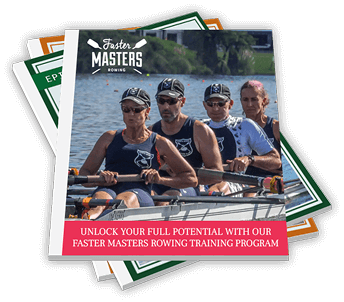
Join our community and get our exclusive Faster Masters Rowing Magazine, packed with tips, techniques, and inspiring stories. Includes four new articles monthly.