Dealing with foot cramps, forearm cramps & whiplash in the rowing boat.
01:00 This Past Week - what we do to advocate for masters rowing
Running a sculling camp. Collecting post-regatta feedback - 10 things you did really well and 10 things you'd like to improve.
09:45 Cramps in the boat. First look at nutritional causes - your electrolyte balance of calcium, magnesium, potassium levels. Check your hydration as well. Check your muscles - are you gripping too hard?
12:15 Muscle goes into contraction in a cramp and does not want to unlock or release. Calcium aides this muscle release. Neurological release by contracting the opposite muscle. Reciprocal inhibition if you contract one muscle the antagonist muscle must relax. Foot cramps - lift up your toes to contract the top of your foot muscles to relieve in the arch of your foot.
15:10 Calf muscle cramps
Extend your leg and pull the toes towards you. Also use elastic bands. A Charley Horse is a common US name for a muscle cramp.
17:30 Hamstring cramps
Contract your quadricep hard to release. Extend your knee and straighten your leg. Lie on the floor and lift your leg up straight off the floor.
20:00 Forearm cramps - often caused by tension in the hand.
Frequently happens when you switch from sweep to scull or swap sides in sweep. Avoid cramps by getting into the rowing stroke rhythm and release your hands within the stroke. Let the handle move with your fingers. Keep the circulation going.
If you do get a forearm cramp, raise your arm and pump your fist open and closed. Must be above the height of your heart.
Marlene-ism "Let the oarlock be an oarlock". 25:30 Abductor muscle cramp This is probably caused by the glute medius. Squeeze a water bottle between your knees to release.
27:30 Whiplash - if you get this in the boat when looking around quickly it's hard to release.
Warm up the muscle, stretch it and massage it with your fist or fingers. Cold muscles are more susceptible to cramps.
30:00 Thixotropic ligaments and tendons. Getting cramp towards the end of an outing happens. Take a little cooked potato with salt, or electrolytes or a banana to prevent this.
33:00 Question: How to work with a squad of different skill levels. Develop your sculling ability - have a pathway to progress. What am I signing up for? Set outings for integration with more experienced people. Switch seats in crew boats.
38:30 Pontoons from Revolution Rowing give stability for singles and doubles, as do Wraptor Balance pontoons.
Rowing is a sport that rewards discipline. Book of the Month | Faster Masters Rowing Radio - the podcast for masters rowers. Tips, advice and discussion from Marlene Royle and Jess DiCarlo.
01:00 This Past Week - what we do to advocate for masters rowing. 03:05 Jess discussed her book choice
Rowing Through the Barbed Wire Fence – Rima Karaliene.
What it was like rowing in the Eastern Bloc from 1960s. 13:30 Privileges came with the elite sport team membership in Soviet Union.
27:20 We discussed the concept of discipline being connected to a goal to help you make decisions and create good habits.
Book Mental Discipline: The pursuit of peak performance by Mike Livingston
29:00 Rule followers are one type of discipline follower.
30:00 The 80/20 type people mean you are highly likely to be successful. To get the benefits of what you are trying to accomplish with your goals. Regular practice of discipline improves your skills.
33.00 Knowing yourself helps - do you need a team or a training partner?
Balancing a boat is easier with personal balance skills - core strength combines with boat handling skills.
Timestamps
01:00 This Past Week - what we do to advocate for masters rowing.
04:14 The training program for August 2022 from Faster Masters
Training module - 1k program peak
5k program for Oct & November peak
HOCR specific program
Fitness is standalone 5 workouts for fat burning, endurance or strength endurance
Land training includes Balance Exercises in the gym
Benefits of having a rowing accountability partner
09:00 Body balance exercises
Supportive of our movements for ageing athletes
Balance is trainable over time.
11:00 The J-curve drill -Rebecca's favourite balance exercise in the boat
14:30 A basic pause drill at part of the cycle. Count One 1000, Two 1000 then go
Choose a point in the recovery to do it.. Marlene prefers arms and body away. It completes the acceleration phase.
Variations you can introduce
Do it at low speeds and low ratings but with good pressure
20:00 - Podcast offer for new supporters - make a podcast donation and want to get the video of the J-curve drill message us.
24:00 Body balance exercises standing
28:00 Single leg jump
29:30 A listener question from Bernie - balance getting into the boat - from a dock
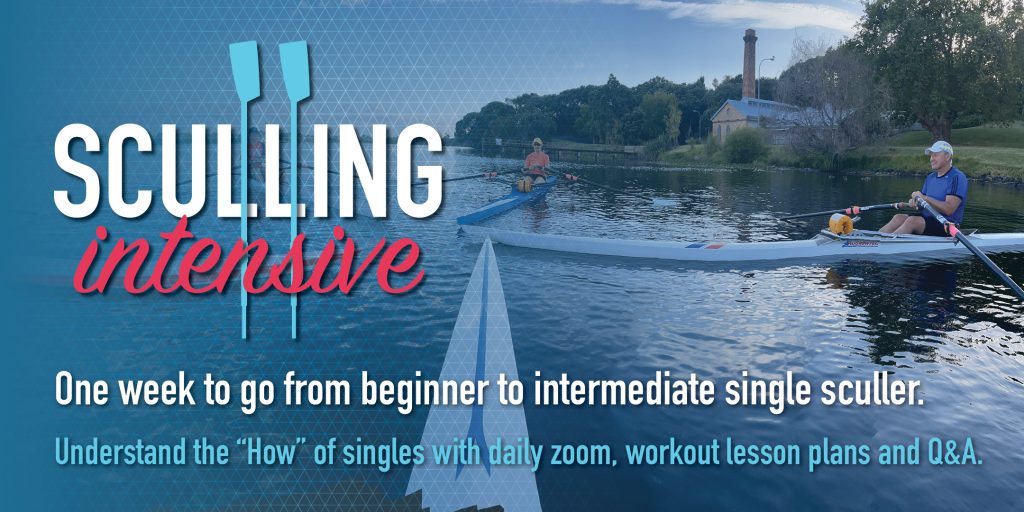
Should we prioritise our rest more? How much is right for my training? Marlene and Rebecca run through some pointers for you to review.
01:00 This Past Week - what we do to advocate for masters rowing - who is the fund raising group in your club?
04:00 Corporate rowing if you’re interested in a discussion - get in touch.
05:00 Marlene’s rigging dock talk
07:00 book of the Month with Jess di Carlo is Olaf Tufte’s Skjerpins. This literally means “sharpening” or more prosaically “Get a grip - you can always get better”. It's in Norwegian and Jess used Kindle translate function to read it.
10:30 Olaf is strong on visualisation and spent 10 minutes working on the first stroke before the Beijing Olympic final.
15:00 Hiking with his family - he found himself in trouble and said 'get the breathing right and the head will follow'.
21:00 Start rowing slowly and rebuild the stroke from the basics after a set back.
Peaks require a rest and reset before another peak event. Recover - between your sessions each week - between each is a recovery period. Sleep is terrific for recovery as is nutrition and hydration. Glycogen in your muscles fuels muscle action - heavy legs
26:30 Doing 2 sessions a day versus 2 days between sessions. Hard and easy days take planning.
28:30 Rest and sleep means 7-9 hours per day asleep. When you sleep your hormones are active. Maintain weight, mental sharpness and dehydration. Interrupted sleep is a common issue for masters. Naps are a useful tool to use.
30:30 Other types of rest include sports massage, sauna, contrast showers (hot and cold) all help flush your system, Plan the rest days in a week's schedule Plan the rest weeks in an annual schedule. Cross training can be a rest and a change too,
33:00 Heart Rate Variability measures the fluctuation of what is happening between your heart beats. Compares the sympathetic and parasympathetic nervous systems. Different ways to track are available. Get age group comparison data and personal day to day changes in your analytics. High values mean you are more recovered.
35:00 Active Recovery is rest or sleeping an extra hour. Simple ways to test your recovery. Check your waking heart beat in the morning for 1 minute. If it’s 10 beats higher than normal don’t do hard work that day or take a rest day.
37:00 Rebecca used to track using the Daily Diary from Harry Mahon If it’s 5 beats higher than normal you could have a virus coming on. Err on the side of caution.
40:45 De-conditioning takes a long time. You have to stop training for a long time to get to lose your fitness. Two sessions a week are enough for fitness maintenance. Keep it low intensity. Two sessions a week are enough for maintenance at low intensity.
When I was racing 1X 10+ years ago, My best 1k boat times were 55-60 seconds slower than my best 1k erg times. This past weekend at Gold Rush regatta, my 1X 1k time was 102 seconds slower than my best recent 1k erg time. Limiting factor in the boat seemed to be endurance. Does this make sense
Faster Master Male single sculler
You don't tell me how old you are now, so that affects my response to your question. You sound like you are a regular trainer and have been rowing a single for many years - I assume you are fit, skillful and a competitive masters athlete.
No, I do not think endurance is likely to be the only significant factor.
Do you train much less now (volume and intensity) compared to 10 years ago?
Did you alter your program over the past winter?
I think the second most likely factor affecting your results is your age. However, I'm not sure if this will affect erg score and boat times identically. So we slow down with age and I'm guessing you can check your training diary about the weekly distance and training volume you were doing in the boat ten years ago compared to today.
Having said that, you might want to look at the Masters Age handicap times for your age today compared to your age 10 years ago - the increments grow fast especially when you're over 50 years old.
Here is the Row2k masters mens handicaps for head racing charts - scroll down to the part where they discuss over 50 year linear regression - it's a real thing.
Having said that, if you want to get a more robust estimate for YOUR on water time compared to your Concept2 erg time, I suggest rowing a time trial on the RP3 machine. It adjusts for boat class and weight (but not age) and your time on the machine is equivalent to your on-water time given perfect conditions and good rowing technique bladework.
So that may set your mind at rest.
You bag your warm up and jump straight to the hard strokes. Next you conveniently forget your post-row stretch. Cutting training corners may be tempting when you are in a rush but in the long run it won’t pay. Even if you are short on time, following the rule of four will give you good gains.
Every training session needs four components: a warm up, a main task, a cool down, and a bit of stretching.
Stretching and warming up have different roles. The warm up raises your body temperature and heart rate, gets blood flowing to your muscles, and brings your breathing rate up. It prepares your body for the job ahead of you. Your warm up should be dynamic and include easy rowing; light erging, jogging, or spinning if on land. Dedicate 10 to 15 minutes to warming up and break into a light sweat. Stretching involves the lengthening and relaxation of the muscles that you use in rowing. It helps to restore range of motion, improve posture, stimulate circulation, reduce soreness. The best time to improve your flexibility is right after exercise when your muscles are elastic.
To pack it all into your budgeted time slot, allow 20 minutes plus the time it takes for your main workout. Keep it simple. Incorporate a warm up period by rowing easy for 10 minutes. Include some drills too. Then, do your workout. Follow up with a 5-minute cool down period so your heart and breathing rates come down to normal. Row easy or walk for 5 minutes. After your cool down, toss in a few stretches before you hit the shower. Target the muscles that feel the tightest. Hold each stretch for about 30 seconds and repeat 3 times. Focus on your low back, hips, hamstrings, quadriceps, and calf muscles.
Five minutes is enough, even a small dose is effective and you can always stretch later on when you have more time.
Would you like to publish this article in your club newsletter or website?
Join our Masters Rowing Advocates mailing list and we will send you one article a month. Sign up on our Advocacy page.
You can copy the text on this page. Or download the PDF.
The injury rate in rowing is about 0.4 per 1,000 hours of training at the elite level. Rates may be higher among non-elite recreational rowers but are far less than other sports such as (American) football at 4 per 1,000 hours of training or rugby at 40 per 1000 hours of training.
Most rowing injuries are caused by the repetitive nature of the rowing stroke. Regardless of age, experience, or competitive level weaknesses, imbalances, or restrictions of muscles and joints can lead to overuse syndromes primarily affecting the neck, shoulders, elbows, ribs, low back, or hips. Repetitive stress or repetitive motion injuries develop because of microscopic tears in tissue or fractures in bone. When the body is unable to repair the damaged tissues inflammation occurs, leading to painful conditions.
You can test your physical restrictions in our Functional Movement Assessment free webinar.
Overuse injuries are more common in female than male rowers. In female rowers the most frequent complaints are chest wall pain (i.e. rib stress fractures), then low back pain, followed by tenosynovitis (inflammation of the tendon and enveloping sheath) of the wrist extensors.
In males, low back pain is most prevalent, then tenosynovitis of the wrist extensors, followed by chest wall pain. Sculling, sweep rowing, and erging are similar exercises but each discipline poses different risks due to the mechanics of the motion involved.
Factors contributing to repetitive stress injuries can be internal or external. Internal factors include your fitness level, core stability, muscle flexibility, nutrition, strength, hydration level, balance and coordination, recovery rate, age, rowing technique, posture, pre-existing injuries, emotional or perceived stress, and cross training.
External factors include a change in boat type or the size of your oars or oar handles, decreased boat stability, change in rigging, racing, changes in rowing technique, overtraining, rapid increases in training intensity, frequency, or duration, or a change from sweep to sculling, changes in seating position, change of athletes in the boat, and inadequate rest between training sessions.
To keep your training on track make changes to your program or equipment gradually including transitioning from the boat to the erg each fall (autumn).
Would you like to publish this article in your club newsletter or website?
Join our Masters Rowing Advocates mailing list and we will send you one article a month. Sign up on our Advocacy page.
You can copy the text on this page. Or download the PDF.
Just as pushing your bow across the line for the first time in the 50+ age category signifies entering a mature phase of your rowing career it may also mark new adventures in maintaining equilibrium in your training schedule.
Masters athletes need to include the same intensities of work in their race preparation as their younger counterparts. However, the difference for masters is how and when workouts are planned in the weekly schedule to adjust for potentially longer recovery periods as the body requires more time.
Improving your performance as you age is linked to maintaining a relatively high VO2 max. This means that high intensity intervals at race pace need to be key elements of any master’s program in combination with the substantial endurance work that rowing demands. Such intervals also place a lot of stress on your physiological systems so the volume and frequency needs to be approached carefully to optimize the benefits. Recovery periods are when your body makes the positive adaptation to the work you just did, without a good recovery period, you risk physical break-down and injuries can occur more easily.
Only you can gauge how much recovery you need between the intense sessions of the week. Monitor your morning resting heart rate the day after, if it is elevated above your norm, include low intensity sessions until it returns to normal rest rate. If this typically takes two days you can schedule a total rest day, easy distance work, or low intensity cross training. Using an app to track your heart rate variability gives an even more accurate measure your state of recovery. I use the HRV4Training app.
Weekly training patterns can vary, be creative so you don’t get bored. You may find you feel more energized taking a total rest day after three training days. If a traditional weekly pattern is better for your schedule, resting Monday and Friday might give you the edge you need to maintain quality workouts during the in-between days.
The best form of recovery as you age is sleep. Getting 40 winks, taking cat naps, or simply lying down restores your energy the fastest especially when backed up by healthy eating. Look over your weekly cycle and build your recovery days around your priority sessions of the week and follow it up with a good dose of rest.
Would you like to publish this article in your club newsletter or website?
Join our Masters Rowing Advocates mailing list and we will send you one article a month. Sign up on our Advocacy page.
You can copy the text on this page. Or download the PDF.
Satisfaction gained from rowing often comes from measuring progress
02:00 This past week
06:00 British Rowing Plus magazine article by Rebecca Caroe Goals and Measuring Training for Masters
07:45 Marlene reads the article - process goals and measured achievement goals.
12:00 What will help you move towards your goal? Diary your testing every 6 weeks.
18:00 Resources and rowing measurement suggestions included in the article. Using an app or speed coach to record data Metres per stroke at rate 18 a measure of base paddling speed A 20 minute erg test for fitness Faster5 Fitness Assessment includes the details
20:45 Heart rate is not a good measure of training intensity Row set distances or set time. Marlene likes Stroke rate 22 for 20 or 30 minutes as a regular workout.
25:00 At what intensity do you row the 20 minute test? The best effort you can on the day - it is a test. However you can’t row 100% every stroke, you have to last the distance. How to find the ideal 500 meter split which you can maintain at “comfortably hard” for the full time. You can increase the split a little during the piece. You just feel that the test is an honest reading of your capacity on that day.
29:30 Tips on goals for non-racing masters.
Technical goals - how many strokes can you row with blades off the water? Endurance goals - distance before you need to take a break. Marlene is not a fan of talking in the boat for team boats. Testing breathing - can you breathe through your nose or your mouth? Steering tests- through the bridge without over-steering.
32:00 Rate of perceived exertion scale Small wins matter.
35:30 Fitness evaluations cause less anxiety over time. Have a routine of how you approach the tests. Make them regular, part of your practice.
37:00 Is it better to rate high with low pressure? It depends - rigging affects this, gearing and your physiology. Use the Rigging for Masters Webinar to find what’s right for you.
A webinar by Faster Masters Rowing.
How to manage the ageing process, the science of longevity and what affects your chronological and biological age.
With guest experts Clare Delmar and Hugh Dunstan.
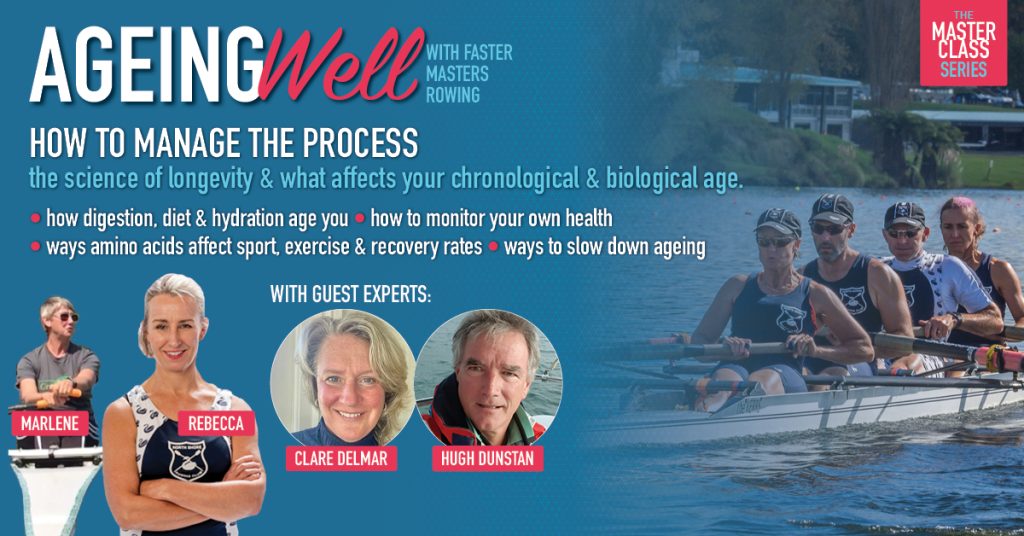
You will meet
After attending this webinar you will
Within the webinar are downloadable bonus lessons for you.
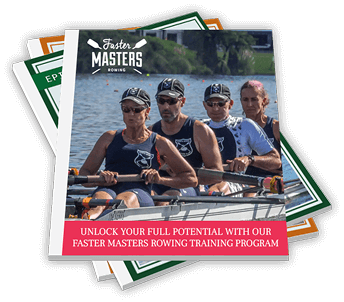
Join our community and get our exclusive Faster Masters Rowing Magazine, packed with tips, techniques, and inspiring stories. Includes four new articles monthly.