If you dread your indoor rower workouts, listen in. We have 5 things for you to try out which could make your ergs more enjoyable.
00:30 In our training programme this month - 3 training plans to suit your racing, force curve video, how your body mass affects boat speed. We had a winner at the Virtual Head of the Hooch and personal best times of 3 seconds and 6 seconds from participants - the programs do work!
Long endurance workouts can be daunting.
1 - Follow a programme
Making up your workout on the day means you have no goal. Keep a record of your training so you can measure your gains and progress.
2 - Train with a group
There is nothing worse than having to train alone. Even if you have to train in your garage, start the workout at the same time as your crew mates - it's an incentive to show up. And showing up is half the battle in forming an exercise habit.
3 - Reward yourself
Feel good about what you have done. Choose something which you enjoy as a reward.
4 - Set short horizons
While doing the workout choose a destination in the near future (5 minutes) so you can focus on one thing for that time. I choose technique items that will keep my form consistent. One minute is the lowest horizon.
5 - Distract yourself
Listen to music while training - challenge not to look at the screen until the song is over. Shut your eyes and focus on the feel of the movement instead of looking. Listen to the flywheel - does it get louder as you move to the finish of the stroke? Have a visual cue for your catch - use tape or a straw marker. Change the units to watts from 500m splits. Use this to train yourself to row with consistent pressure. Use your force curve in the same way to train consistency.
Training Camp with US Rowing in Chula Vista 1-4 April. Newsletter recipients will get information about it. I was incorrect that food and accommodation. These aren't included. My bad.
Breathing is something that we do every day and most of us don’t even think about when and how we breathe. The breathing process moves air in and out of the lungs to allow diffusion of oxygen and carbon dioxide. We as human beings require oxygen at cellular level for our body to function. The respiratory center in our brains (Medulla) is responsible for control of ventilation as breathing is often called. Regulation of pH levels in our body is also done through breathing.
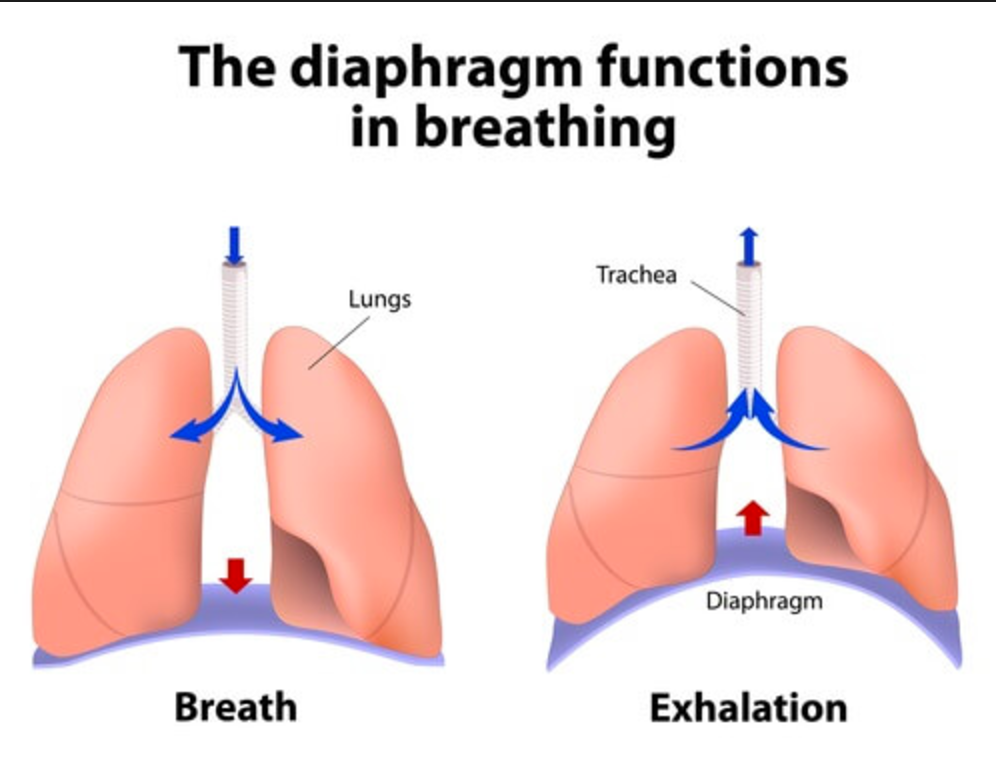
Movement of air in and out of the lungs is caused by changes in the thoracic volume.
Inspiration (inhalation) at rest begins with the contraction of your diaphragm and use of external intercostal muscles. Inhalation lowers the floor of the thorax while lifting the ribs up and out and this allows us to take in more air. The opposite happens at the expiration (exhalation) where the diaphragm and intercostal muscles relax and recoil (bounce back to original position) while pushing the air out. In sports and the exercise world breathing is a must and there are several breathing patterns for different sports. Every repetition or exercise should have both an inhale and exhale part.
During exercise inhalation movements are assisted by accessory inspiratory muscles which include neck and trapezius muscles. The function of these muscles is to lift the ribs and clavicle (collar bones) allowing larger amount of air in our lungs during exercise.
Rowing is named as one of the hardest endurance sports and proper breathing is very important to be able to sustain the amount of work. As a coach, I always teach my athletes proper breathing technique.
During the rowing stroke the inhalation should be at the catch and exhalation (releasing of the air) should be at the finish when the hands touch the body.
This must be trained daily.
For some athletes a correct breathing pattern is harder to learn than the rowing motion and it is the coach’s job to make sure the athlete is breathing properly. This is especially important during hard training loads and workouts.
During exercise the rowing stroke exhalation should be loud and noticeable. At this point breathing (exhalation) becomes active and forced. This forced exhalation allows smaller intercostal and accessory muscles to stretch which greatly increases the maximal rate and amount of air flow. By forcing the exhalation, we can drastically increase the amount of air without necessarily increasing the breathing frequency. It is important to note that as the rowing speed increases, the breathing frequency should increase as well. You do not want to breathe like fish at stroke rate 32!
Next time when you sit on the rowing machine, pay attention to your breathing!
Your breathing pattern should become mechanical, followed by each inhale at the catch and the exhale at the finish.
Perfect practice makes a perfect result.
Coach Misha Jezdanov
Buying rowing training programs online - making your decision.
01:00 A customer writes
"I have presented the options to our club & pushed heavily for the program. There are some very vocal people who feel like there are robust free training plans online Some suggest we reuse our plan from 6 years ago and that would suffice for our purposes. It’s more of an uphill battle than I expected. The next step is for people to submit their own recommendations for our committee to consider. Once that’s done, we will put it to a vote. People are just very largely against paying for a plan and think that we have enough talented, intelligent people on our team to put something together that’ll be good enough. We are a recreationally competitive club with no real desire to progress beyond that."
Committee member for masters rowing group
Is this a situation that looks familiar to you?
02:00 Our challenges are often similar but local situations have nuance.
If you're athletic, and well-trained, aged 40 or less You will have no problem using free online programs written for 2k racing.
Men and women cannot do the same program because our physiology changes through the decades.
Try a sample of the Faster Masters Rowing programs sign up free here.
05:00 When buying a training program, speak to the person who has written it - ask about their experience training masters.
Do they have a good understanding of masters physiology? The diversity of people from beginners through returning rowers.
How to deal with adult novices, rigging adjustments, general adaptations for masters to row in comfort?
06:30 Broken Oars Podcast reviewed online training programs including Faster Masters Rowing.
The review is from the point of view of any athlete. This is what they said about Faster Masters programs.
Good reasons to spend money on a specific program for 1k racing. This program takes you there quite quickly - it has one week of training (specific preparation with a taper week). You get 7 days of training which you repeat each week and then move into the taper week before the regatta.
As you get closer to the race, you need to practice distance in meters, not minutes of workout. This workout is focused on 500m, 750m and 250m workouts aligned with learning the race distance within one workout.
This is a GOOD Training program for one thousand meters, I found it hard to get my training right for this distance.
11:30 Feedback we gave to Rebecca Caroe - the price could be increased to include a consultation - or to buy a consult on its own to get individual coaching suited for yourself.
Buy coaching from Faster Masters Rowing - buy time and expertise in the technique review service.
13:00 The full Faster Masters program offering is currently US$39 per month [2023]; it also includes gym strength and conditioning training as well as 4 articles on technique, peak performance, rowing lifestyle and a bonus.
Coaches can buy these programs in a Word doc format so you can edit them and adjust to your own situation.
Our offer is 100% refund if within 14 days you aren't fully satisfied. Keep the program as our gift for you.
Sometimes athletes get very, very tired. Today we will talk about recovering from exhaustion and the power of napping.
01:00 Is it under recovery or over training?
Mike Spracklen described it as under-recovery. Marlene prefers this term because it affects your ability to train. You don't have to be fully recovered to train effectively. You feel on "high alert" all the time.
04:00 Six causes of exhaustion noted by Elizabeth Avery, sport nutritionist.
What's the reason? If your training has increased a lot recently, that could be a reason. You should be able to adapt to the new training load. Check your nutrition preferably post training.
06:00 There can be an accumulation of fatigue from session to session. After a heavy training day you may need an active rest day. How to balance your training. Emphasise quality over quantity.
07:45 Adapting to a new training load.
Going from 5 x per week to 6x per week. Is a 12% increase in training. Keep to a 5% increase. After a big jump you may feel OK for a day or two, but it will catch up with you.
As masters, your cause of exhaustion may not be rowing-related. It all kicks off the same cortisol hormones
10:00 What about naps?
Elliza McGrand naps heavily after a heavy training day. She asked the Masters Rowing International group if others had the same outcomes. Listen to your body and respect what it's telling you. Your best recovery method is sleep. People are different with naps - some do it every day.
Lie down and close your eyes. Set an alarm so you wake up in time. Bodily stimulation comes in through your eyes - rest your nervous system by closing your eyes.
13:00 What is restorative for you?
Some people find a daytime nap affects their night time sleep. If you don't tolerate daytime naps, find another thing that rests you. Cooking or gardening, yoga. what do you enjoy? Even walking for 10 minutes has a positive effect to your nervous system. As we age our bodies change - you may need naps now and not in the future.
15:00 Leaden legs can happen after a nap. A good way to revive is to wake up slowly, move slowly, do a bit of stretching, walk gently for a couple of minutes. Even 5 minutes of repetitive activity gives you the same dopamine hit as a workout. Rowing repetitive cycles are restorative activities to the nervous system.
There are many different types of masters training programs - for elite racers, for club racers, for fitness rowers, for return-to rowing.
In this episode understand the benefits of 'cross fit' versus the more traditional 'miles make champions' approach.
01:00 Types of training though year
01:30 The new "Spacer Placer" rowing Tool for pushing out spacer washers.
04:45 Types of training what is your goal? In a weekly cycle use a mix (polarised) low, high, medium pace intensity & strength training.
Different types of session you can choose.
Aerobic system stresses
HIIT is a very broad definition - it could be oxygen utilisation 4×5' or a power 30" on 90" off.
07:30 Plan your training through the year.
Your 2 key days a week training and insert your low intensity a strength in between.
High performance racers - you can insert Cross fit only if the workout is inserted in the right place & right way for your goal.
09:00 Cross fit workouts are intense. Prepare to do it.
As a master how careful do you need to be? To do intervals and explosive work and not get injured, you need to be strong and ready to do the workout. The faster you do things the larger the injury risk.
Does this type of workout fit your needs and goals? Also remember to check out your instructors - are they experienced and qualified?
Testing - speed of repetition amount in a given time.
12:30 make the right choices of training type to fit into your overall training.
Sport science reviews how to train your body. A word of warning - if you do 2x HlIT sessions you can't spend that time in the boat too.
16.20 Racers' training needs.
Train three times per week. Aerobic work for one session and two endurance sessions with one at a higher intensity. How high that is depends on time of year.
Use AT tempo endurance closer to the racing season. Oxygen utilisation or 1K / 4- 5min pieces. Speed and power workouts are shorter and quicker.
What stroke rate you want to race at?
18.00 Fitness rowers don't need extremely high intensity intervals. How skillful are you in the boat?
30 stroke pieces if you want to. Aerobic work is for fitness - combined with strength work in the gym.
19:45 Strength stimulates muscle metabolism. At the end of the session do 6x 30" on / 90" off or 20" on / 40" off.
Power works at the end of a strength session. Combination workouts.
21:00 Return to rowing rule of thumb is to approach it gradually to build tolerance.
Take it easy. Focus on technique and efficiency. Ensure your posture and body positions are correct. Hinge through the hips not the back.
22:50 Keep it fun and interesting focus on drills and steady rowing Pick a theme for the da to keep the interest and focus aligned.
Balance is lost as we age. How can rowers learn balance - in the boat, in life and physical balance? How to balance a quad scull.
03:00 Balance as you age.
Typically it changes around age 50. There is a loss of muscle mass - it affects co-ordination like walking and neuro-muscular aspects like hearing and vision as well.
04:45 Balance can be trained and maintained. Keep your muscles in good condition. Notice changes in your balance.
05:30 standing balance - it's more challenging.
08:30 Sitting balance. Use a swiss ball /physio ball.
Sit with hips and knees at 90 degrees. Arms to side in a T position. Lift one leg and extend it.
Does it challenge your balance?
Get comfortable doing this. Then raise both legs off the floor.
11:14 Try a V-sit, sit on the floor raise legs as well as torso. Balance on sit-bones. Can you balance?
13:00 How to balance a quad scull.
17.00 'Transitioning land to boat - getting into the boat. One leg squats help train strength.
Also concentric & eccentric motion. Lowering your weight to sitting is a good progressive exercise.
21:00 Why a 2x is easier to balance than a single scull.
The boat is wider - it sits in the water with more surface area of the hull under the water. A narrow beam is more sensitive.
23:00 Tension kills boat speed
We need endurance training at low rate but golly it's boring. Learn some strategies to pass the time profitably investing in improving your performance and training consistency.
02:00 Low intensity sessions - how to approach them.
Common training mistake is to do the lower intensity session too hard. "Conversational level" workout - can you sing while rowing?
It trains your heart - it is beating slower and pumps more blood per heartbeat. A conditioning effect is lower morning heart rate as a result. This builds capillary density.
05:00 Goal is training consistency. Build a data set of your scores. Keep the training effect the same, even if you have to cut the workout shorter.
You become more fatigue resistant. Improve your recovery time between races in the summer because you're fitter from winter training.
09:30 Make technique corrections during your long erg workouts.
12:00 Choose a technical focus - every 5 minutes do one technical improvement for one minute. Repeat every 5 minutes.
14:00 Listen to audio books, podcasts while you work out. If you stop rowing during the session, it takes 3 minutes for the capillaries to start closing down. You could do a core exercise and re-start without losing the training effect.
A psychological break.
17:00 Rebecca counts strokes - chasing the average split number for your programmed workout. How many strokes to reduce the average by 0.1?
Consistency - in power, rate, technique and mental approach is your goal.
Concentration is a big element of racing - you can build up your concentration skill here and it will be beneficial.
Exercise with weights linked to lower risk of early death, study says.
Why we need MORE gym work as we age.
02:00 Weight lifting makes us stay healthier, longer. Being Active as well as doing weight lifting had 14% to lower risk of premature death. Other types of exercise were also included.
04:00 Mortality risk appears to be lowest for those adults who reported doing weightlifting. They had a 9% lower “all-cause mortality risk” Masters rowers are already active so staying strong gives greater quality of life. 06:00 How quickly can you walk across the street? A measure of ageing.
07:00 Thinner This Year book by Jen Sacheck - Muscle Nutrition specialist. It's a lifestyle book with great advice.
09:00 Muscle as the grand negotiator of body signals.
Stimulus must be constantly there to keep your muscles alive.
Muscles:-
13:00 Strategies that work for you. Work out at least twice a week with weights. You need recovery between sessions.
Get into shape BETWEEN not during sessions.
Joe de Leo suggests different off-season and on-season weight training.
16:00 when we row it's load bearing but that isn't that doing weights.
How about power strokes in the rowing boat? No - that's strength endurance. Rowing is repetitive and compared to a one Rep Max lift, one stroke is a low load Goal of strength training is to activate more muscle fibres to fire at the same time. We lose our slow twitch muscles as we age.
18.00 Other ways to increase resistance in your training:
23:30 kettle bells 25lb or 12kg are worth buying for your home gym. Bags with weights Nested dumb bell weights.
26:00 Strength training does not need a lot of time. Ideal rowing home gym.
Transitioning seasons to Winter / Summer is a key point in the training year for masters rowers. Key things to do and watch out for.
01:00 What are season transitions in rowing? When you have completed any training period there is a transition that follows. Give yourself some recovery time and down time.
03:50 What is base level training? Lower intensity for aerobic work. Include cross training. When changing activities - be careful to do this gradually. It is new for your muscles.
07:00 Beware gardening - any intense yard work can injure you. Stacking firewood - it's the unusual positions you get into when raking, chopping wood.
12:10 Getting back on the erg.
Workout I - do a ten minute warmup. 15 minutes continuous rowing + stretch 10 minutes continuous.
Week 2 move to 20 minutes continuous rowing + 10 minutes after the stretch.
Week 3 move to 2×20 minutes
Week 4 do 30 minutes continuous. Then build up gradually towards 45 or 60 minutes rowing.
17:30 Do several weeks erging before doing a test of any type.
19:00 Things to work on for yourself.
Muscle imbalances, stiff hamstrings. Use our Functional Movement Assessment free course to get 10 physical tests for your personal mobility.
Is having self-compassion "giving up"?
01:00 Tune in to your feelings and know the 'big picture' of training. Be your own best friend - look out for yourself.
Energy fluctuates - what's your energy level? Sometimes the programmed workout doesn't align with your energy levels.
02:30 Most rowers are not lazy. Compassion is not the same as laziness.
Steven Seiler says masters do 200 - 250 workouts a year. If you take time out it will recharge your batteries and quality of life.
04:30 When tired, your judgement is impaired.
A fatigue state is not calm. If you miss one or two sessions, carry on training. If you miss more than a week, review your physical state and you may need to repeat the missed sessions, or build back gradually.
07:00 Learn to work hard in long training. A well designed plan will build up to this point. It can be scary the first time. Repeat workouts to get better at this session. Get confident. Give an honest effort.
10:00 Learn to watch puddle size.
Get grip on the water by picking up speed rowing one at a time or in pairs and join in the rest of the crew. Learn to move quicker to keep the grip on the water. Erg sessions teach you consistency and efficiency. Learn to row harder and increase the meters rowed.
Mental toughness. Keep your workouts challenging but not impossible.
14:30 Question about testing and drag factor on the erg. This load (gearing) should match the gearing of your boat.
23:00 Book of the month Warriors by Danielle Brittain - the team doctor for the South African Rowing Team and mother to four rowers reviewed by Jess di Carlo.
Join our community and get our exclusive Faster Masters Rowing Magazine, packed with tips, techniques, and inspiring stories. Includes four new articles monthly.