The Stroke Cycle - Balance and Stability PLUS Book of the Month with Jess di Carlo
Support this show with a donation
https://fastermastersrowing.com/podcast
01:00 This Past Week - what we do to advocate for masters rowing.
Ageing Well Webinar
British Rowing Plus article on goal setting
Club feedback on season goals
Jess Di Carlo reviews. Book of the Month - it's womens history month and Jess chose My Olympic Life by Anita DeFrantz
https://amzn.to/36pkjTE
The definition of balance is narrow. It's about the level or set of the boat.
Stability is a wider base of support using the whole system from oarlock to oarlock. Keep the riggers level when the oars are out of the water, keeping connection to the oarlock.
Within the hull keep pressure on your feet and back.
19:30 Watch for oarlocks staying on the button and the collar not coming away from the gate.
Read and watch the full video series on the rowing stroke cycle - 6 episodes from catch to finish.
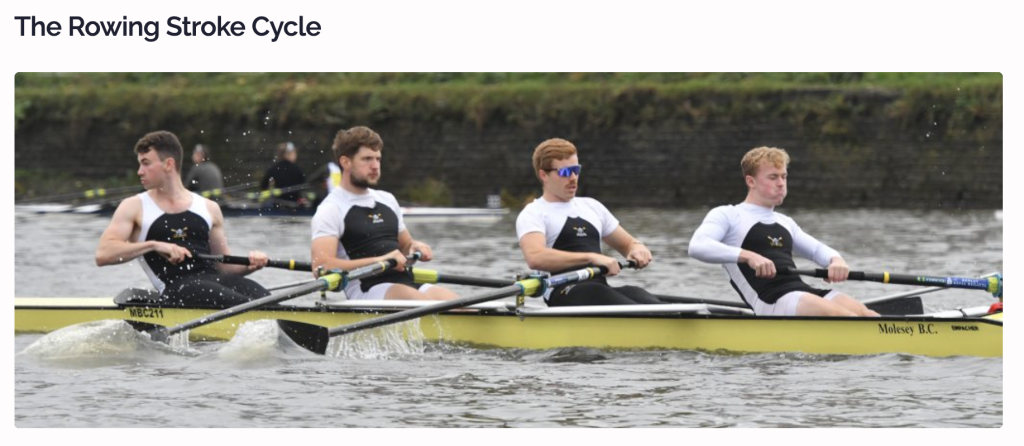
21:00 Transitioning back onto the water.
Testing your stability and balance - an exercise.
Sit at the finish with blades buried. Press against the oarlock on one side - the boat tips.
Do Drills
In place - finish squared and buried. Tap out the release and put the oars back int he water.
Release and feather
Release, feather and hands away
Release, feather, hands away and body rock forward
All return to blades buried in the water after each attempt.
27:00 Weight in the hand is a key concept in rowing and sculling.
Demonstrated by Marlene
28:30 Open palm sculling drill
Enough weight ove the handle - how do you know when you have this?
Feel you sat up a little taller - your sternum rises as you rock forward.
How do you work with your coach and how do they work with you?
What boundaries are there to the relationship?
How to give and receive negative feedback
01:00 This Past Week - what we do to advocate for masters rowing.
US Rowing Masters Conference
https://2022usrowingmastersconference.sched.com/
05:00 Ageing Well Webinar
https://fastermastersrowing.com/courses/ageing-well-for-rowing/
08:00 Athlete Coach Relationships
How do they work with you and you with them?
Goals of your program - fitness, technique, camp ....
Develop trust and respect
Understand communication - what would they like to get from the session or what to learn
10:15 Life stage and coach relationships
At high school they tell and you do.
Competitive teams - team culture, standards of behaviour and quality training matter
Masters are different our choices are more varies.
12:30 Igor Grinko coach to USSA, USA and China noticed the differences in athlete coach relationships.
15:00 What boundaries are there to the relationships?
private time
Communication - how, when, text / email / call / Face to face
Days off from the team
Scheduling crews - deadlines
Timelines for practice. Time to arrive and time on the water OTW
18:00 Preparing for the session - brief the coach ahead of time.
What is the approach - do you coach the whole boat or individually?
22:00 Use video to give individual feedback privately
23:00 How to give and receive feedback
Ask at the beginning what are you currently working on?
At the end one good point and one point to work on. Plus video of good sculling.
26:45 Separate their identity from the rowing skills - feedback is not criticism
28:00 Receiving feedback - coach-ability is a great skill to have. Try to do what the coach says.
Some coaches relay on athlete intuition to solve problems. Others explain the "how" relative to a reference point.
31:00 Give coach feedback afterwards for the crew.
35:00 If you want coaching, come close to the coach boat.
02:30 This Past Week - what we do to advocate for masters rowing. The March programs are ready including a focus on the pelvis and how to use it in rowing and sculling. Hip and pelvic mobility exercises.
08:00 Sponsor this week by the Rowing Directory including new listings for Glide Boat, The Flying Boatman, Shell Covers Australia, Adirondack Rowing and Trophy Oars
https://rowing.chat/retailer/
09:45 The Recreationals at Trafford Rowing Club - Susie Loates is the Vice Captain responsible for the group.
11:30 A recreational rower is anyone who does not want to commit to the full training plan of the racing squads. Members are parents, professionals with busy jobs and shift workers.
13:00 We seek a good technical row in sculling boats.
15:00 The Group uses Fitclub.me to book boats with up to 19 sessions available per week. We are welcome and a recognised part of the club.
16:30 How are sessions broken down - is a technical point or a workout set?
We arrange to out out 4-5 times a week.
Anyone can coach and we are encouraged to help other rowers.
Treated as an equal rower from day one.
19:30 The explore series of races. Uses stable 4x. These are 300 meter dashes races.
23:00 Advice for starting a recreational group.
Approach your committee or club leadership. You want a fair time on the water and a fair allocation of boats and equipment. Seen as the equal t racing squads.
25:30 Has the group got a leader? Susie has a rough plan for the group.
Membership fees are £25 per month for everyone in the club.
How is rowing going for you? What's it like elsewhere in the world? Learn more from our survey report. If you would like the anonymised raw data, get in touch.
Most masters have been rowing over 10 years and started rowing either at school/university or began over age 40.
The average spend on rowing per year is between US$500 to $2,000 with a significant group spending $4,000 or more each year.
There is some alignment between training effectiveness and rowing budget, those who invest the least get the worst results. Masters who train between 2-4 days a week report results between mixed, OK and good results in the past year.
Training frequency on land and water is consistent from summer to winter.
55% of masters follow a training programme. 39% do not plan their training.
Nearly 40% of masters row a single, 25% use the erg and many do crew boats as well. Weights, body conditioning, yoga, gym and cross training are the most popular land training choices.
Download the State of Masters Rowing 2022 report.
The most shocking finding is that half of all masters rowers either do not get coached or get coaching once a month or less.
Going on camp is popular with most choosing to go to improve technique or for race preparation. 60% of respondents plan on going to camp during 2022.
The pandemic affected rowing clubs postiviely and negatively - 30% reported a growth in members and 22% lost members compared to pre-pandemic yeas. Learn to row classes continue to be popular with most clubs running between 1-3 courses a year and 40% of clubs had more students.
Student drop-out after learning to row is reported at between 50-70%.
Racing was badly affected by Covid with over 70% doing three or fewer races in 2021 and 2/3 reporting they raced less than in previous years. 50% of masters race 5 times a year normally.
The majority of masters use data to analyse their rowing at least some of the time - only 25% report not collecting rowing data. Race results get more attention than training data by the very keen but 30% of masters don't analyse race or training data (clearly some collect data and don't analyse it). Over a quarter report uncertainty understanding what the data shows and 6% have technical issues interpreting rowing data.
We asked respondents for the personal and club challenges - the biggest challenges for clubs are recruiting new members, fundraising, coaching and equipment. A strong second tier of answers include 'getting people to row with', finding time to row and getting support from the organization.
For personal challenges Coaching, injuries and age-related issues lead the responses. It is interesting that the detailed responses frequently reference learning rowing and sculling technique as a personal issue.
Covid has of course created challenges as well from weight gain, restrictions in the number of people allowed to row at one time and training frequency. Many people referenced training in singles as a change as a positive result of Covid.
This week's podcast is about maintaining your posture at the finish, particularly your back angle.
01:00 This Past Week - what we do to advocate for masters rowing. Learn to row course; US Rowing Masters Conference 2nd April 2022; Australian Masters Rowing Championships venue changed to Ballarat, Victoria.
06:00 - NEW feature - Book of the month with Jess Di Carlo
Perfect Balance by Aquil Abdullah.
"One man's personal struggle to be the best in a sport and to find meaning from efforts that repeatedly fall shy of their mark."
Aquil Abdullah
We have a list of rowing books which you may enjoy.
The challenge is sitting and maintaining awareness of your posture.
How to maintain spine position
The finish is at the end of the leg drive - the handle is close to the body and a slight layback of your body.
13:30 Pay attention to the lumbar spine
How to tell if you have swung your body back too far.
15:00 Protect your lower back in rowing.
Keep your chest high helps with neutral spine.
17:15 Feet connected to the foot stretcher helps keep your finish posture as well.
How to do a physical check of your finish position. You need help from someone outside your boat to find this out to give you guidance if you are maintaining that position as you row.
Set up your finish position so your oar handles brush your lower ribs at a specific point so you can tell if you've rocked back too far because your handle is not at that position.
Set up your oarlock height and your foot stretcher so you have a precise place you finish at on your ribs / shirt.
20:00 Compare video of yourself rowing (3 strokes low rate and firm pressure) to a good example of rowing / sculling. What am I aiming for? Compare to what I'm doing in the video.
Marlene talks to Hans Brunner and Dean Smith about erg racing. Dean Smith's indoor rowing world record at 95 years old
00:00 Introduction
01:35 This Past Week - what we do to advocate for masters rowing Erg Racing Webinar announcement
03:00 Welcome to Hans Brunner, 71, and Dean Smith, 95, training partners
03:25 Hans tells about his rowing background and about being part of the first generation of masters rowers
08:30 The formation of their current erg training group
09:30 The importance of motivation from the group and having accountability partners
13:13 Dean Smith introduces himself
14:25 Dean started rowing at 80 at the Rocky Mountain Rowing Club
16:05 Dean tells about his first on the water experience in the boat, racing, and international competition
20:15 How Dean started erg racing
21: 55 Preparation for his world record row at the Huntsman World Senior Games
24:50 Dean trains every day; likes high intensity work
27:40 Dean’s warm up and how he paced his race
31:40 Importance of discipline in your race
33:50 The toughest part of the race
35:26 The start
36:55 Getting ready for Crash-B’s next
37:25 Dean’s tips for longevity in training
40:50 Importance of individual goals
42:20 Dean say coaching is key
42:45 The importance of rest
44:10 Dean says he is still learning at 95
Dean's record
Huntsman World Senior Games
(Indoor rowing results)
Oct 4, 2021 To Oct 16, 2021, St George, Utah (USA)
Hosted By: Huntsman World Senior Games
Dean Smith: First place, setting a new world record by more than 30 seconds in the 95-99 year-old lightweight men 2000m event, which earned him the Overall Championship award. In addition, Dean won gold in the 5000m event, held the previous day.
Heart rates are well known as a guide to exercise intensity.
0:00 Introduction
0:27 Faster Masters Rowing Radio - the podcast for masters.
The show this week is brought to you by Tip of the Blade, notes on rowing. A book by Marlene Royle which is a collection of articles, presentations and interviews.
https://amzn.to/3o8nUtO
2:36 This past week - check out the Global Remote Head of the Charles race - a charity event for 4702 meters from 31 January through 6 February
https://www.regattacentral.com/regatta/?job_id=7651&org_id=0
The rule of thumb 220 less your age is wildly inaccurate.
11:06 What affects heart rate?
Lactate is developed in your blood and different intensities develop different lactate levels. Specificity is important and physiologists measure blood lactate in milimoles.
Retest regularly as lactate changes as you train.
Things that affect your heart rate include: heat, humidity, sleep, wine, altitude, dehydration.
Your heart rate is a measure of stress.
Faster Masters Rowing prefers to use these over heart rate. You do a trial and from the trial results extrapolate training paces.
Keep out of the garbage training zones
20:23 When to use Heart Rate
Test your morning resting heart rate - what's normal for you?
Within your workout use HR to check your rest between pieces.
23:30 HR for rest and recovery
Heart Rate Variability is useful for monitoring your sympathetic nervous system. Is your body in a state of stress or state of recovery?
28:02 FREE Webinar: Functional Movement Assessment For Masters
Click the picture to reserve tickets and get your free ebook with 10 tests for you to do.
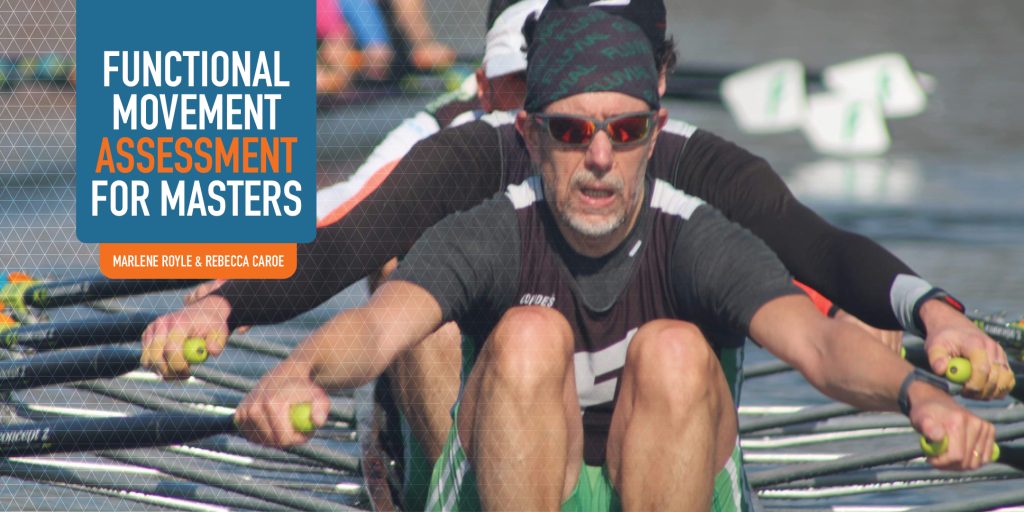
A free webinar by Faster Masters Rowing on 27th January 2022.
When you sign up there's a free ebook for you to download which details all the 10 tests to do on your own body. On the webinar we will run through exercises and stretching you can do to improve your mobility and flexibility on each of the 10 tests.
The event is run via Eventbrite so sign up for your tickets today.
How flexible is your body? Does it help or hinder your rowing and sculling? Learn how to test yourself and what you need to do to improve.
Our bodies naturally undergo changes in coordination, balance, muscle strength, and joint range of motion as we age.
In this webinar you will learn:
Key concepts for aging:
But we can certainly influence how we age with proactive interventions and choices in our own lives. The Faster Masters Rowing Radio podcast welcomes Clare Delmar to the show to guide us through who is researching aging well and where we can find their writings and publications.
12:00 The science of longevity - Why we should be interested in aging and what we already know.
Cancer research tells us what happens to cells in the body.
Key tenets:- shifting healthcare, medicine and personal focus from lifespan to "health span". Living well longer.
14:45 Top risk factors for health conditions - the number 1 is aging for prostate cancer. We should think that aging is not just a fact of life - we can learn about it and about the process of aging.
17:45 Difference between chronological and biological age.
Measure this with biomarkers.
We can manage our biological age ourselves.
20:00 Which people are doing work in aging who we should follow? There are scientific geneticists, society researchers (employment, housing, transport), medical (treatments and interventions) and personal health (what we can do ourselves).
Cell senescence is key - cells are dying and not being replaced.
24:00 Gurus on longevity. What they are talking about
David Sinclair is a professor at Harvard Medical School whose book, Lifespan is evidence-based.
https://amzn.to/3ntcj9O
Nir Barzilai also has a book Age Later, the new science of longevity.
https://amzn.to/3A20YCB
Interventions he suggests include supplements and drugs to help reduce aging.
28:00 Covid has taught us about repurposing drugs. Metformin is a diabetes drug Mir is working on.
29:30 Eleanor Sheeky has a great YouTube channel the Sheeky Science show.
https://www.youtube.com/c/TheSheekeyScienceShow/about
30:30 Researchers into societal and cultural perspectives and the policies needed
Sergei Young
https://amzn.to/3fsxF2H
Susan Flory
https://www.susanflory.com/
Tina Woods has a book on AI driving interventions. She's also on the UK Parliamentary advisory group.
https://amzn.to/33Gc2sK
Andrew Scott at London Business School has a book
https://amzn.to/3qw4uSC
Ashton Applewhite - social media around ageism @thischairrocks
36:30 Novos Labs are a supplements company. Their website is informative.
37:15 How you you monitor our own health?
Clare takes supplements not because she feels bad. She wants to live well.
Daily yoga practice has been massively helpful for strength, balance and mobility.
Daily exercise - sculling, run or cycle
Diet and nutrition - the impact on physical and mental / emotional health. I eat gut-friendly foods. I have cut out sugars so I'm less dependent and greek yoghurt daily.
44:00 Tips - apply to your everyday. A dietary intervention is the concept of intermittent fasting - body ketosis. Everybody is different.
47:00 Opinions on a vegan diet? It's an individual choice. With aging it's protein levels that are critical to less stress and cell repair. Women need fat in our diet.
Clare is a convert to non-meat proteins - pulses / beans and plant based milks.

Join our community and get our exclusive Faster Masters Rowing Magazine, packed with tips, techniques, and inspiring stories. Includes four new articles monthly.
