After the summer racing regattas end, it's time to rest, reflect and plan the long distance races you want to do.
This episode explains how to organise the 3-4 month training block to suit your peak event and the training you need to do.
02:30 This Past Week - we had an article published on Ludum
https://ludum.com/blog/athlete-health-fitness/managing-your-training-in-masters-rowing/
First take the calendar and find the events you'd like to do. Select your peak event first - the big one. Your first race should be something local to where you live / train. You can row twice in one day and it should be low key and easy to travel to logistically.
14:00 Choosing your first race. The night before the race you may be nervous or excited. Practice sessions may be race simulations but they don't create this tension. Get your checklists sorted.
16:00 Spacing between races. Get 2-3 weeks between each race. Try to pick ones which dob't involve a lot of travel. Some people like to race the weekend before the peak event to kick off their training taper.
19:30 You can choose to race not at the peak event intensity e.g. rate limit your last race before the peak event.
23:00 How peaking works. The goal is to be fully rested before you race.
Super compensation is the principle of accumulated tiredness from a training period or block. The Taper period is reducing the volume of training. Maintain the frequency of training. The duration of sessions decreases over time. Your muscles start to recovery and replace muscle glycogen.
27:00 To tolerate pain you must be rested.
For folks going to the Head of the Charles - we have created a stand-alone program which peaks for the October Head of the Charles regatta.
It's very similar to our 5k program, and is based on the race distance 4,702 meters.
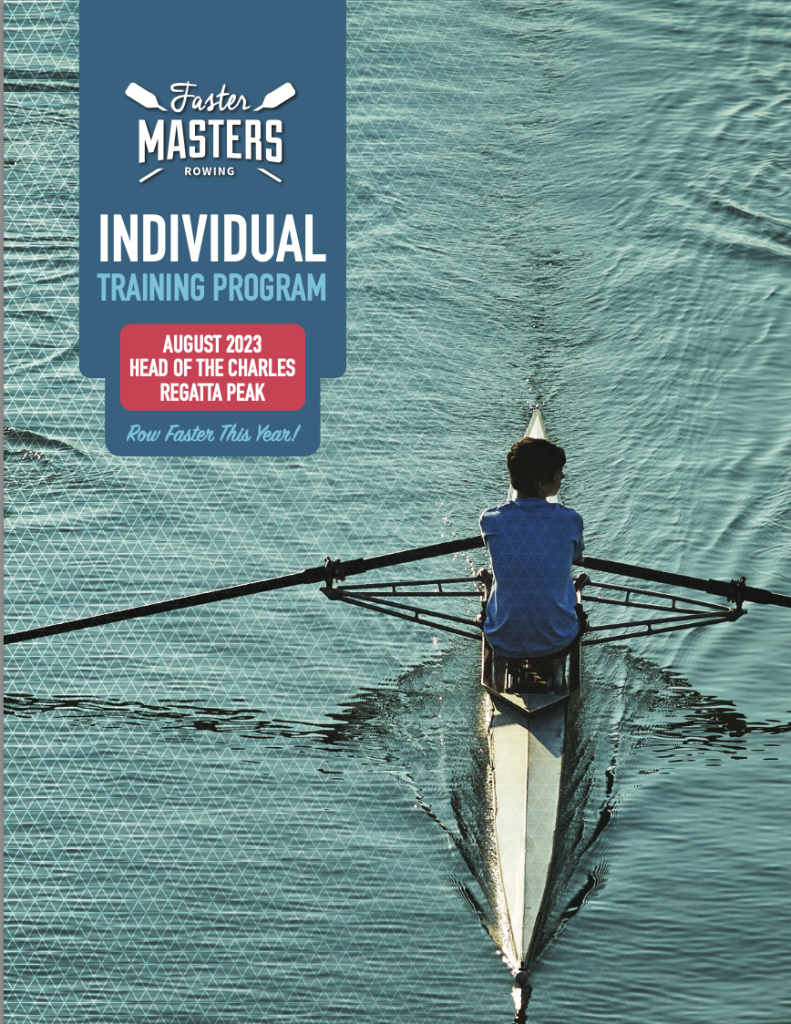
This is INCLUDED in any of the monthly subscription programs. No extra charge, Select the 5k training program in our Individual or Crew training memberships and trust Faster Masters Rowing to get you fully prepared to race.
Each training plan is designed for masters who row 3 to 6 times per week. It includes "core" sessions which you mustn't miss and optional extra workouts.
The membership also includes land training, rowing and sculling technique, performance and aging well.
We have got you covered.
The monthly subscription programs are customized with training zones to suit you.
CONTENT From this show
- Time to think about head racing
- What to do when motivation comes and goes
Faster Masters Rowing Radio - the podcast for masters rowers. Tips, advice and discussion from Marlene Royle and Rebecca Caroe.
Support this podcast
https://fastermastersrowing.com/register/podcast-supporter/
01:30 This Past Week - what we do to advocate for masters rowing. Henley Masters Regatta July 9-10. The new Knowlton Rowing Club.
05:00 The Faster Masters Rowing Program for July. Squaring technique focus; Mid-race strategies.
Find out what's going on in your mind. What is important to you?
Jim Loehr - The Power of Full Engagement Book
https://amzn.to/2Tu585u
12:30 Physical / Emotional / Mental / Spiritual pyramid. Check the physical first for clues about what's wrong.
17:30 The best stress reliever is to just do something.
Physiology - think of your average speed - this is key to your best race.
Train to improve your base average speed. Train your base aerobic mitocondria.
It also helps to know the race course as well for steering.
At low rates you can also work on technique.
Race pace is an anaerobic threshold AT workout. Ride the line of best pace before you get lactate acid build up in your muscles.
Improve your VO2 max during the next 3 months training. The higher ceiling means you can move up your AT. That brings a better average race speed.
25:50 Don't wait till September to start training. Plan ahead
Shift your attention to average split and target metres to complete the session.
Choose the meters per second erg display - use charts to analyse the split you need to do the time you want in the head race you are going to race.
30:30 If you are racing 1k in August - stay on the 1k program. Then when you finish that event, take a few days off - 3 or 4 days - to decompress. Then move on to the 5k program.
Stick to the prescribed intensity in the program workouts.
Picking your crew lineups for regatta is a delicate task for Masters group organisers and coaches. There are so many potentially “touchy” topics.
Rather than present a vanilla approach, I thought it would give insight if I share the process I use for my club group. We are a mixed club of racing and non-racing members with some who train 1-3 times a week and others who do 5 times plus.
When I am planning a regatta squad I start by creating a spreadsheet with a list of every single event in the order in which they will be raced. The critical issue here is the turnaround times between events. We normally find you need at least 3 races for one athlete to get adequate time to return to the start after racing.
I then make a list of all of the athletes who have signed up to attend including their age, and their sweep and sculling preferences.
Part of our club’s modus operandi is that we encourage members to ask for their number one preferred crew lineup. In this way we allow people to set their own personal priorities. We have an understanding that after you have your #1 crew, you will join any crew for which you are selected without complaint.
Many people say they only want to do two or three races, and we also try to boat crews of people who train regularly together. We find that if there is a group who enjoy training together that makes it super easy for crew selection!
I find it most straightforward to put people into groups of 4 athletes. In this way you have the same people in the same crews at the same time and there are fewer boat sharing and lineup conflicts between races. So for example 4 people may do a quad and then they may split into two doubles and they may also do a coxless four.
My next job is to run through the list of events and to write draft names next to each event. I already have a list of the priority crews so I put these in first.
I then run down the list a second time adding in each crew’s average age based on the people in the lineup. This shows me which age class they are in and which are close to the age limit.
Then I refer back to the list of names and I write the event number that each person is rowing in next to their name.
This quickly shows me that some people have got five races and others only have one! And so I review the list again and move people between boats so that everybody has a similar number of races. Knowing the average age of each lineup helps me to see where I will have to change age category when I switch out an athlete.
My last job is then to allocate boats and oars against each of the events. We have several boats which can be rigged for both sweep and sculling and so this adds in the necessity of allowing time to re-rig in between races.
Then the fun starts! I send the draft spreadsheet to a small group of people who review my work and point out some of the errors, omissions and overlaps. There have been some hilarious ones in the past.
Based on this I do a further revision and then send it round to the athletes as a draft. That allows people to see some of our suggestions and to come back with any objections or changes which they want made.
Another version is done; in the meantime people start training in their crew combinations. The final lineups are given to our entries secretary who manfully does the hideous task of putting in the regatta entries. I’m so grateful I do not have to do this.
And of course, on the day there are sometimes drop-outs and crew swaps... but those are relatively easy to manage compared to the work already done.
Would you like to publish this article in your club newsletter or website?
Join our Masters Rowing Advocates mailing list and we will send you one article a month. Sign up on our Advocacy page.
You can copy the text on this page. Or download the PDF
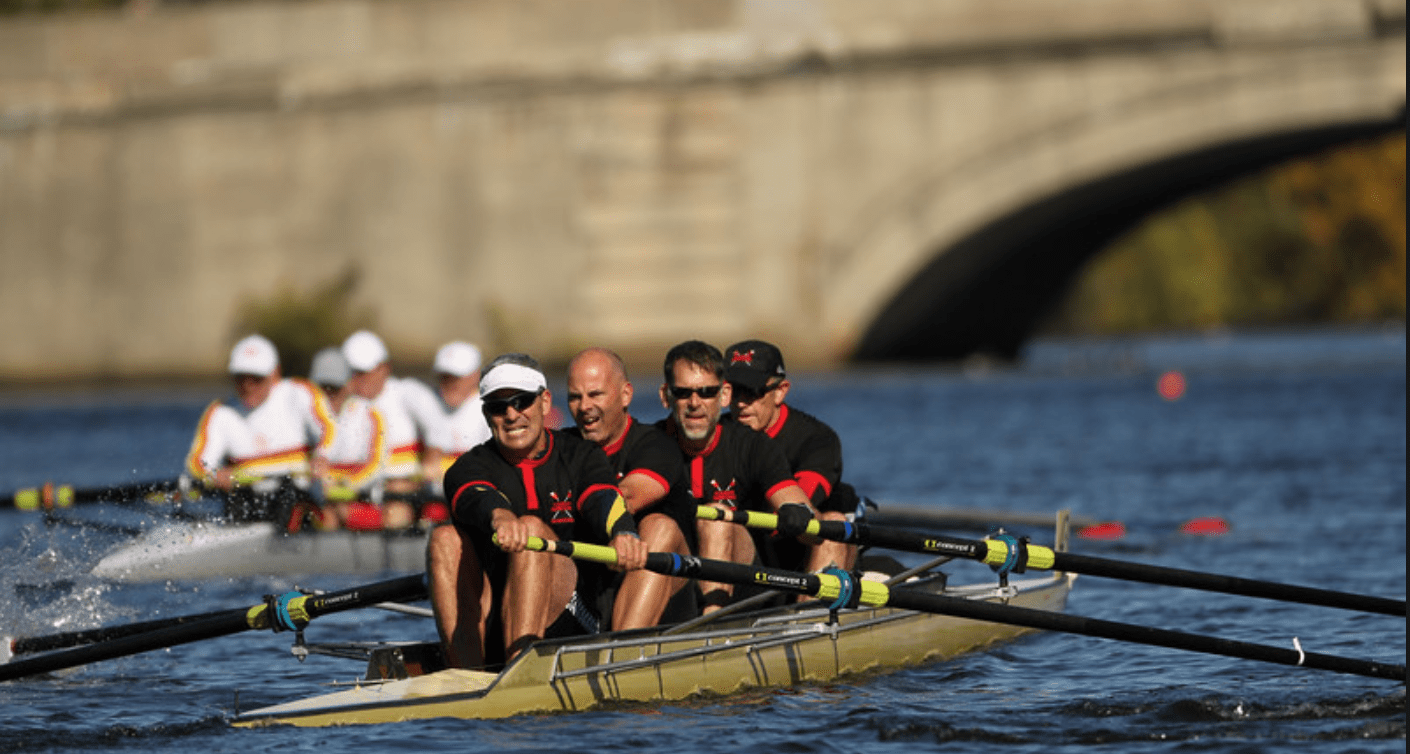
Getting ready to race takes a lot of practice. Fortunately come head racing season there are a lot of different events where you can practice and improve. As masters we enjoy the challenge of long distance rowing races and accept that we need to plan our training and practice before expecting to be successful racing,
When reviewing your plan for the season, you will need a winter “peak” event. This is your top priority for your group, crew or yourself. Frequently this event is the Head of the Charles or the Eights Head of the River or the Head of the Yarra. The trouble is that two of those events fall early in the head racing season and that gives you limited opportunity to practice and refine your race plan in advance with practice events. Ideally you want to do a race distance 2 weeks before your main event as a practice. If there isn’t a formal race, plan a local informal one against other people in your club or invite a nearby club to race you in a private match.
Don’t worry, Faster Masters Rowing has you covered. In this article we will cover off the 3 key things you need to have practiced and how to compose them into a written race plan which will see you through any head race event.
All races are the same. All races are different.
You need a plan for each race. All plans go out of the window once the race starts. Yes we know that sounds contradictory.... let us explain.
Exceptionally scary statements. All true and all things you need to learn how to execute to a high level of skill.
Having a rowing coach will help you become an adaptable athlete who can race in ANY situation. Faster Masters Rowing is your coach.
So every race plan has these 4 core elements:
Yes it’s as simple as that. You need to be able to get the boat from stationary up to race pace; you need to have some way to improve your technique; some way to go faster, and a finishing sprint.
How you string these together is where your race experience comes in. The degree of sophistication of each depends on your skill, your personal preferences and whether you are a longstanding or new crew. Because some take more practice than others and you NEVER want to do something different in a race. No. NEVER. Because you’ll likely mess it up. So don’t risk your race result.
Let’s figure out some options for each of your 4 elements of your plan. For each of these, choose the version which you think works best for you. Practice them all (at least 3 times) before you select one. There are no wrong answers - your choice is about the one that WORKS. And your skill at executing now may be different next month or next year... so your choice is not fixed for ever. Be open to new things as an athlete. It helps build your flexibility and adaptability.
In the description of the finish above I explain the type of risk that you may need to take while doing a head race. You risk running out of energy and power before the finish line by sprinting early. If you don’t take risks, you’ll never do your best race. Your risks can be small and incremental - like choosing to rate a half point higher in the mid-race than you think you want to. Or adding in a push when you sense mental capacity is getting tired in the third quarter. I hope that you are pleasantly surprised by your performance.
But if your risk doesn’t work out, you need a strategy to get back on track and to last the distance. One way to do this is to practice making a strong rhythm at a rate one point below your target race rate. Can you move the boat well at that rate? If yes, then try taking the rate and power up again after re-establishing the rhythm.
Look at the map of your race course, divide it up by distance, time, landmarks or all three and then write out long hand down a page what race plan you intend doing. Here’s an example
Start
250 meters hit the race rate and rhythm
Push 10 into 500 meters
Technique 10 - catches
Push 10 into first corner
Push 10 out of the corner
Etc .. you get the idea. This framework allows the whole crew to understand the logic behind each move. Pushes and technique interspersed with the distance / time / landmarks.
Plan variations during the race can happen based on what is actually happening around you. This is where your cox or caller needs to be trusted to judge a situation and select the response which will best advantage your crew. If there’s a crew up ahead which you can overtake, don’t wait for the corner to make your push, go for them early - tell the crew the distance from the crew in front (4 lengths, 2 lengths, overlap) and use that focus to maintain higher average speed. When overtaking, never stop pushing after you are past them, you MUST move away from that crew to prevent them sensing they could attack back and overtake you. If being overtaken, use your pushes to stay in front of them. If you are steering, leave moving out of their way until the last possible moment and then move gradually so you don’t upset the rhythm in your boat. Cut back in behind them at the earliest possible moment. And when you can see the crew behind, focus on your boat rhythm - too often crew members look at the other boat and end up rowing in their rhythm - which makes your boat slow down.
And so you now have all the techniques you need to build a robust race plan, you know how to adjust it based on different head race events of differing distance and also what to do when racing to adjust your plan to take advantage of situations. Now all you need to do is to practice those moves, agree your calls and enter a race.
If you buy a subscription training programme from Faster Masters Rowing there is a bonus welcome gift included. In the Performance module article Preparing your head race plan.
Would you like to publish this article in your club newsletter or website?
Join our Masters Rowing Advocates mailing list and we will send you one article a month. Sign up on our Advocacy page.
You can copy the text on this page. Or download the PDF
Faster Masters Rowing Radio - the podcast for masters rowers. Tips, advice and discussion from Marlene Royle and Rebecca Caroe.
06:00 This Past Week - things we do to advocate for and advance masters rowing around the world. Alan Oldham interviewed Rebecca for Rowing News - the article is titled Covid Connections
https://www.rowingnews.com/2021/03/17/covid-connections/
Marlene's Rowing News article is about a drill called the Stationery Stability Drill. When you can complete this and not touch the water you will be able to row oars off the water in any conditions.
Wellington Rowing Club is advertising for an independent board director - how many clubs use independents on their board?
Does your club offer social rowing memberships?
The Dutch mens eight use motors on their boat https://nos.nl/l/2372717
12:00 Our next webinar Functional Movement Assessment for Rowers. Learn 10 assessments and how to overcome the limitations. Tuesday 30th March 5 pm EST. Sign up for a free ticket
https://bit.ly/FunctionalMovementRowing
We are appearing on Tara Morgan's Steady State Network's Rowing Podcaster's Roundtable.
https://www.steadystatenetwork.com/rowing-podcast-roundtable
20:00 Your 2k race. Write down what you did to prepare and the race plan - what actually happened? Use this to improve your race for next time and to repeat what went well for you.
Give yourself credit for what went well.
24:40 The 3rd quarter of the race. What should you do?
It's going to be hard at this stage you are in oxygen debt. When the lactic acid is peeling the enamel off your teeth. You have to have a plan for the third quarter.
Simplify the plan as the race progresses. Practice the plan. Count 5s or 7s or 10s.
Rebecca recommends you pick a trick out of your bag to respond to what happens in your split. If it slips, which "trick" will you use to get it back?
Splits on Concept2 are run as a 3 stroke rolling average - this means it may take you a while to get the split back.
32:00 Plan your practice trials for competition. Develop the strategy.
35:00 How bad should you feel or not feel at the end of a 2k? To learn to row 100% is a skill. It takes time to learn how to cross the line. Ask yourself whether you could have done better or not.
40:00 Would you expect to exceed your maximum heart rate is OK? Calculations of heart rate are imprecise. Tests are precise.
43:00 Peak performance - did you ever have an out of body experience while racing?
A client got in touch with us asking a question which we know many of you will relate to.
Hi, I'm a masters rower voluntarily coaching a novice crew; my crew are racing in the first weekend of December so we have 8 weeks basically to get some fitness up.
I'm wanting an erg program for them - ages 35, 59, 50 and 43 - two younger women fitter than the older ones.
Can you help?
Rebecca and Marlene explain The Faster Five essentials for rowing
Technique, Bladework, Stroke Power, Racing and Fitness Assessment.
12:00 We launch the Faster Five. These are principles which are important to learn, how to practice and what to practice. Things to pay attention to and key reference points.
The Faster Five represents the Faster Masters Rowing philosophy of teaching and a structure for you to plug into when you are studying rowing and learning how to become the rower you want to be.
16:00 Faster Five - Technique . Reference points so you can practice on your own. It takes thousands of strokes to learn the correct technique. It takes 3 seasons to become a sculler and 2 seasons for a sweep rower to feel they can apply good power in both sweep and sculling.
19:30 Faster Five - Bladework. timing and co-ordination is important. When you hold something in your hand (the oar) your brain thinks it's part of your hand. This is why it takes a long time to learn. Reduce your wash and blade is a key part of the learning from the Faster Five. The timing, finesse and precision takes drill work, focus and concentration. Developing high speed co-ordination is key to becoming a skilled rower.
23:00 Faster Five - Stroke Power - this comes after the bladework which brings confidence to your rowing. Power requires you to trust the oars and use your body weight. Learning the sequencing, being explosive and being effective at moving the boat.
26:00 Faster Five - Racing - the principles of racing well. Mental and physical, starts, steering and race strategy. What works for you and your crew. Back up plans. Relevant for all rowers whether you race or not because you can test yourself and get progress markers.
30:00 Faster Five - Fitness Assessment. A battery of tests to gauge your quality of rowing including stroke power, VO2 max, anaerobic threshold. Comparing the results works on both an erg (watts) and on water (500m spit to watts). The relative comparison gives proportional fitness measures. This changes over time.
34:30 If you are injured and come back to rowing your test shows you the right level of intensity you can manage.
38:00 Where to get the Faster Five. Link is in the website footer
https://fastermastersrowing.com/courses/the-faster-five/
When you subscribe to ANY monthly recurring program on Faster Masters Rowing the Faster Five is included as a welcome gift.
When athletes stop doing our training program you lose a lot. You lose commitment, you lose engagement and you lose someone else coaching and doing the thinking for you.
When you stop doing our training program you lose fitness, you lose your edge and you don't stay engaged and showing up. When successful athletes stop doing the Faster Masters program 100% of the time they never maintain the results they had on the program. Success does not carry on without an ongoing, developing training program.
40:00 Faster Masters is more than just a training program. Faster Masters is not babysitting athletes. Depth of instruction and insight from masters specialists. The Faster Five took us months to complete and includes our years of coaching expertise.
Masters feel like "disregarded" athletes - we are on a mission to get the sport of rowing to appreciate masters athletes. What we can bring to them, the goals we have are important. We deserve respect. We are building a global family of athletes.
Marlene and Rebecca talk about
- Finding a coxswain
- A new video tip
- Have experienced masters rowers got an 'attitude' problem?
Coxswains are essential to rowing eights and they are in short supply for masters rowers. Most of us find that we have to "grow our own" coxes - by that I mean recruit and train them up.
Frequently a cox will allow you to do a trainibg outing - you don't need them to be expert in coaching, just steering. And for getting out on the water that is a great first step.
04:00 Subscribe to our newsletter
https://fastermastersrowing.com/newsletter/
05:30 A National Voice for Masters Rowers in New Zealand
Join the Facebook Group https://www.facebook.com/groups/256708472122650/
07:30 Finding a coxswain
12 week training program for 5k races
https://fastermastersrowing.com/courses/head-racing-12-week-program/
Find someone's child - 8 years old or more. Teach them to steer.
Adult coxswains - build a plank with a rowing seat to sit across the gunwales to sit above the boat.
Get members to recruit their petite friends.
Starting to teach coxing. Be comfortable with making compromises.
We start by getting them steering first. And the commands for starting and stopping ONLY.
Let them repeat the commands relayed by the stroke.
Understand gentle steering. And hook the little fingers over the side of the boat - steer with your forefinger and thumb. Tape the midpoint of the steering wire - a visual reference.
15:00 Coaching the Coxswain book by Chelsea Dommert
https://www.rowperfect.co.uk/product/coaching-the-coxwain-revised-edition-2/
Use the phrase "On Point" and create discipline in the cox to always do this.
17:30 Rent an expert coxswain from the local high school. Take care of your cox and pay their way.
A talented cox even if they are heavy is better than an inexperienced one.
19:00 Some coxes don't want to cox grumpy old men. We recommend feeding them cake
21:00 Slow motion video tips. Use landscape not portrait. And check the slow motion playback on YouTube where you can go 2x and 3x slower. It makes it easier to see your rowing technique.
27:00 Port, Starboard or both? And which is dominant? Maoco Florann Elkins calls this bisweptual or ambidextrous.
32:00 Do rowers have an attitude problem? Consider the situation individually. If the coach says people don't want to be coached - find out what the rowers think too. Do you also get attitude from club junior coaches. Club culture matters. Learning the correct rowing etiquette is important for the culture of rowing.
42:00 If you don't want to learn - just go and row. but if you want to learn new habits then get coached. Use Slow Motion Video recording on your phone because it is much easier for people to see.
Marlene and Rebecca discuss
- synchronising male / female masters crews
- solving a leftwards lean while sculling
- Buying a boat - particularly a single scull 1x
- FISA Masters Regatta
- Masters Nutrition Webinar from Rowing New Zealand
04:15 Synchronising male and female mixed crews - look if your oars are parallel; check catch and finish timings - clues you are not together. Easy things to adjust - foot stretchers, Hips level with the pin, practice timing drills to blend your strokes together.
12:40 What do you need to know or do before buying a boat
- Have you got storage space? The type of boat should suit your water and racing choices. Different pricing levels. The right size for your body weight. Comfort is key. Test drive as many as you can.
Find places to buy rowing boats at the Rowing Directory
19:00 Buying second hand rowing boats - how to get a 'deal'.
Know what you want, get an experienced person to look over the boat for you for repairs. Weigh the boat. Do the shoes fit? How worn are the fitments - gates, shoes, slides, bow ball?
27:00 Solving a leftwards lean in a single scull. Check your hand positions at crossover, sit square on the seat, are your elbows dropped? Get a functional movement assessment. Video yourself to see where you go off of center during the stroke cycle.
34:00 Squeaky oarlocks in a single scull. Clean them, check the inserts - consider olive oil as a lubricant.
Returning to rowing article - what to expect when you restart as a master.
Rigging for Masters webinar - what span/spread to use, oar lengths and inboards, download comparison charts
Getting into a single scull article - how to do it, what to watch out for, keeping stable.
n
Join our community and get our exclusive Faster Masters Rowing Magazine, packed with tips, techniques, and inspiring stories. Includes four new articles monthly.